Stop the Bleed: Training, Gear, and How to Get Certified
5 min reading time
5 min reading time
Uncontrolled hemorrhage is the leading cause of preventable death after traumatic injury. Arterial bleeding can kill in 3–5 minutes — a window that closes regardless of whether EMS is six minutes out or thirty. Stop the Bleed is the national program that teaches civilians to close that gap. More than 5 million people have completed the certification since the program launched in October 2015.
This is what the training covers, what gear it puts in your hands, and where to get certified. If you've heard the term and aren't sure what it means in practice — this is the brief.
Stop the Bleed is a national public awareness campaign and hands-on skills program developed in response to the Sandy Hook Elementary School shooting in 2012, formalized through the Hartford Consensus — a framework developed by trauma surgeons and law enforcement to address preventable hemorrhagic death. The program is now managed by the American College of Surgeons and administered at stopthebleed.org.
The training is two hours, free, and available in all 50 states through hospitals, law enforcement agencies, fire departments, and corporate safety programs. You leave with three actionable skills:
The MARCH protocol — Massive hemorrhage, Airway, Respiration, Circulation, Hypothermia — is the CoTCCC-standard sequence for trauma care. Stop the Bleed addresses the first priority: massive hemorrhage control. Everything the program teaches maps directly to the M in MARCH.
Hemorrhage control before a provider arrives requires two things in parallel: trained hands and proven gear. A tourniquet applied incorrectly fails to occlude arterial flow. Gauze packed without sustained pressure allows a clot to fail. Neither piece is optional.
Field Note: Good Samaritan Coverage
All 50 U.S. states have Good Samaritan laws that provide legal protection to civilians acting in good faith during a medical emergency. Providing hemorrhage control is a legally protected act in every state. Failing to act when you have the skills and the gear is a different kind of decision entirely.
The program is equipment-agnostic in the classroom but field outcomes depend on gear that performs under pressure. Here is what Stop the Bleed teaches and the tools that meet the standard.
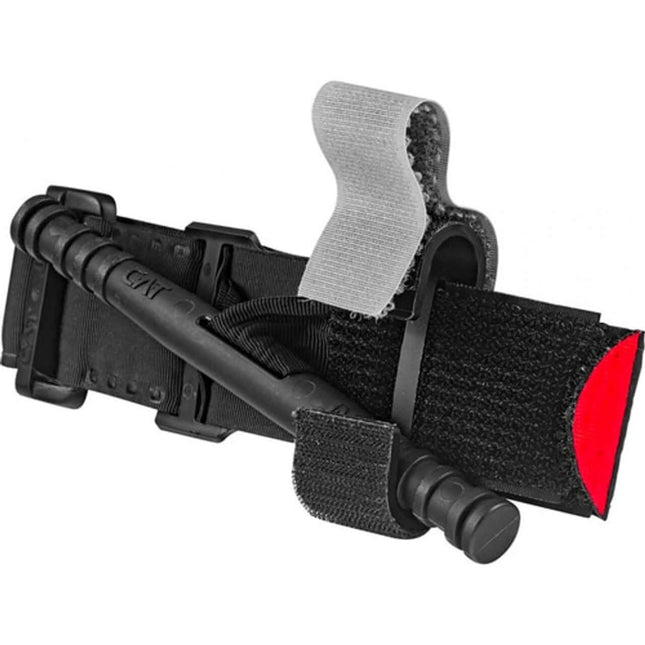
The windlass tourniquet is the primary tool for limb hemorrhage. Stop the Bleed teaches single-handed self-application — the scenario where improvisation fails and the right equipment is the difference. The CAT Gen 7 and SOFTT-W are the only two CoTCCC-recommended windlass tourniquets with documented field performance across thousands of applications since 2005. No substitutions.
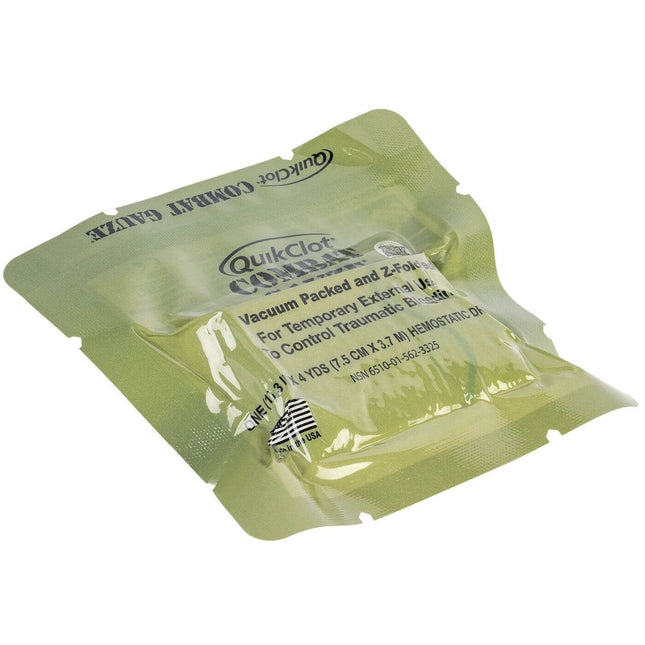
QuikClot Combat Gauze is kaolin-based, CoTCCC-recommended since 2008, and clots five times faster than plain gauze. NSN 6510-01-562-3325. Stop the Bleed teaches wound packing with 3 minutes of direct pressure — QuikClot is the gauze that makes that protocol reliable.
After wound packing, a pressure dressing locks the clot in place. The Israeli bandage (4-inch) uses built-in pressure bars and a self-securing closure — the field-standard solution for maintaining pressure over a packed wound without additional hands.

Stop the Bleed recommends staging a bleeding control kit anywhere you spend regular time: workplace, vehicle, home, place of worship. The right kit depth depends on the setting.
| Setting | Kit Option | Core Components |
|---|---|---|
| Workplace / Facility | MediTac Bleeding Control Pack | CAT tourniquet, QuikClot gauze, pressure dressing, gloves |
| Vehicle | ViTAC Vehicle Trauma Kit | CAT Gen 7, QuikClot, chest seals, NPA, pressure dressing |
| On-Body / EDC | Compact IFAK | CAT or SOFTT-W, compressed gauze, nitrile gloves |
| Home / Multi-Person Coverage | M-17 Medic Kit | Full wound care and bleeding control for sustained multi-person use |
How long is Stop the Bleed certification valid?
The American College of Surgeons does not mandate a recertification interval but recommends refreshing skills annually. Many employers and law enforcement agencies require recertification every 1–2 years. The course is two hours and free — there is no reason to let your skills lapse.
Can an improvised tourniquet work in an emergency?
No. Improvised tourniquets — belts, bandanas, clothing strips — cannot generate the sustained circumferential pressure required to occlude arterial blood flow in most adults. A CAT Gen 7 or SOFTT-W windlass is required. Stop the Bleed trains you on the real tool. Carry one.
Does Stop the Bleed cover chest wounds?
The core curriculum focuses on limb hemorrhage control — tourniquet application and wound packing. Advanced courses cover vented chest seals for penetrating thoracic trauma. If your environment warrants it, a TCCC-level course provides the full MARCH protocol including airway and respiration management.
Uncontrolled hemorrhage is preventable when the response is immediate and the gear is ready. Stop the Bleed certification takes two hours and costs nothing. The CAT Gen 7, QuikClot Combat Gauze, and a pressure dressing give you the tools the program trains you on.

OSHA minimum workplace kits don't include a tourniquet. Here's how to calculate station count, stock each station, and build bleed control coverage in any public...

One kit at the main entrance fails the 90-second coverage rule for most buildings. Here's how to run a coverage audit and calculate the correct...

Arterial hemorrhage kills in 3 minutes. Urban EMS takes 7–10. Every business needs CoTCCC-standard bleed control kits — here's how to select, deploy, and train...

40+ states mandate bleed control kits in schools — but most deployment plans miss classrooms and buses. Here's the placement standard that actually works.

Most of our trauma kits and first aid supplies qualify for HSA and FSA reimbursement. Don't let your benefits expire — invest them in gear that could save a life.


$124.95


$279.99

$37.49 - $139.46


$299.95 $269.95


$139.95 - $169.95

$49.95


$25.99


$164.95

We've been downrange. We know what it costs to be unprepared. ViTAC was built by U.S. Army Special Operations veterans to make sure the people who run toward the threat — and the families who depend on them — have gear that works when everything is on the line.
— ViTAC Solutions Founders | 40+ years combined Special Operations experience