-
Free Shipping
On All Orders $100+
-
HSA/FSA Eligible
First Aid Kits & Supplies
-
Satisfaction Guarantee
Money-Back, 30-Days
-
GOVX Discounts
Military, LEO, & More

Family & Home Readiness
Most Emergencies Happen at Home. Be the One Who's Ready.
Family and home first aid kits — real wound care for the everyday scrapes, burns, and sprains of an active household, organized so anyone in your family can find what they need fast.
Veteran-Curated
HSA/FSA Options
30-Day Guarantee
Free Shipping $100+
Beyond One Kit
One kit isn't a plan — prepared families layer their readiness.
Help is minutes away, even at home. The families we serve stage coverage where life actually happens: a home-base kit, a vehicle kit, and a bleeding control layer for the worst day.
Layer 1 — Home Base
The kitchen-shelf kit
Your primary kit, stored where the household actually gets hurt. Start with this collection.
Shop This Collection ↓Layer 2 — On the Road
The vehicle kit
Road trips, practices, campgrounds — a kit that rides with the family, built for the glove box or trunk.
Shop Vehicle Kits →Layer 3 — The Worst Day
The bleeding control layer
A tourniquet, hemostatic gauze, and a pressure dressing turn a first aid kit into real trauma capability.
Shop Bleeding Control →-
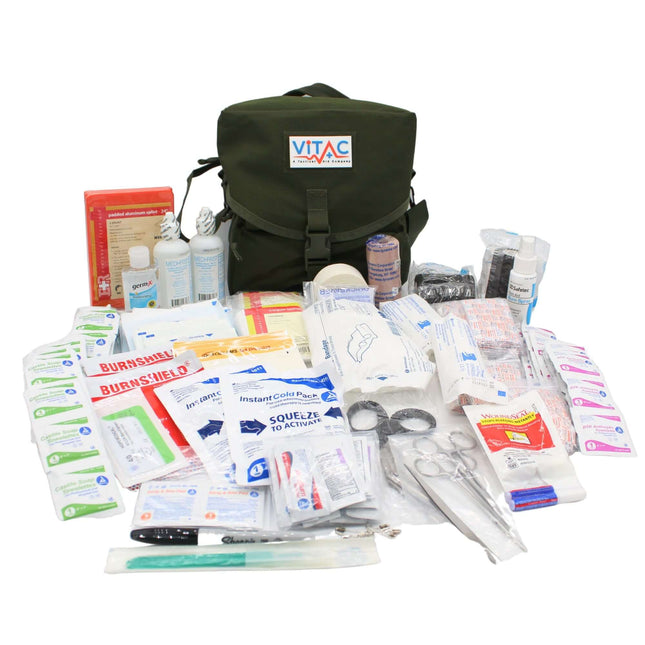
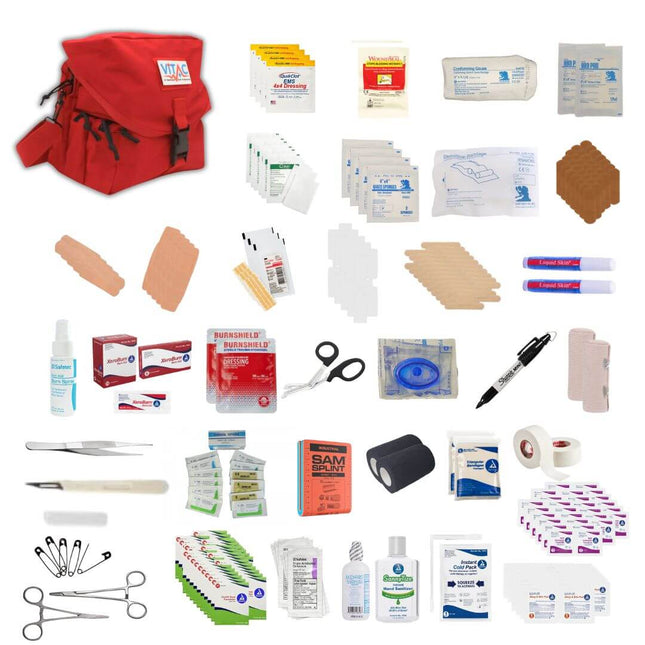
ViTAC Brand Premium Emergency Home First Aid Kit – 301-Piece Family Medical Kit
The ViTAC Premium Emergency Home First Aid Kit is a 301-piece, hospital-grade medical system designed by emergency professionals to equip your household for real-world injuries—providing clear organization, advanced care tools, and peace of mind when every second counts.
$259.00 $230.00
-


Elite First Aid M-17 Medic Kit w/Basic Wound Care & Bleeding Control
Over 200 trauma and wound care supplies organized across six canvas compartments — serious medical readiness for homes, vehicles, and remote worksites in a proven M-17 bag.
$174.95
-


Elite First Aid M3 Medic Kit – Basic First Aid & Wound Care
70+ wound care, airway, fracture, and burn supplies in a tri-fold military-style kit that opens flat — team-ready first aid for worksites, training programs, and group outings.
$73.49
-


Elite First Aid Pet First Aid Kit for Dogs & Cats | 38-Piece Medium Kit
Tick removal, wound wash, self-adhering wrap, sterile gauze, cold pack & Pet First Aid Guide — 38 organized supplies for dogs & cats in a compact 1.0 lb orange travel case.
$30.76 - $36.26
-


ViTAC Brand Campus Ready – Dorm + Vehicle | College First Aid & Trauma Bundle
The two places a college student actually gets hurt, covered in one order.
$256.89
-


MyMedic Scout Portable Medical Kit | Professional Trauma Kit
Dual tourniquets. Dual hemostatic. Dual chest seal 2-packs. Dual NPAs. The Scout is built for multi-casualty readiness in a single portable kit.
$849.95
-

MyMedic MyFAK Large Medical Kit by MyMedic
Twice the supplies of the original, on a folding-page MOLLE system you can mount, tear away, or carry. Standard covers bleeding control to topicals; PRO adds QuikClot® and dual NPAs.
$269.95 - $424.95
-

MyMedic Sidekick IFAK Pouch by MyMedic
Trauma readiness without the bulk. Pro pairs everyday wound, burn, and topical care with a RATS® tourniquet, Celox® hemostatic, and pressure bandage—ready when bleeding turns serious.
$74.95 - $119.95


Common Questions
Family & home kit questions, answered straight.
What's the difference between a family first aid kit and a trauma kit?
Family kits cover the everyday injuries of an active household — cuts, burns, blisters, sprains. Trauma kits are built for severe bleeding and life-threatening injuries. Most prepared households own both, or choose a family kit that includes bleeding control components.
What size kit does a family of four need?
Go larger than you think — kids burn through bandages and antiseptic fast. A comprehensive kit like the 301-piece Premium Home Kit covers a full household; pair it with restockable refills so you replace what you use instead of replacing the kit.
Where should we store our home first aid kit?
Where injuries happen and where every family member can reach it — kitchen, hall closet, or laundry room. Avoid bathrooms (humidity degrades supplies) and locked cabinets that slow you down. Many families keep a second kit in the garage or workshop.
Are these kits HSA/FSA eligible?
First aid kits and supplies are generally recognized as qualified medical expenses, and most kits in this collection may be eligible for HSA/FSA reimbursement. Plans vary — verify with your plan administrator, and contact us if you need an itemized receipt for your claim.
How often should we check or restock the kit?
Do a quick inventory every six months — restock anything used, and check expiration dates on medications and ointments. Tie it to something you already do, like changing smoke-detector batteries.

Your pre-tax dollars can fund your preparedness.
Most of our trauma kits and first aid supplies qualify for HSA and FSA reimbursement. Don't let your benefits expire — invest them in gear that could save a life.

Our Mission.
We've been downrange. We know what it costs to be unprepared. ViTAC was built by U.S. Army Special Operations veterans to make sure the people who run toward the threat — and the families who depend on them — have gear that works when everything is on the line.
— ViTAC Solutions Founders | 40+ years combined Special Operations experience
Proud Partners Of





Add'l Info
- Family and home first aid kits cover the everyday injuries every household actually deals with — cuts, scrapes, burns, blisters, headaches, and sprains — plus the supplies you'd want for a more serious incident
- The right kit depends on family size, where you'll keep it (kitchen, garage, vehicle), and whether anyone in the household has training in basic first aid
- Look for kits with clear organization, replaceable components, and quality wound care supplies — not a box of expired band-aids and a single pair of tweezers
What Are Family & Home First Aid Kits?
Family and home first aid kits are the everyday medical supplies that handle the routine injuries of an active household: kids skinning their knees, kitchen burns, splinters, blisters from new shoes, headaches, allergies, and the occasional more serious incident. Unlike trauma kits built for severe bleeding or life-threatening injuries, family kits prioritize broad coverage of the everyday stuff.
That said, a quality family kit isn't just a box of band-aids. The best home kits include real wound care supplies, basic medications, instruments (scissors, tweezers, thermometer), and clear organization so any family member can find what they need quickly.
What's Inside This Collection
Our family and home kits range from compact countertop options to larger emergency-ready systems. You'll find:
- ViTAC Home First Aid Kit — our flagship home kit with comprehensive wound care, medication, and instrument coverage
- Premium Emergency Home Kits — expanded systems that combine everyday first aid with emergency preparedness components
- Vehicle First Aid Kits — sized to fit gloveboxes, center consoles, and trunks for family travel
- General-purpose backpack kits — for families who want grab-and-go capability for travel, camping, or emergency evacuation
How to Choose the Right Family Kit
1. Match Size to Household
Solo or couples: compact kits work fine. Families with children: larger kits with more bandages, antiseptic, and pediatric-appropriate supplies. Families with active kids or pets: expect to restock more often, choose modular kits with available refills.
2. Consider Storage Location
Kitchen or laundry room: countertop kits with quick access. Garage or workshop: more rugged kits with burn and laceration supplies. Vehicle: sized to fit your storage location and stable across temperature extremes.
3. Layer Multiple Kits
Most prepared families have a primary home kit, a vehicle kit, and an emergency-ready kit (for evacuations or extended power outages). They serve different purposes and shouldn't compete.
4. Plan for Restocking
Kids go through bandages fast. Choose kits with available refill components or modular organization so you can restock used items without replacing the entire kit.
5. Add Trauma Capability for Higher-Risk Environments
If you live remotely, in a high-risk area, or want comprehensive readiness, supplement your family kit with bleeding control supplies (tourniquet, hemostatic gauze, pressure dressing). Consider a Stop the Bleed® course — it's free and takes 90 minutes.
Who These Kits Are For (And Who They're Not For)
This is for you if: You're stocking a home, vehicle, or family travel kit. You want comprehensive everyday coverage with quality components, organized for any family member to use.
This may not be for you if: You're looking for a tactical or trauma-focused kit (see our Bleeding Control Kits or IFAK collections), or basic supplies for minor injuries only.
Ready to Equip Your Home?
Browse the collection below to find the family kit that matches your household and storage needs. Every kit is curated by a veteran-owned team that takes preparedness seriously — because your family deserves real readiness, not a recall-prone box of expired band-aids.