Uncontrolled bleeding is the leading cause of preventable death after traumatic injury, according to DHS Stop the Bleed data. Severe arterial bleeding can exsanguinate a casualty in three to five minutes, per TCCC guidelines. Reach for the wrong wrap in that window and you lose ground you can't get back.
Conforming gauze and elastic bandages look alike in a kit, but they solve different problems. One holds a dressing in place. The other applies compression to support soft tissue. Mix them up under stress and you either fail to protect a wound or fail to control swelling. In a rural response zone averaging 14+ minutes for EMS arrival per NHTSA data, that mistake has time to compound before help shows up.
Use the matrix below to match the tool to the injury before you're standing over one.
What conforming gauze does
Conforming gauze is a soft, stretchable, breathable wrap that molds to the contours of the body. It has one job: hold a wound dressing in place without cutting off circulation. It doesn't compress, and it won't stop arterial bleeding on its own.
- Securing primary dressings over a wound
- Wrapping fingers, joints, and other irregular anatomy where flat gauze won't stay put
- Situations that require repeated dressing changes without re-taping each time
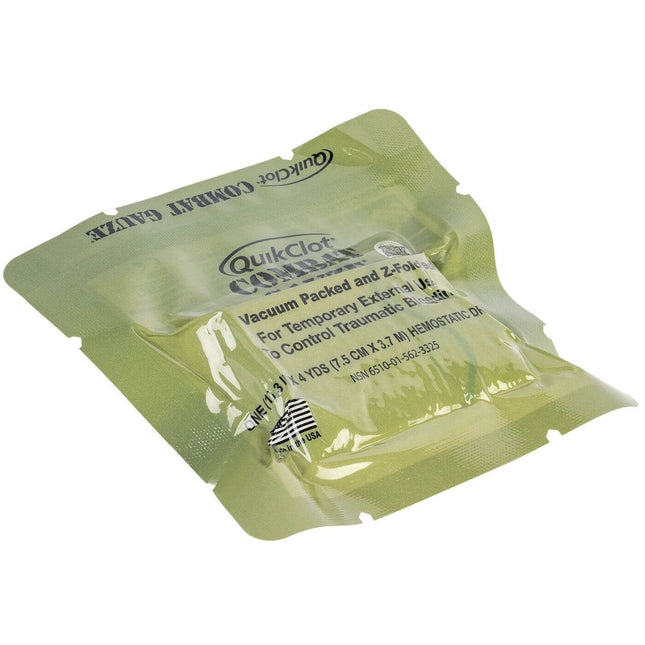
Conforming gauze can't substitute for hemostatic gauze in a severe bleed. If the wound is producing life-threatening hemorrhage, reach for a hemostatic agent and direct pressure instead.

What elastic bandages do
Elastic bandages — ACE-style wraps — are thicker and built to apply sustained pressure. They support joints and manage swelling in strains, sprains, and soft-tissue injuries. Used correctly, they can also add compression over a dressing to help manage mild bleeding. They are not a hemorrhage control device.
- Supporting injured ankles, wrists, and knees
- Managing swelling from sprains or contusions
- Adding compression over a dressing for mild bleeding
Wrapped too tight, an elastic bandage restricts blood flow. Watch for numbness, tingling, or discoloration distal to the wrap — those are signs to loosen it immediately.
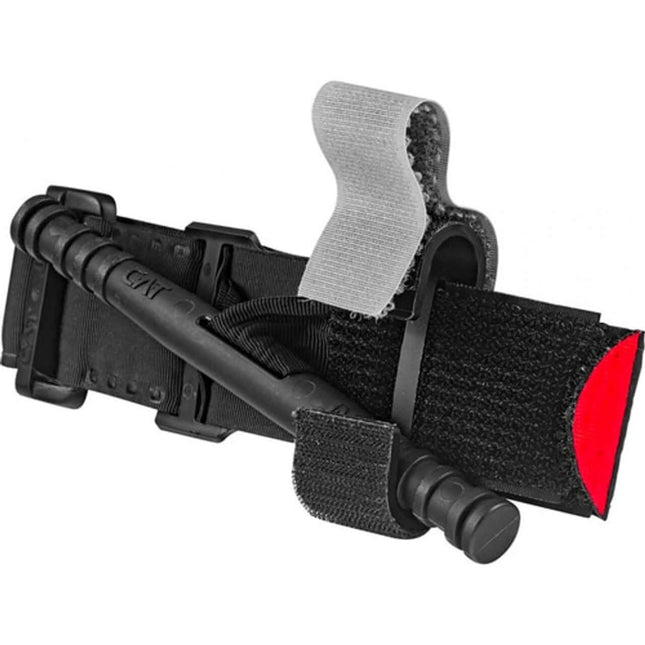
Massive hemorrhage control comes first in any trauma response — before airway, respiration, circulation, or hypothermia management. Neither conforming gauze nor an elastic bandage is a hemorrhage control tool on its own. For severe bleeding, control it with direct pressure and a hemostatic agent or tourniquet first, per the MARCH trauma care framework, then use gauze or elastic wrap to secure the dressing afterward.
The decision matrix
| Scenario | Use Conforming Gauze | Use Elastic Bandage |
|---|---|---|
| Securing a wound dressing | Yes — primary use case | No — too rigid for wound contours |
| Sprained ankle or wrist | No — provides no compression support | Yes — primary use case |
| Severe arterial bleeding | No — use hemostatic gauze + direct pressure | No — use hemostatic gauze + direct pressure |
| Wrapping fingers or irregular joints | Yes — conforms to shape | No — bulky, slips on small anatomy |
| Managing swelling post-injury | No | Yes — sustained compression |
| Frequent dressing changes | Yes — easy to remove and reapply | No — not designed for repeat use over wounds |
One holds. One compresses. Neither one stops a bleed by itself.ViTAC Field Standard
Application: do it right the first time
Applying conforming gauze
- Clean and dress the wound first
- Start wrapping at the distal end, farthest from the heart
- Overlap each layer by one-third to one-half
- Secure with tape or clips — snug, not tight
Applying an elastic bandage
- Start with light tension directly at the injury site
- Wrap in a figure-eight pattern around joints where possible
- Keep pressure firm and consistent — not restrictive
- Check circulation past the wrap: capillary refill, color, pulse
Matching gear to your kit
What you're building changes the ratio, not whether you carry both. Patrol and duty loads should weight toward hemostatic and conforming gauze for penetrating trauma. Vehicle and home kits should carry both in equal measure, since blunt injuries and lacerations show up about as often as each other.
ViTAC's General Purpose First Aid Kit — Pro carries both wrap types pre-sorted by function, so you're not digging through a bag mid-response trying to tell them apart.
FAQ
Can I use an elastic bandage to stop heavy bleeding?
No. Elastic bandages add compression over a dressing for mild bleeding only. Severe or arterial bleeding requires a hemostatic agent and direct pressure, or a tourniquet if the bleed is on a limb, per TCCC guidelines.
Do conforming gauze and elastic bandages expire?
Elastic bandages don't carry a hard expiration, but check elastic integrity yearly. Hemostatic gauze and chest seals carry a five-year shelf life from the manufacture date and should be rotated out on schedule.
Which one should go in a vehicle trauma kit?
Both. A vehicle trauma kit should carry conforming gauze for securing dressings and an elastic bandage for joint injuries and mild-bleed compression — see the full breakdown in the vehicle trauma kit components guide.
Bottom line
Conforming gauze secures. Elastic bandages compress. Neither controls a severe bleed on its own — that's a job for hemostatic gauze, direct pressure, and a tourniquet when indicated. Stock both, know which one the injury in front of you calls for, and rotate hemostatic components on their five-year shelf life.
Build a kit that already has both sorted and ready — see the Individual First Aid Kits collection.