Vehicle Trauma Kit Components, Placement, and Access: The Operational Guide
8 min reading time
8 min reading time
A vehicle trauma kit fails in three predictable ways: wrong components, wrong location, wrong condition. Each failure mode kills the kit's usefulness in a different scenario, and most kits in civilian vehicles fail on at least two of the three. This guide answers the operational questions — what goes in, where it stages, how it stays mission-capable — without the marketing fluff.
Uncontrolled bleeding is the leading cause of preventable death after traumatic injury. A casualty with a severed femoral artery can bleed out in three to five minutes. Rural EMS routinely takes longer than that to arrive. The vehicle kit's job is to close that gap. It cannot do that if it is buried in the trunk, missing components, or full of expired gauze.
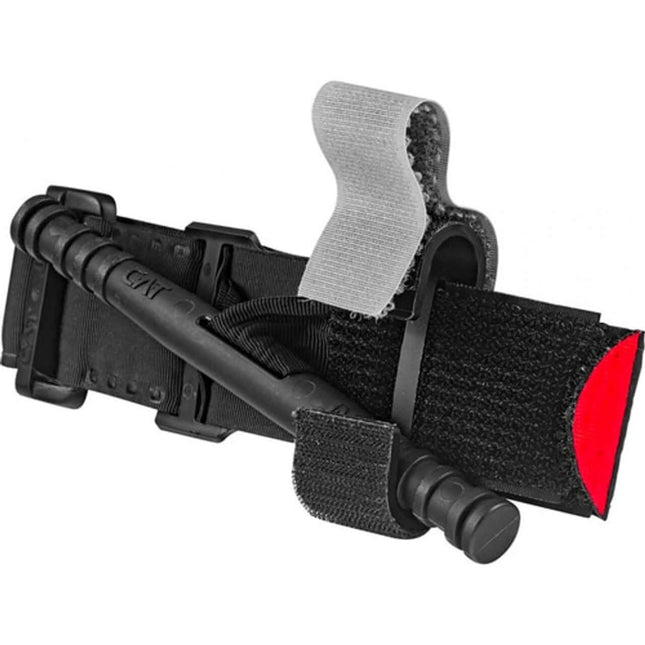
The minimum loadout for a vehicle kit follows the MARCH framework — Massive Hemorrhage, Airway, Respiration, Circulation, Hypothermia. Anything not supporting MARCH is secondary.
Supporting items — basic wound care, antiseptic wipes, smaller bandages — belong in a separate first aid kit, not the trauma kit. Mixing the two dilutes the trauma kit's usefulness and depletes critical supplies on minor injuries.
Pre-built options that meet this spec: the Vehicle Trauma Response Kit (purpose-built for vehicle staging), the General Purpose First Aid Kit – Med Pro (79 pieces, CAT and HyFin included), or the MediTac Bleeding Control Pack for vacuum-sealed glove-box carry.
The single most common vehicle-kit failure is staging in the trunk. A trauma kit on the wrong side of a locked or damaged door is a trauma kit you cannot deploy. Cabin staging is non-negotiable for the primary kit. The decision tree:
| Stage Location | Pros | Cons | Best For |
|---|---|---|---|
| Driver's door pocket | One-handed reach from driver's seat with seatbelt on | Limited capacity; visible to outside if windows down | Compact rip-away IFAK as primary |
| Center console | Reachable by driver and front passenger; concealed | Often crowded with other items; latch can stick under load | Vacuum-sealed bleed pack as backup |
| Headrest mount (driver or passenger) | Visible to back-seat passengers; rip-away accessible | Visible from outside; mount must be secure | Rip-away IFAK in family vehicle |
| Under driver's seat | Concealed; out of the way | Hard to reach with seatbelt on; can shift in collision | Secondary kit only, not primary |
| Behind passenger seat (backpack) | Holds full backpack-format kit; multi-casualty capable | Not reachable from driver's seat in a collision | Family vehicle, off-road, multi-occupant scenarios |
| Trunk / cargo area | Maximum capacity; out of the way | Inaccessible if vehicle is overturned, on fire, or has rear damage | Tertiary stockpile only — never primary |
The reach test: from the driver's seat, with the seatbelt fastened, can you grab the kit with one arm? If not, restage it. A primary kit that fails the reach test fails its job.
Field Note: Layered Carry Beats Single-Kit Setups
Most serious vehicle setups run two layers — a compact rip-away IFAK in cabin reach for the first 60 seconds, plus a backpack kit (like the Tactical Trauma Backpack) for sustained scene management or multi-casualty events. They are not redundant. They are layered. The Waterproof Medical Kit works as the cargo-area backup in vehicles that see weather and dust.
Vehicle interiors are hostile environments for medical gear. Summer dashboard temperatures routinely exceed 140°F. Adhesives on chest seals break down. Foil pouches warp. Tourniquet elastic loses retention. The maintenance discipline:
Both paths produce a TCCC-compliant kit. Both have failure modes.
Pre-built kit: faster to capability, components vetted for authenticity, organized for fast deployment. The trade-off is you inherit the curator's component choices. For most civilians and first-time buyers, this is the right answer — the time saved goes into Stop the Bleed training, which is where real capability lives. Pre-built options that meet the standard: the Vehicle Trauma Response Kit, the Vehicle First Aid Kit (104-piece), or the First Responder Trauma Care Medical Bag for full EMT-grade coverage.
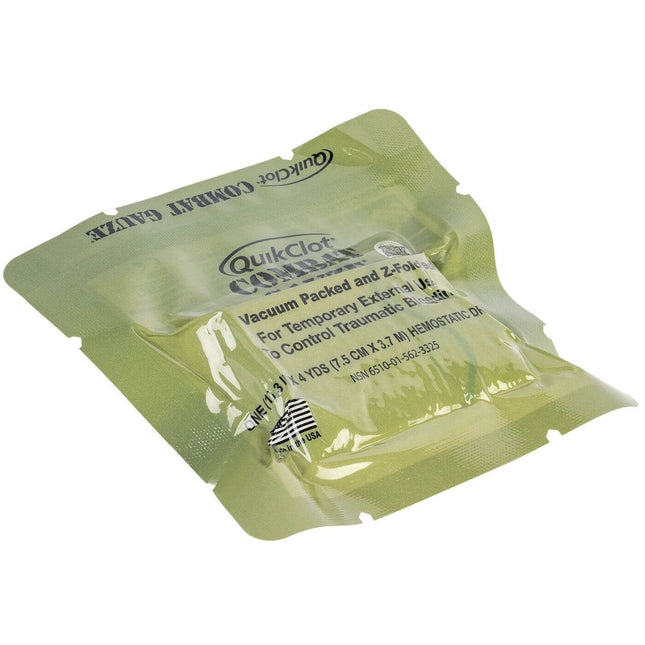
Build-your-own: total control over components, layout, and pouch type. The trade-off is real risk of buying counterfeit tourniquets or off-brand QuikClot that does not contain kaolin, plus the time cost of sourcing each component from authorized distributors. Best for experienced users with specific carry constraints. This breakdown of counterfeit risk covers what to verify before purchase.
Small enough to stage in cabin reach. A primary IFAK should fit in a door pocket or center console — roughly the size of a paperback book. A backpack-format kit for multi-casualty capability runs the size of a school backpack and stages behind the passenger seat or in the cargo area as a secondary layer.
Yes. They cover different problems. A trauma kit handles life-threatening bleeding, airway, and chest injuries. A first aid kit handles cuts, scrapes, headaches, allergies — the 95% of injuries you will actually use it for. Burning through trauma-kit components on minor injuries depletes the kit before it is needed for what it was built for. Carry both.
Most ViTAC kits qualify under IRS guidelines for HSA and FSA reimbursement. Verify eligibility before purchase via the HSA/FSA eligibility guide. Funding the kit out of pre-tax dollars is a meaningful cost reduction over time.
Same MARCH backbone, scaled to a single-occupant scenario. A compact rip-away IFAK in the door pocket plus a vacuum-sealed bleed pack in the glove box covers the bases. Most importantly: the teenage driver needs the Stop the Bleed certification before they get the kit. The kit without the training is theater.
A vehicle trauma kit that closes the gap before EMS arrives is built around MARCH, staged in cabin reach, maintained on a calendar, and operated by someone who has trained on every component. That is the standard. Anything less is gear sitting in a trunk.

OSHA minimum workplace kits don't include a tourniquet. Here's how to calculate station count, stock each station, and build bleed control coverage in any public...

One kit at the main entrance fails the 90-second coverage rule for most buildings. Here's how to run a coverage audit and calculate the correct...

Arterial hemorrhage kills in 3 minutes. Urban EMS takes 7–10. Every business needs CoTCCC-standard bleed control kits — here's how to select, deploy, and train...

40+ states mandate bleed control kits in schools — but most deployment plans miss classrooms and buses. Here's the placement standard that actually works.

Most of our trauma kits and first aid supplies qualify for HSA and FSA reimbursement. Don't let your benefits expire — invest them in gear that could save a life.


$124.95


$279.99

$37.49 - $139.46


$299.95 $269.95


$139.95 - $169.95

$49.95


$25.99


$164.95

We've been downrange. We know what it costs to be unprepared. ViTAC was built by U.S. Army Special Operations veterans to make sure the people who run toward the threat — and the families who depend on them — have gear that works when everything is on the line.
— ViTAC Solutions Founders | 40+ years combined Special Operations experience