Bleed Control Kits for Schools: What to Stock and Where to Place Them
6 min reading time
6 min reading time
More than 40 states have introduced or passed legislation requiring bleed control kits in schools since 2018, driven by the same public health calculus that expanded AED deployment in the 1990s: bystander intervention in the first three minutes saves lives that trained responders arriving later cannot. A bleed control kit on the wall of a school gymnasium addresses the same gap as an AED in an airport terminal. The question for school administrators is not whether to stock them — it is where to place them, what to put in them, and how to ensure staff can use them.
Strategic placement follows one rule: the kit must be reachable in under 60 seconds from any location in the building where an injury is plausible. For most school layouts, that requires multiple stations. The priority locations:
All station cabinets should be wall-mounted at eye level, clearly marked, and visually distinct from standard first aid kits. Red is the universal color for bleed control stations. Mount them adjacent to AED units wherever possible — responders trained to locate one will find the other.
Field Note: Lockdown Access
During an active threat event or lockdown, classroom teachers are the first and often only responders available. A bleed control kit in the nurse's office 200 feet away is not accessible. A kit on the classroom wall is. State mandates that require only centralized stations miss this operational reality. Stock classrooms regardless of what the mandate specifies.
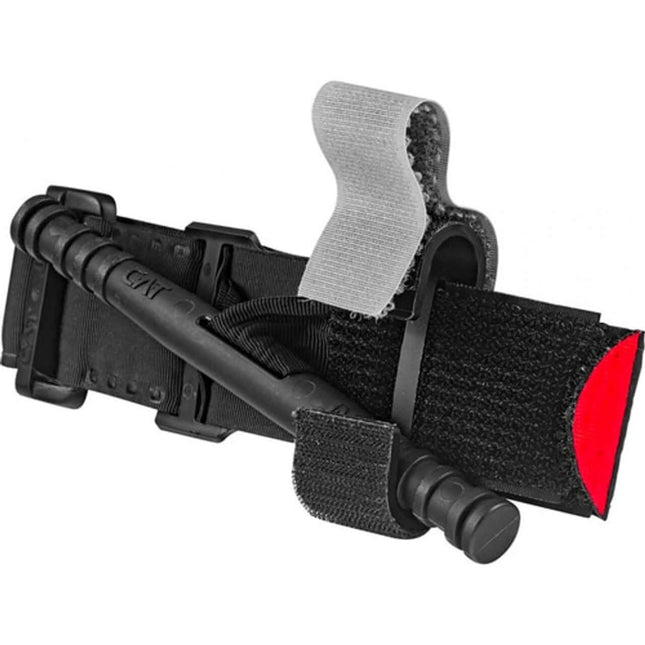
School kits require the same components as any bleed control kit, with one additional consideration: tourniquet sizing. Standard adult tourniquets apply reliably to most adult limb circumferences. For elementary and middle school students with smaller limbs, verify that the tourniquet model in your kit applies correctly to a 4-inch thigh circumference. The CAT Gen 7 accommodates a wide range of limb sizes and is the current U.S. military standard. The SOF-T Wide is the alternative for larger limb circumferences or extended-wear applications.
Minimum kit contents for each station:
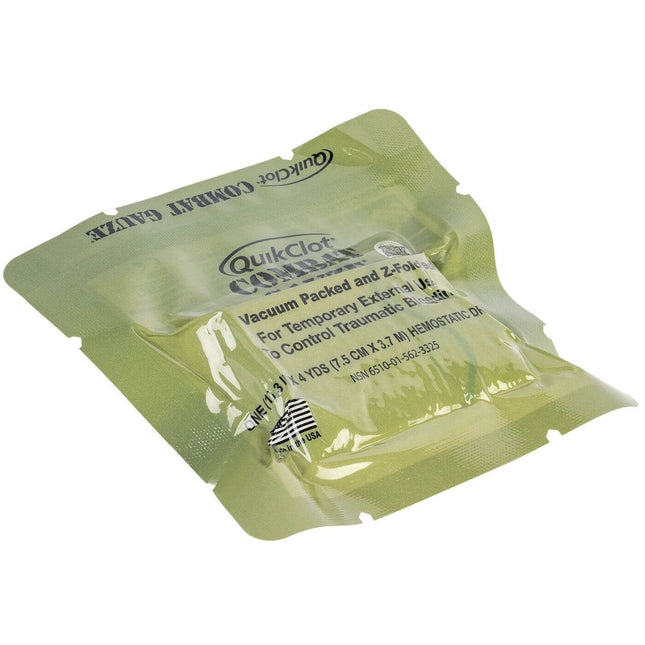
The ViTAC Intermediate Bleeding Control Pack contains these components in a compact IFAK-format package compatible with standard wall-mount stations. Procuring identical kits for every station simplifies training — staff learn one layout rather than navigating varied contents under stress.
State-level bleed control legislation is expanding rapidly. As of 2025, states including Texas, Florida, Missouri, New Hampshire, and others have enacted laws requiring bleed control kits in public schools. Requirements vary: some mandate kits at centralized locations only; others require classroom-level deployment. Several states tie the kit requirement to minimum training standards for designated staff. Non-compliance after an incident creates liability exposure that far exceeds the cost of full building coverage.
Administrators should verify current requirements with their state Department of Education or legal counsel rather than relying on summaries. The legislative landscape changes year to year and many states are in active rulemaking phases. For districts in non-mandate states, voluntary compliance with the most stringent available standard is the appropriate baseline.
A kit without trained users is storage, not preparedness. The training burden for a school is practical to meet: Stop the Bleed courses run two to four hours and are available through hospitals, fire departments, and law enforcement agencies, often at no cost. The training priority order:
Inspect every station at the start of each semester and immediately after any use or drill involving kit contents. The inspection checklist:
Any item used — even in a training exercise — is replaced before the kit returns to service. Assign inspection ownership by building area to a specific staff member, not to a generic "school nurse" or "facilities" designation. Vague ownership means it does not get done.
Bleed control capability addresses the M in MARCH — Massive hemorrhage. Staff trained to stop bleeding are completing the first and most time-critical step in the full trauma response chain. Read the MARCH protocol guide to understand every phase of emergency response beyond hemorrhage control.
For component selection and how each item works, see what's inside a Stop the Bleed kit. For building-wide deployment planning, see how many bleed control kits your building actually needs.
Bleed control kit deployment in schools follows the same logic as AEDs: place them where people are, make them visible, and train the people nearest to them. The placement priority is gyms, cafeterias, classrooms, and buses. The kit standard is tourniquet, hemostatic gauze, pressure dressing, shears, gloves, and marker. Training every staff member closes the gap between having the equipment and using it effectively.
Shop Bleed Control Kits for Schools

OSHA minimum workplace kits don't include a tourniquet. Here's how to calculate station count, stock each station, and build bleed control coverage in any public...

One kit at the main entrance fails the 90-second coverage rule for most buildings. Here's how to run a coverage audit and calculate the correct...

Arterial hemorrhage kills in 3 minutes. Urban EMS takes 7–10. Every business needs CoTCCC-standard bleed control kits — here's how to select, deploy, and train...

40+ states mandate bleed control kits in schools — but most deployment plans miss classrooms and buses. Here's the placement standard that actually works.

Most of our trauma kits and first aid supplies qualify for HSA and FSA reimbursement. Don't let your benefits expire — invest them in gear that could save a life.


$124.95


$279.99

$37.49 - $139.46


$299.95 $269.95


$139.95 - $169.95

$49.95


$25.99


$164.95

We've been downrange. We know what it costs to be unprepared. ViTAC was built by U.S. Army Special Operations veterans to make sure the people who run toward the threat — and the families who depend on them — have gear that works when everything is on the line.
— ViTAC Solutions Founders | 40+ years combined Special Operations experience