Bleed Control Kit Procurement Standards for Large Organizations
5 min reading time
5 min reading time
Uncontrolled hemorrhage is the leading cause of preventable death after traumatic injury. For organizations with purchasing authority — law enforcement agencies, school districts, corporate campuses, government facilities — the compliance question is which standard governs procurement and how to fund it. Two frameworks apply: TCCC for tactical and law enforcement environments, ANSI/ISEA Z308.1 for workplace settings. Both have associated federal grant programs that significantly offset procurement costs.
This guide maps each standard to the organizations it governs, defines minimum kit requirements, and identifies grant programs by organization type.
Tactical Combat Casualty Care (TCCC) is maintained by the Committee on Tactical Combat Casualty Care (CoTCCC) and structures trauma kit requirements around the MARCH sequence: Massive hemorrhage, Airway, Respiration, Circulation, Hypothermia. A CoTCCC-compliant IFAK addresses the M and A priorities at minimum — the two threats most addressable before EMS arrives.
Minimum CoTCCC-informed IFAK for law enforcement deployment:
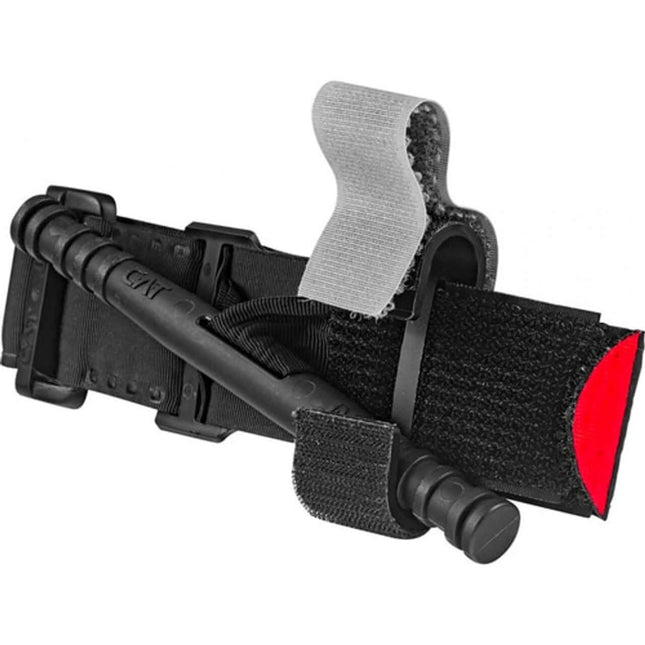
The ViTAC TCCC IFAK is configured for individual officer carry and meets this component standard. The Tactical Operator Response Kit (TORK®) – Advanced is designed for vehicle staging and higher-acuity duty deployment. Both carry CoTCCC-sourced components with traceable manufacturer documentation — a requirement for Byrne JAG and FEMA HSGP grant applications.
Field Note: Tourniquet-Only Kits Don't Meet TCCC
A kit containing only a tourniquet addresses one mechanism of injury. Law enforcement encounters include penetrating chest trauma and junctional wounds — neither is managed by a tourniquet alone. Procurement specs that stop at “tourniquet included” leave documented survivable-injury gaps in CoTCCC guidance.
ANSI/ISEA Z308.1 is the American National Standard for workplace first aid kits. It classifies kits by hazard level: Class A for lower-hazard environments, Class B for higher-hazard. Workplaces with trauma exposure — manufacturing, construction, warehousing, energy — require Class B, which includes trauma-level supplies: pressure dressings, wound closures, and hemorrhage control items. Class A kits do not include tourniquets or hemostatic gauze. Deploying a Class A kit in a Class B environment exposes the employer to OSHA recordable deficiency findings.
Requirements for ANSI/ISEA-compliant bleed control deployment:
The distinction between a general first aid kit and a dedicated bleed control kit matters for Z308.1 compliance. A standard Class B first aid kit may not satisfy the hemorrhage-specific accessibility requirements that apply in high-risk zones. Organizations in OSHA 29 CFR 1910.151-regulated environments should document bleed control kit placement specifically in their written hazard assessment.
| Organization Type | Standard | Primary Grant Source | Administered By |
|---|---|---|---|
| Law Enforcement Agency | TCCC / CoTCCC | Byrne JAG, FEMA HSGP | DOJ / DHS |
| School / Educational Institution | ANSI/ISEA Z308.1 Class B | STOP School Violence | DOJ / BJA |
| High-Hazard Workplace | ANSI/ISEA Z308.1 Class B | OSHA compliance budget | Internal / OSHA |
| Government / Municipal Agency | TCCC or ANSI/ISEA by role | FEMA EMPG, HSGP | DHS / FEMA |
Grant applications require documentation of the standard your kits meet — TCCC or ANSI/ISEA — and a vendor with traceable supply chain documentation. Purchasing from suppliers without CoTCCC-sourced components or documented manufacturer traceability creates audit risk on grant-funded purchases. Byrne JAG and FEMA HSGP allow direct equipment purchase as part of allowable cost categories; STOP School Violence funds both equipment and implementation training. For a detailed breakdown of LE-specific grant programs, see Law Enforcement IFAK Procurement: TCCC Standards and Grant Funding.
What is the minimum CoTCCC-compliant IFAK for law enforcement?
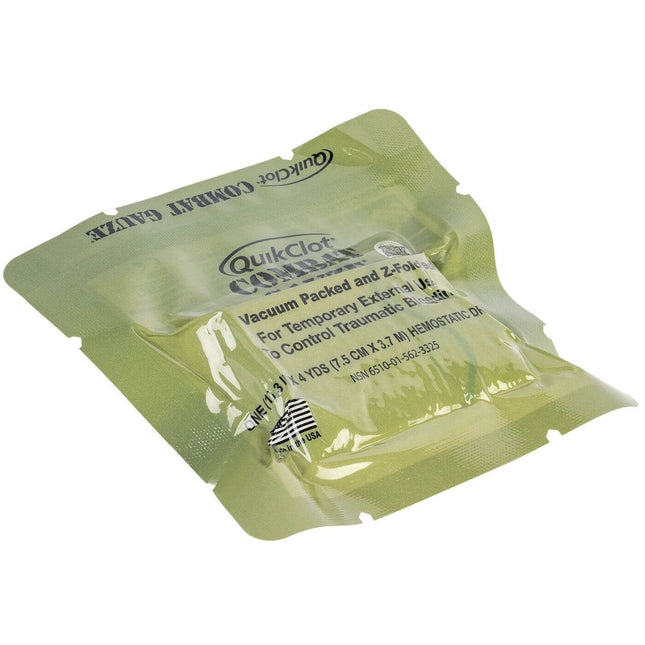
A TCCC-informed kit must include a CoTCCC-recommended windlass tourniquet (CAT Gen 7 or SOFTT-W), hemostatic gauze (QuikClot Combat Gauze), pressure dressing, vented chest seal pair, and NPA with lubricant. Kits that omit chest seals or hemostatic gauze do not meet CoTCCC guidance and leave documented gaps in penetrating-trauma coverage.
Can Byrne JAG cover both equipment and training?
Yes. Byrne JAG allowable costs include law enforcement equipment, supplies, and associated training. Stop the Bleed instruction paired with kit purchase strengthens the grant application narrative. Contact your state administering agency for current allowable cost guidance and application cycle timing.
How often do organizational bleed control kits require inspection?
At minimum semi-annually, with a full contents audit against the original manifest. Hemostatic gauze and chest seals carry a 5-year shelf life from manufacture date. Tourniquets require windlass and strap inspection at each interval. Document all inspections — this log is required for OSHA compliance under ANSI/ISEA Z308.1.
TCCC and ANSI/ISEA Z308.1 define compliant bleed control kit procurement for every major organization type. Grant programs from DOJ, DHS, and FEMA fund this equipment — the barrier is documentation and spec compliance, not cost alone.
For agency and institutional kit configurations, see the Law Enforcement First Aid Kits collection and the Mass Casualty Kits for bulk deployment options.

OSHA minimum workplace kits don't include a tourniquet. Here's how to calculate station count, stock each station, and build bleed control coverage in any public...

One kit at the main entrance fails the 90-second coverage rule for most buildings. Here's how to run a coverage audit and calculate the correct...

Arterial hemorrhage kills in 3 minutes. Urban EMS takes 7–10. Every business needs CoTCCC-standard bleed control kits — here's how to select, deploy, and train...

40+ states mandate bleed control kits in schools — but most deployment plans miss classrooms and buses. Here's the placement standard that actually works.

Most of our trauma kits and first aid supplies qualify for HSA and FSA reimbursement. Don't let your benefits expire — invest them in gear that could save a life.


$124.95


$279.99

$37.49 - $139.46


$299.95 $269.95


$139.95 - $169.95

$49.95


$25.99


$164.95

We've been downrange. We know what it costs to be unprepared. ViTAC was built by U.S. Army Special Operations veterans to make sure the people who run toward the threat — and the families who depend on them — have gear that works when everything is on the line.
— ViTAC Solutions Founders | 40+ years combined Special Operations experience