Emergency medical services carry an average response time of 7–8 minutes in urban areas. In rural or wilderness environments, that window extends to 30 minutes or longer. A femoral arterial bleed can cause fatal blood loss in 3–5 minutes. The gap between injury and EMS arrival is the window where self-aid and buddy aid determine whether someone survives.
These aren't concepts from tactical medicine that only apply to military personnel. They're the clinical reality of prehospital trauma: the most dangerous injuries — arterial hemorrhage, airway obstruction, tension pneumothorax — progress faster than professional help can arrive. The skills to address them are learnable, and the equipment is accessible. Self-aid and buddy aid close the gap between injury and definitive care.
Self-aid: immediate care when you're the casualty
Self-aid is the ability to apply medical intervention to yourself following injury, before another person or professional help is available. The clinical priority for self-aid mirrors the MARCH protocol: stop the bleeding first, address the airway second, everything else follows.
In practice, self-aid capability comes down to three things: accessible equipment, trained technique, and the mental rehearsal to execute under pain and stress. All three are addressable before an emergency occurs. A tourniquet you haven't practiced applying one-handed is worth less than it appears. A kit buried in a vehicle compartment doesn't help someone who's alone on a trail.
The critical self-aid skills — one-handed tourniquet application, wound packing with direct pressure, identifying a pneumothorax — are covered in Stop the Bleed and TCCC-based courses. They require hands-on repetition, not just reading. The technique for applying a tourniquet to your own thigh is mechanically different from applying it to someone else's arm, and that difference matters under stress.
1. Control massive hemorrhage. Tourniquet on extremity arterial bleeds. Wound packing for non-tourniquet-applicable bleeds. This comes before anything else including calling for help — you have 3–5 minutes on an arterial bleed, not 7–8.
2. Address airway. If you're conscious and able to self-treat, your airway is likely patent. Reassess if consciousness decreases.
3. Treat for shock. Get flat if possible. Conserve warmth. Don't remove the tourniquet.
Buddy aid: care under fire and in the field
Buddy aid is immediate care delivered to an injured person by a non-medical bystander — a teammate, family member, coworker, or civilian — until professional responders take over. It's the model that TCCC and Stop the Bleed are built around: the person closest to the casualty at the moment of injury has the most leverage over the outcome, because they're there before EMS is.
Buddy aid operates on the same MARCH priority stack as self-aid. The difference is that you have two hands, can see the full picture, and can apply more force to wound packing and tourniquet application. You can also monitor level of consciousness, reassess every 60–90 seconds, and provide verbal reassurance — a factor in shock management that's often underestimated.
The limitations of buddy aid are mostly about training gaps, not capability gaps. Applying a tourniquet without prior practice produces inconsistent results. Wound packing done without understanding the depth-first principle misses the source bleed. Improvised materials produce worse outcomes than commercial products. All of these are solvable with a 2-hour Stop the Bleed course and the right kit staged near where injuries are most likely to occur.
Why these skills train together
Self-aid and buddy aid use identical procedures executed from different positions. Practicing one reinforces the other — the tourniquet technique, the pressure duration for wound packing, the MARCH sequence. Courses that combine both approaches are more efficient and produce more capable responders than courses that treat them separately.
The populations where this matters most include military and law enforcement personnel (where TCCC covers both explicitly), outdoor adventurers and survivalists (where self-reliance is a baseline requirement), and schools, workplaces, and houses of worship (where active threat scenarios make bystander response a documented survival factor). For team and organizational training programs, see ViTAC's preparedness resources or team kit configurations.
Simulation-based scenarios, regular skill refreshers, and hands-on practice are what retain these skills over time. Reading about wound packing builds conceptual understanding. Packing a training wound under time pressure builds the automatic response pattern that activates when the environment is unpredictable and your hands are shaking.
Equipment requirements
Effective self-aid and buddy aid require specific tools. Improvised substitutes for tourniquets and hemostatic gauze produce documented worse outcomes — belts slip, cloth bandanas can't generate enough occlusion pressure, and improvised packing materials don't have the coagulation-accelerating properties of kaolin-impregnated gauze.
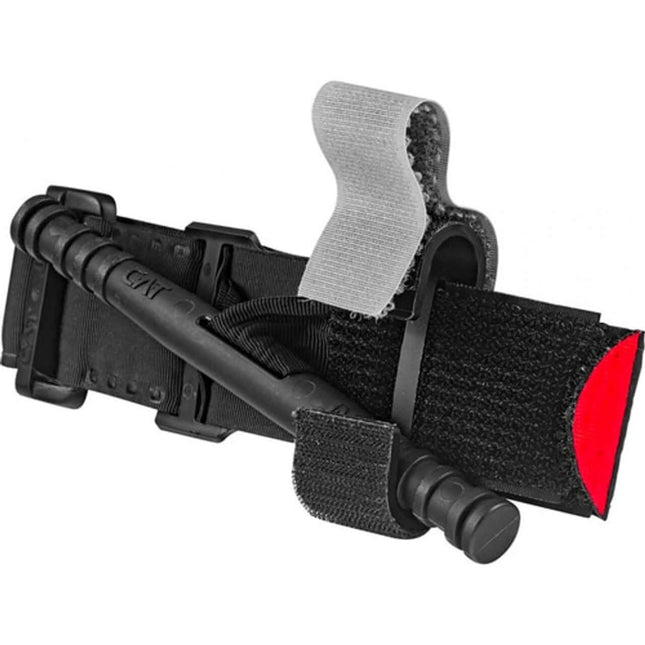
- Commercial windlass tourniquet (CAT Gen 7 or SOFTT-W) — the baseline for extremity arterial hemorrhage in any MARCH-based protocol
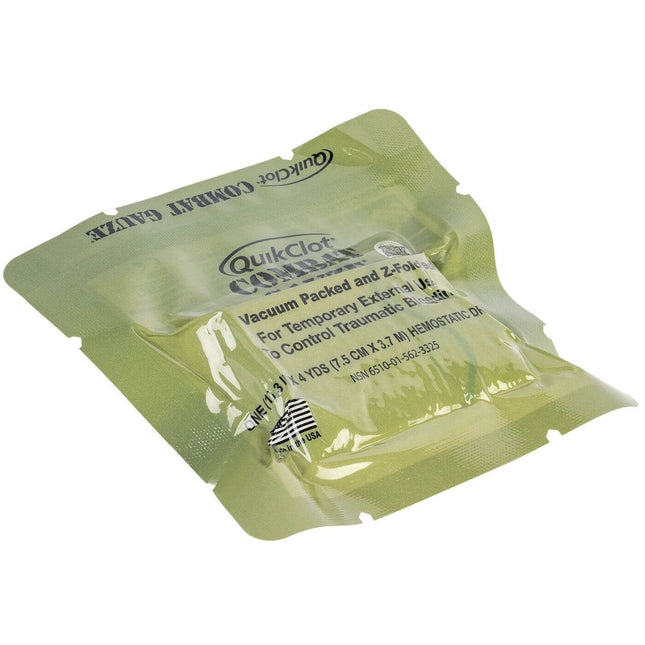
- Hemostatic gauze (QuikClot Combat Gauze Z-fold) — for junctional and non-tourniquet-applicable bleeds
- Pressure bandage (Israeli dressing or equivalent) — to secure wound packing and maintain pressure during movement
- Vented chest seal (HyFin Vent, SAM) — for penetrating chest wounds
- Trauma shears — to access wounds through clothing quickly
- Nitrile gloves — bloodborne pathogen protection; multiple pairs per kit
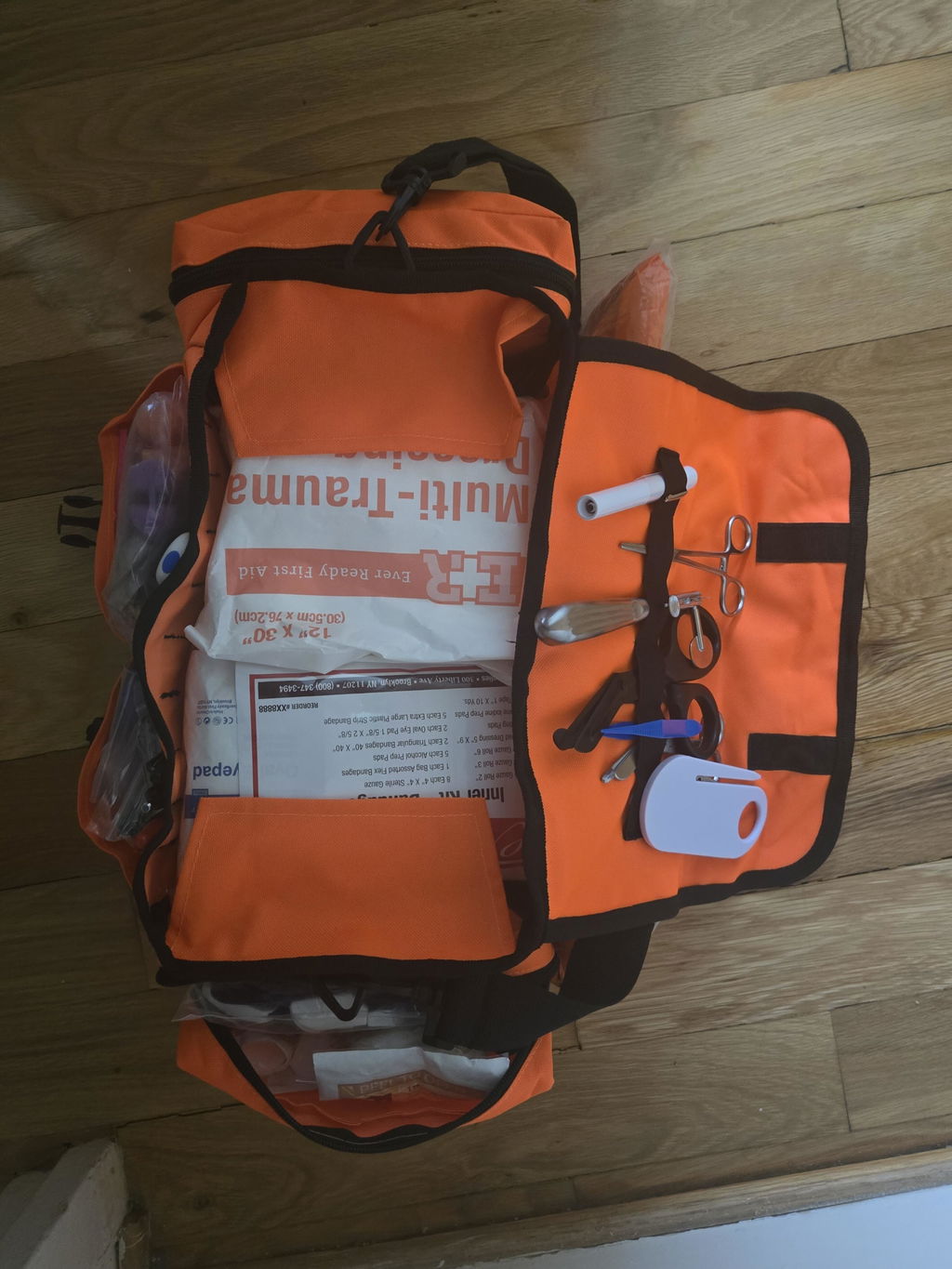
Pre-staged kits matter as much as the contents. A kit in a car glove box is not accessible to someone who gets hurt 200 yards from the trailhead. Stage kits where injuries are most probable: vehicle, workplace desk, range bag, home. The Rip-Away Tactical Trauma Kit is designed for MOLLE and vehicle staging — single-pull deployment in the field.
Why bystander response scales
The Stop the Bleed program's public health rationale is built on a documented effect: when communities have trained bystanders, bystander hemorrhage control interventions increase, and outcomes improve. The limiting factor is density of trained responders. A community where 10% of adults have completed a 2-hour hemorrhage control course has a materially different trauma outcome profile than one where 0% have.
The model scales because the skills are simple, the equipment is accessible, and the intervention window is well-defined. This isn't wilderness first aid or EMT-level care — it's a three-skill intervention (tourniquet, wound packing, direct pressure) that a trained bystander can execute on an injury that would otherwise kill in the time it takes an ambulance to arrive. For certification resources and course options, see Stop the Bleed: Training, Gear, and How to Get Certified.
FAQ
What's the difference between self-aid and buddy aid?
Self-aid is treatment you apply to yourself following injury. Buddy aid is treatment a non-medical bystander applies to someone else. Both follow the MARCH priority stack — Massive hemorrhage, Airway, Respiration, Circulation, Hypothermia — and use the same equipment and techniques. The practical difference is position and accessibility: buddy aid gives you two hands, direct sight lines, and more force for wound packing.
Can civilians without military training perform effective self-aid or buddy aid?
Yes. Stop the Bleed is specifically designed for civilian bystanders with no medical or military background. The course takes approximately 2 hours and covers the three primary interventions — tourniquet application, wound packing with direct pressure, and pressure dressing — that address the majority of preventable prehospital trauma deaths. Hands-on practice with actual equipment is the critical component; the skill transfers with repetition.
What kit do I need for self-aid and buddy aid?
At minimum: a commercial windlass tourniquet (CAT Gen 7 or SOFTT-W), hemostatic gauze (QuikClot Combat Gauze Z-fold), a pressure bandage, and nitrile gloves. Add vented chest seals if you're in environments where penetrating chest trauma is a realistic risk. The kit needs to be staged where you can actually reach it under stress — not locked in a case, not at the bottom of a bag. See IFAK options for pre-configured kit solutions.
Do self-aid skills degrade over time?
Yes. Motor skills under stress require regular rehearsal to maintain automaticity. CoTCCC recommends skills refresh every 6–12 months for military personnel. For civilians, the same interval applies as a practical guideline. The Stop the Bleed course is available for free through most hospital systems and community organizations — repeating the course annually is a reasonable maintenance cadence.
Self-aid and buddy aid close the gap between the injury and the ambulance. That gap — 3 to 10 minutes for arterial hemorrhage in an urban area, longer anywhere else — is where most preventable trauma deaths occur. The skills are teachable. The equipment is accessible. Get trained, stage the kit where it's reachable, and rehearse the priority stack before you need it.
For training options: Stop the Bleed certification. For the full MARCH protocol breakdown: MARCH Trauma Care. For kit options: IFAKs and the Rip-Away Tactical Trauma Kit.