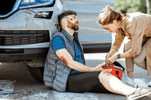
The Critical Role of Emergency Trauma Dressings in First Aid
2 min reading time
2 min reading time
The Emergency Trauma Dressing (ETD) is purpose-built to control severe bleeding when EMS is minutes away—or hours. Every serious trauma kit needs one. This guide covers what ETDs do, why they matter, and how to apply them correctly.
Emergency trauma dressings are highly absorbent, pressure-applying wound dressings designed to control severe bleeding and open wounds. Often referred to as "Israeli bandages" or "compression bandages," these tools are purpose-built for high-stakes environments, from battlefield conditions to remote wilderness rescues.
1. Hemorrhage Control — ETDs are designed to apply focused pressure directly to bleeding wounds. Their elastic wrap and built-in pressure applicator create a compression effect, significantly reducing blood loss in arterial and venous bleeding.
2. Versatile Wound Coverage — Whether you're dealing with lacerations, punctures, abrasions, or penetrating injuries, trauma dressings are adaptable. Their ability to be wrapped tightly and conform to various body parts makes them useful in nearly any emergency.
3. Infection Prevention — In rugged or austere environments, keeping a wound clean is half the battle. Trauma dressings serve as a barrier against dirt, debris, and bacteria—helping reduce the risk of wound contamination until further care is available.
For backcountry hikers, tactical operators, or responsible civilians building a home first aid kit, trauma dressings are a must-have. In scenarios where EMS is delayed or inaccessible, your gear becomes your lifeline. ETDs are compact, easy to use, and designed for quick deployment—even by those with limited medical training.
The NAR ETD 6" Flat is a field-proven option trusted by military and first responders for its reliable pressure applicator and elastic wrap system.
Proper application can take less than a minute and may significantly impact survival, particularly in remote or tactical environments.
While ETDs are intuitive, practicing their application improves effectiveness. We recommend:
Whether you're hunting elk in the Rockies, on patrol in law enforcement, or building peace-of-mind at home—trauma dressings are a critical layer in your emergency preparedness. They deliver lifesaving functionality in compact form, making them an indispensable part of any serious medical loadout.
At ViTAC Solutions, we believe readiness is more than a mindset—it's a responsibility. Explore our full line of IFAKs and trauma medical supplies at www.ViTACsolutions.com.

OSHA minimum workplace kits don't include a tourniquet. Here's how to calculate station count, stock each station, and build bleed control coverage in any public...

One kit at the main entrance fails the 90-second coverage rule for most buildings. Here's how to run a coverage audit and calculate the correct...

Arterial hemorrhage kills in 3 minutes. Urban EMS takes 7–10. Every business needs CoTCCC-standard bleed control kits — here's how to select, deploy, and train...

40+ states mandate bleed control kits in schools — but most deployment plans miss classrooms and buses. Here's the placement standard that actually works.

Most of our trauma kits and first aid supplies qualify for HSA and FSA reimbursement. Don't let your benefits expire — invest them in gear that could save a life.


$124.95


$279.99

$37.49 - $139.46


$299.95 $269.95


$139.95 - $169.95

$49.95


$25.99


$164.95

We've been downrange. We know what it costs to be unprepared. ViTAC was built by U.S. Army Special Operations veterans to make sure the people who run toward the threat — and the families who depend on them — have gear that works when everything is on the line.
— ViTAC Solutions Founders | 40+ years combined Special Operations experience