You're looking at a laceration. The bleeding is controlled. Now the question is whether wound closure strips close this or whether it needs sutures — and whether sutures can wait until you reach a clinic or require an ER visit right now. Getting this wrong in one direction means a suboptimal scar. Getting it wrong in the other means a wound that dehisces (reopens), gets infected, or fails to heal through the full tissue depth.
This isn't a question of strip vs. suture preference. It's wound assessment applied to a decision framework. Emergency medicine, TCCC-aligned wound care guidance, and the Wilderness Medical Society have converged on clear criteria. Apply them in order.
What butterfly strips actually do
Wound closure strips — butterfly strips, Steri-Strips, or skin closure tape — are adhesive strips that hold wound edges together while the superficial skin layer heals. They work by lateral tension: the strip holds both wound margins in apposition, eliminating the gap that would otherwise fill with scar tissue.
What they don't do: they provide no deep-tissue closure. A wound with significant dermis separation or subcutaneous tissue involvement requires sutures to close the deeper layer before the surface is sealed. Applying strips to a wound that needs a deep stitch seals the skin surface while leaving a cavity beneath — the ideal environment for abscess formation.
The second limitation is mechanical. Strips depend on adhesion to dry, intact skin surrounding the wound. High-tension locations — knuckles, knees, over joints — generate shear forces that repeatedly challenge strip adhesion. On the hand, full finger flexion alone applies enough stress to displace strips within hours. This isn't a failure of strip quality; it's a mismatch of tool to environment.
Strips work when:
- Wound depth is less than 5mm (skin layer only, no visible fat or deeper tissue)
- Wound edges come together cleanly without tension
- Location is on a low-movement surface (torso, upper arm, shin, scalp)
- The wound is clean — no significant contamination or debris
- You're within 6 hours of injury and bleeding is fully controlled
- Wound length is under 2–2.5cm with well-approximated edges
Sutures are required when:
- Wound depth exceeds 5mm or visible subcutaneous fat is present
- Wound edges gape open without manual approximation
- Location is over a joint (knuckle, knee, elbow) or on the face
- The wound is longer than 2.5cm with irregular or jagged edges
- Significant tissue damage, avulsion, or crushing is involved
- Active arterial bleeding was involved (even if controlled)
Five-question field assessment
Run these in order. A single "no" at any step is a signal toward escalation.
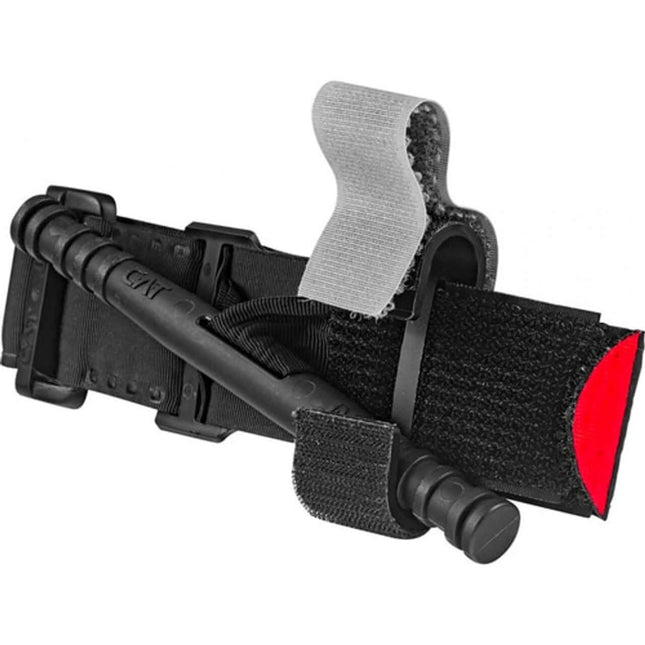
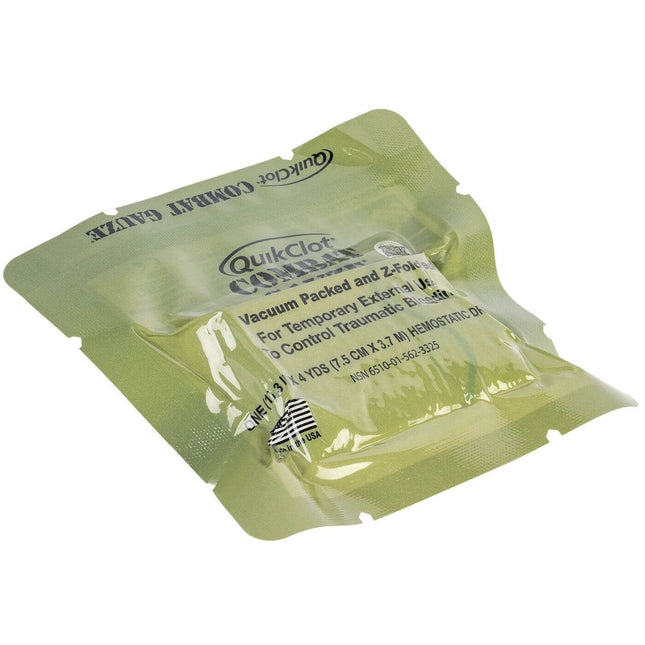
- Is the bleeding fully controlled? If the wound is still actively bleeding, closure is secondary. Apply direct pressure, hemostatic gauze for significant bleeds, or a tourniquet for extremity arterial bleeding. Nothing gets closed until hemorrhage is managed.
- How deep is the wound? Probe gently — gloved finger or a clean swab — to assess depth. If you see yellow subcutaneous fat, the wound has penetrated through the dermis and needs sutures. If the wound is skin-deep with clearly approximated margins, strips may be appropriate.
- Where is it located? Hands, fingers, feet, over any joint, or on the face: route to professional care for sutures. These locations have functional or cosmetic stakes that strips don't adequately address. Torso, upper arm, thigh, and scalp: strips may be sufficient for appropriate wounds.
- How old is the wound? Under 6 hours in a field environment: primary closure is reasonable. Between 6 and 72 hours with no obvious infection signs: use clinical judgment, but secondary closure is increasingly appropriate. Over 72 hours or with any infection signs (warmth, erythema, purulence): don't close. Clean and dress open with evaluation as soon as possible.
- What's your access to care? Strips work as a stabilizing bridge — not a final closure for wounds that actually need sutures. If professional care is available within a reasonable timeframe, take the wound there. Strips are the right call when care is hours to days away and the wound meets criteria.
Applying closure strips correctly
Strip failure in the field is almost always technique, not product. The three failure modes: skin not dry enough, tension not relieved before placement, or strips placed parallel to wound edges instead of perpendicular.
- Irrigate and dry the wound perimeter. Sterile saline flush removes debris without damaging tissue. Pat the surrounding skin completely dry — moisture is the primary adhesion failure point. Benzoin tincture applied to the skin margin (not the wound itself) significantly improves strip retention in wet or field environments.
- Approximate the wound edges manually. Use gloved fingers to bring the wound edges together before placing the first strip. The edges should meet with minimal tension. If you're fighting to hold them together, strips aren't the right tool for this wound.
- Place strips perpendicular to the wound line. Each strip should cross the wound at a right angle, not run parallel to it. Start at the center of the wound and work toward the ends. Overlap slightly at center.
- Apply enough strips to maintain full closure. Leave small gaps between strips — completely sealing the skin prevents drainage if any fluid accumulates beneath. A typical 2cm laceration needs 3–5 strips depending on width.
- Bridge strips at the ends. Apply a strip parallel to the wound at each end, touching the perpendicular strips. This distributes tension and prevents the perpendicular strips from peeling back from the ends first.
Check the wound at 48 hours. Signs that require escalation regardless of initial assessment: increasing erythema spreading beyond wound margins, warmth, purulent drainage, or patient fever. A wound that looked acceptable at closure can evolve quickly — especially in humid, dirty, or physically demanding environments. When in doubt, remove the strips and dress it open.
Aftercare and failure signs
Strips stay on until the wound is healed — typically 5–10 days for low-tension locations, 7–14 days for higher-tension areas. They can be moistened and removed at that point, or left to fall off on their own. The wound beneath should be inspected gently during dressing changes. Keep the area dry for the first 24–48 hours if possible.
Replace strips immediately if they curl or fall off before the wound is healed. Re-clean and dry the skin before replacement. Do not apply new strips over adhesive residue — clean the residue with alcohol before reapplying.
Remove strips and seek evaluation if you observe: wound edges separating (dehiscence), increasing pain rather than decreasing over 48 hours, progressive redness extending beyond the wound margin, or any discharge that isn't clear serous fluid.
What to carry
Wound closure strips belong in any kit that addresses lacerations — they're lightweight, require no additional tools, and cover a significant portion of the wound closure scenarios you'll actually encounter in field settings. For penetrating trauma and serious bleeds, the tourniquet and hemostatic gauze are the priority. But the strip is how you close what comes after hemorrhage control.
Quality ViTAC IFAKs include wound closure components alongside the trauma essentials. The kit design treats hemorrhage control as primary and wound management as the follow-on — which is the correct priority order.

FAQ
Can I use butterfly strips on a facial wound?
Facial wounds are a suture indication for a reason beyond closure: cosmetic outcome. The face has high vascularity (wounds bleed a lot but heal well) and significant social visibility. A small, clean laceration on the forehead in a field setting where care is days away can be managed with strips as a bridge — but clean facial wounds that can reach a clinic within a few hours should receive sutures or tissue adhesive from a practitioner. Don't make the face the test case for your strip technique.
What's the difference between butterfly strips and Steri-Strips?
"Butterfly strips" is the common field name. Steri-Strip is the 3M brand designation for the same concept — an adhesive wound closure strip. Both function identically. "Butterfly" refers to the hourglass shape of some strip configurations designed for easier handling. For clinical purposes they're the same tool evaluated against the same criteria.
Should I close a wound immediately or wait?
Primary closure — closing the wound as soon as possible after injury — is the goal when the wound is clean and you can verify it meets closure criteria. Delayed primary closure (48–72 hours after injury, after observation for infection) applies to contaminated wounds or wounds in environments where bacterial load is high. In most civilian field settings, a clean wound that meets strip criteria should be closed promptly, then monitored. Do not close a wound you cannot observe and reassess.
Can strips be used on puncture wounds?
No. Puncture wounds should not be closed at the surface — the track runs deep, and sealing the skin traps contamination inside. Clean puncture wounds are dressed open and monitored for infection. This includes most knife stab wounds and small-caliber gunshot wounds with no significant tissue destruction. The treatment is irrigation, open dressing, and professional evaluation.
What about tissue adhesive (dermabond) — is it better than strips?
Tissue adhesives (cyanoacrylate-based, like Dermabond) are appropriate for the same wound types as strips — small, clean, low-tension surface lacerations. They're more water-resistant and don't require dry skin for initial application, which makes them an advantage in wet environments. The tradeoff: once applied they're difficult to remove, and they're not appropriate for infected or contaminated wounds, joints, or mucous membranes. Strips and adhesives cover overlapping indications; having both in a kit isn't redundant.
Bottom line
The closure decision isn't about what's easier — it's about whether the wound meets criteria. Less than 5mm deep, low-tension location, clean wound edges that approximate without force, within the primary closure window: strips. Anything outside that: route to professional care for sutures or use strips strictly as a bridge while you move toward that care.
Train the assessment before you need it. The five questions become automatic fast, and automatic is what you need when you're running them on a patient with an adrenaline response still active. Carry the strips in a kit designed around TCCC priorities — hemorrhage control first, wound closure second — and you'll have the right tool available at the right point in the care sequence.
See the full MARCH protocol in the MARCH Trauma Care guide for where wound closure sits in the priority framework.