Why a Tourniquet Belongs in Every Vehicle and How to Carry One
8 min reading time
8 min reading time
Uncontrolled hemorrhage is the leading cause of preventable death after traumatic injury. In a severe arterial bleed from a limb, a person can lose a fatal volume of blood in 3 to 5 minutes. The national average for rural EMS response exceeds 14 minutes. A tourniquet in your vehicle closes that gap. Without one, you are staging for an emergency that outruns your only option: direct pressure and waiting.
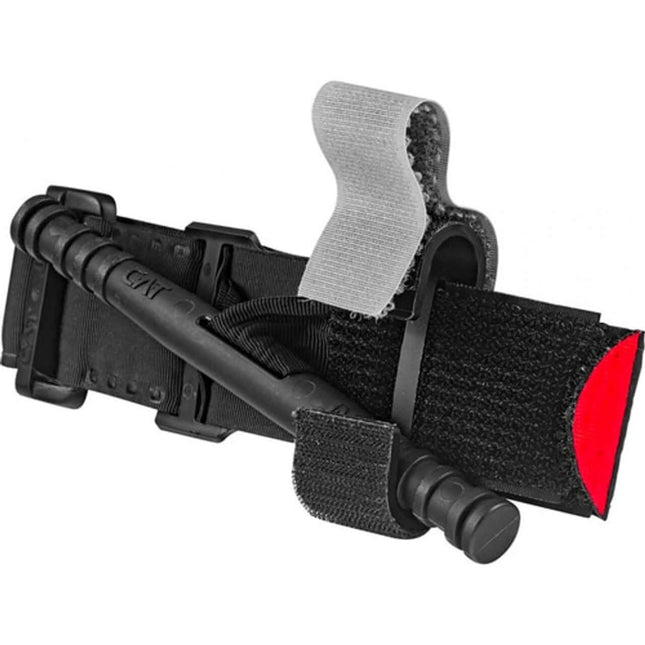
The CAT Gen 7 has more than 4,000 documented combat applications since 2005, with an 87%+ correct-application survival rate. That performance record is why CoTCCC lists it as a recommended tourniquet. This brief covers why it belongs in your vehicle, how to select the right model, where to stage it, and what maintenance looks like.
A tourniquet addresses one specific problem: uncontrolled hemorrhage from a limb where direct pressure has failed or is impractical. It is not the first tool for every laceration. It is the correct tool when:
The MARCH framework — Massive Hemorrhage, Airway, Respiration, Circulation, Hypothermia — places massive hemorrhage control at the top of the trauma response sequence for exactly this reason. For a full breakdown of MARCH in civilian application, see M.A.R.C.H. Trauma Care.
Field Note: Earlier Is Better Than Late
TCCC and Stop the Bleed both recommend earlier tourniquet application for high-mechanism injuries. A tourniquet applied that turns out to be unnecessary can be removed by EMS. One that was not applied when needed cannot be retroactively added after the patient loses consciousness from blood loss.
Two windlass-style tourniquets dominate CoTCCC recommendations: the CAT Gen 7 and the SOFTT-W. Both support one-handed self-application, both have documented combat effectiveness, and both are available through verified distributors.
| Tourniquet | Windlass | One-Hand Application | Best For |
|---|---|---|---|
| CAT Gen 7 | Plastic | Yes | Primary vehicle and EDC carry; widest training base |
| SOFTT-W | Metal | Yes | Duty carry where metal windlass durability is prioritized |
| SWAT-T | None (strap system) | Yes | Compact secondary carry; functions as pressure dressing if needed |
Do not use counterfeits. Counterfeit CAT and SOFTT-W tourniquets circulate at significantly lower prices with inferior materials — windlass rods that snap under torque, webbing that frays before achieving occlusion pressure. Buy from authorized distributors only. Sub-$20 listings for a "CAT Gen 7" are a reliable authenticity red flag.
A tourniquet buried in a general first aid kit in the trunk is functionally inaccessible during the first 60 seconds of an emergency. Stage it where you can reach it with one hand, in the dark, under stress, without unzipping anything.
| Location | Access Speed | Notes |
|---|---|---|
| Center console, top position | Fastest | Reachable from driver or passenger seat |
| Seatback MOLLE pouch | Fast | Visible; accessible to rear passengers |
| Door pocket with open-top holster | Fast | One-hand reach; lower thermal exposure than dash |
| Glove compartment (loose) | Moderate | Acceptable only if not buried under other items |
| Trunk bag or general kit | Slowest | Not acceptable as primary tourniquet staging |
Avoid dashboard mounts. Dashboard temperatures exceed 160°F in summer sun and degrade webbing and plastic windlass components over time. For a complete vehicle trauma system, the Rip-Away Tactical Trauma Kit stages hemostatics, chest seals, and a tourniquet in a single organized carrier designed for vehicle installation. The Premium IFAK Trauma Kit w/Tourniquet & Chest Seals is a compact alternative for under-seat or console placement.
Stop the Bleed offers a free two-hour certification with 50-state availability at stopthebleed.org. That training is the standard. Until you complete hands-on practice, these four steps are the operational minimum:
The amputation risk from a properly applied tourniquet is very low and is primarily driven by the severity of the underlying injury, not the tourniquet itself. The risk of failing to apply one when indicated — exsanguination — is orders of magnitude higher than the risk of limb damage from correct application.
Modern TCCC guidelines do not specify a hard two-hour cutoff. Prolonged application increases risk of ischemic injury, but the decision to remove a tourniquet is made by receiving medical personnel — not bystanders. Apply it, mark the time, and leave removal to EMS or the emergency department.
A standard first aid kit does not address arterial bleeding from a limb. Gauze and pressure bandages are not equivalent to a windlass tourniquet for high-volume hemorrhage control. For the full breakdown on when each kit type applies and why both belong in a vehicle, see First Aid Kits vs. Trauma Kits vs. IFAKs: What's the Difference?
A tourniquet in your vehicle addresses a specific, time-critical failure mode: arterial hemorrhage from a limb when EMS response time exceeds the patient's survivable bleed window. That window is 3–5 minutes. The national rural EMS average exceeds 14 minutes. The math is the case for staging a tourniquet in reach — not in a trunk bag, not buried in a general kit.
Carry a CoTCCC-recommended windlass tourniquet — CAT Gen 7 or SOFTT-W — from an authorized distributor, staged where you can reach it with one hand. The Rip-Away Tactical Trauma Kit integrates tourniquet, hemostatics, and chest seals in a single vehicle-ready carrier. Build your kit to the standard.

OSHA minimum workplace kits don't include a tourniquet. Here's how to calculate station count, stock each station, and build bleed control coverage in any public...

One kit at the main entrance fails the 90-second coverage rule for most buildings. Here's how to run a coverage audit and calculate the correct...

Arterial hemorrhage kills in 3 minutes. Urban EMS takes 7–10. Every business needs CoTCCC-standard bleed control kits — here's how to select, deploy, and train...

40+ states mandate bleed control kits in schools — but most deployment plans miss classrooms and buses. Here's the placement standard that actually works.

Most of our trauma kits and first aid supplies qualify for HSA and FSA reimbursement. Don't let your benefits expire — invest them in gear that could save a life.


$124.95


$279.99

$37.49 - $139.46


$299.95 $269.95


$139.95 - $169.95

$49.95


$25.99


$164.95

We've been downrange. We know what it costs to be unprepared. ViTAC was built by U.S. Army Special Operations veterans to make sure the people who run toward the threat — and the families who depend on them — have gear that works when everything is on the line.
— ViTAC Solutions Founders | 40+ years combined Special Operations experience