The Best Car First Aid Kit for Trauma-Ready Preparedness
5 min reading time
5 min reading time
Uncontrolled hemorrhage is the leading cause of preventable trauma death. Most car accidents that produce serious injury happen faster than EMS response allows. A car first aid kit that covers only minor wound care isn't prepared for that reality. The components that close that gap map directly to the MARCH sequence — Massive hemorrhage first, then Airway, Respiration, Circulation, and Hypothermia. This guide covers each category, why it matters, and what to carry.
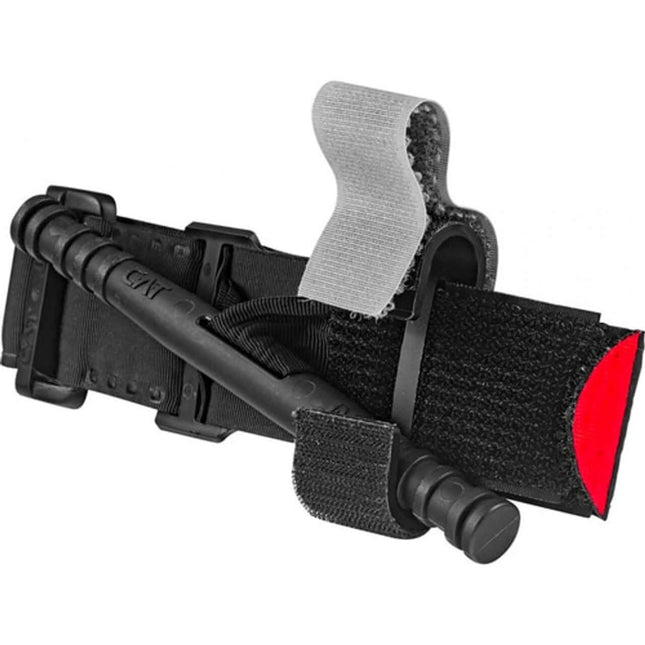
The CAT Gen 7 is the CoTCCC-recommended limb tourniquet for a reason — it applies correctly one-handed, generates reliable occlusion pressure, and windlass engagement is confirmed by tactile feel. For a vehicle kit, mount it where you can reach it from the driver's seat or keep it immediately accessible in the center console. Placement: 2–3 inches above the wound, never over a joint. Tighten until bleeding stops and note the time on the windlass clip. Every minute of ischemia matters for definitive care.
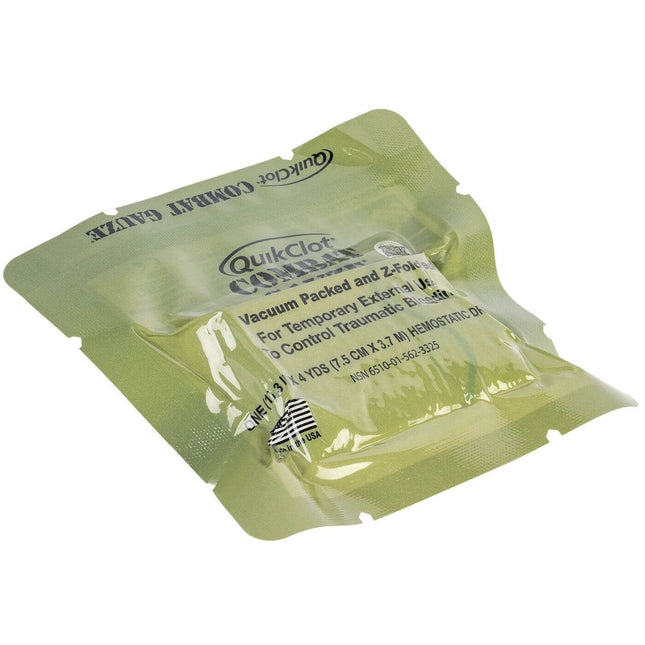
Junctional wounds — groin, axilla, neck — cannot be managed with a tourniquet. Hemostatic gauze packed directly into the wound cavity and held under firm pressure for a minimum of three minutes achieves hemostasis through kaolin (QuikClot) or chitosan (HemCon) chemistry. For vehicle kits, carry at least two packages. Pack the wound fully, apply a pressure dressing over it, and do not remove the gauze in the field.
A pressure bandage locks a packed wound dressing in place and maintains compression without requiring continuous manual force. Israeli-style pressure bandages integrate an applicator bar that creates secondary compression on the wrap pass. Stock a 4-inch for extremity wounds and a 6-inch for larger areas. Apply firmly enough to maintain constant pressure without cutting off distal circulation — verify pulse, warmth, and color after application.
Penetrating chest trauma from a car accident — a seatbelt buckle, steering column, or road debris — can create an open pneumothorax. Without intervention, air enters the pleural space and a tension pneumothorax can develop. A HyFin vented chest seal applies directly over the wound. The three-channel vent system allows trapped air to escape while preventing atmospheric air from re-entering. Buy the twin pack; treat both entry and exit wounds. Adhesive quality matters — the seal must hold in wet or bloody conditions.
A CPR mask provides a barrier for rescue breathing and enables a better seal than mouth-to-mouth alone. Compact one-way valve masks fold flat for kit storage without bulk. Proper CPR technique and mask use are covered in a STOP THE BLEED or standard First Aid/CPR certification course. The mask is the tool; training is what makes it functional.
Accessing a wound means removing clothing, and clothing doesn't come off cleanly during a trauma response. Trauma shears cut through denim, leather, and seatbelts with blunt-tipped blades that won't puncture skin. Keep them in a fixed, known location in the kit. If you've never practiced cutting through a garment under stress, do so before you need to in the field.
Stock sterile 2×2 and 4×4 inch gauze pads for direct wound application and rolled gauze for securing dressings and splint padding. Individually wrapped sterile pads maintain sterility until opened. Replace any gauze with compromised packaging immediately — a non-sterile pad on an open wound introduces contamination.
For injuries where wound cleaning is safe — minor lacerations, abrasions without embedded debris — antiseptic wipes provide a field-grade clean before dressing application. BZK (benzalkonium chloride) wipes work on intact and wounded skin without the sting of alcohol on open tissue. Carry individually wrapped packets; loose wipes dry out.
SAM splints are moldable, lightweight, and applicable to any limb fracture. Immobilize the joint above and below the injury site, pad the limb first, and verify distal circulation after securing the splint. Triangular bandages serve double duty — as sling material for shoulder and arm injuries and as cravats to secure rigid splints.
Shock and hypothermia are secondary threats in any trauma scenario. A Mylar emergency blanket reflects radiant body heat back toward the patient and adds no meaningful weight or bulk to a vehicle kit. Wrap any trauma patient waiting for EMS — temperature regulation is part of managing shock, not a comfort measure.
Store the kit where you can reach it from the driver's seat or immediately outside the vehicle: center console, under the seat, or secured to the headrest with a MOLLE mount. The trunk is not an acceptable location for trauma supplies — trunk access may be blocked after an accident, and distance from the driver compromises response time.
Inspect the kit twice a year. Check expiration dates on hemostatic gauze and chest seals (3–5 years), antiseptic wipes (1–2 years), and sterile dressings. Test the tourniquet windlass for smooth engagement quarterly. Replace used or expired items before the next inspection interval, not after.
Severe extremity bleeding from a vehicle accident can cause death in minutes. A tourniquet stops arterial hemorrhage when direct pressure is insufficient and is the most effective single intervention for limb bleeding. EMS response times make waiting for professional care a risk that a properly positioned tourniquet eliminates.
Accessible from the driver's seat — center console, under-seat, or MOLLE-mounted to the headrest. The trunk is the wrong location: it may be inaccessible after an accident, and retrieving supplies wastes critical response time.
Yes. STOP THE BLEED certification covers tourniquet application and wound packing in under two hours. Find a course at stopthebleed.org. Equipment without trained hands underperforms.
For a breakdown of vehicle kit staging options and component placement by access zone, see Vehicle Trauma Kit: Components, Placement, and Access.
A car first aid kit earns its place when it can manage the injuries most likely to kill someone before EMS arrives — hemorrhage and airway compromise. The components that close that gap are well-defined, compact, and available for HSA/FSA purchase.

OSHA minimum workplace kits don't include a tourniquet. Here's how to calculate station count, stock each station, and build bleed control coverage in any public...

One kit at the main entrance fails the 90-second coverage rule for most buildings. Here's how to run a coverage audit and calculate the correct...

Arterial hemorrhage kills in 3 minutes. Urban EMS takes 7–10. Every business needs CoTCCC-standard bleed control kits — here's how to select, deploy, and train...

40+ states mandate bleed control kits in schools — but most deployment plans miss classrooms and buses. Here's the placement standard that actually works.

Most of our trauma kits and first aid supplies qualify for HSA and FSA reimbursement. Don't let your benefits expire — invest them in gear that could save a life.


$124.95


$279.99

$37.49 - $139.46


$299.95 $269.95


$139.95 - $169.95

$49.95


$25.99


$164.95

We've been downrange. We know what it costs to be unprepared. ViTAC was built by U.S. Army Special Operations veterans to make sure the people who run toward the threat — and the families who depend on them — have gear that works when everything is on the line.
— ViTAC Solutions Founders | 40+ years combined Special Operations experience