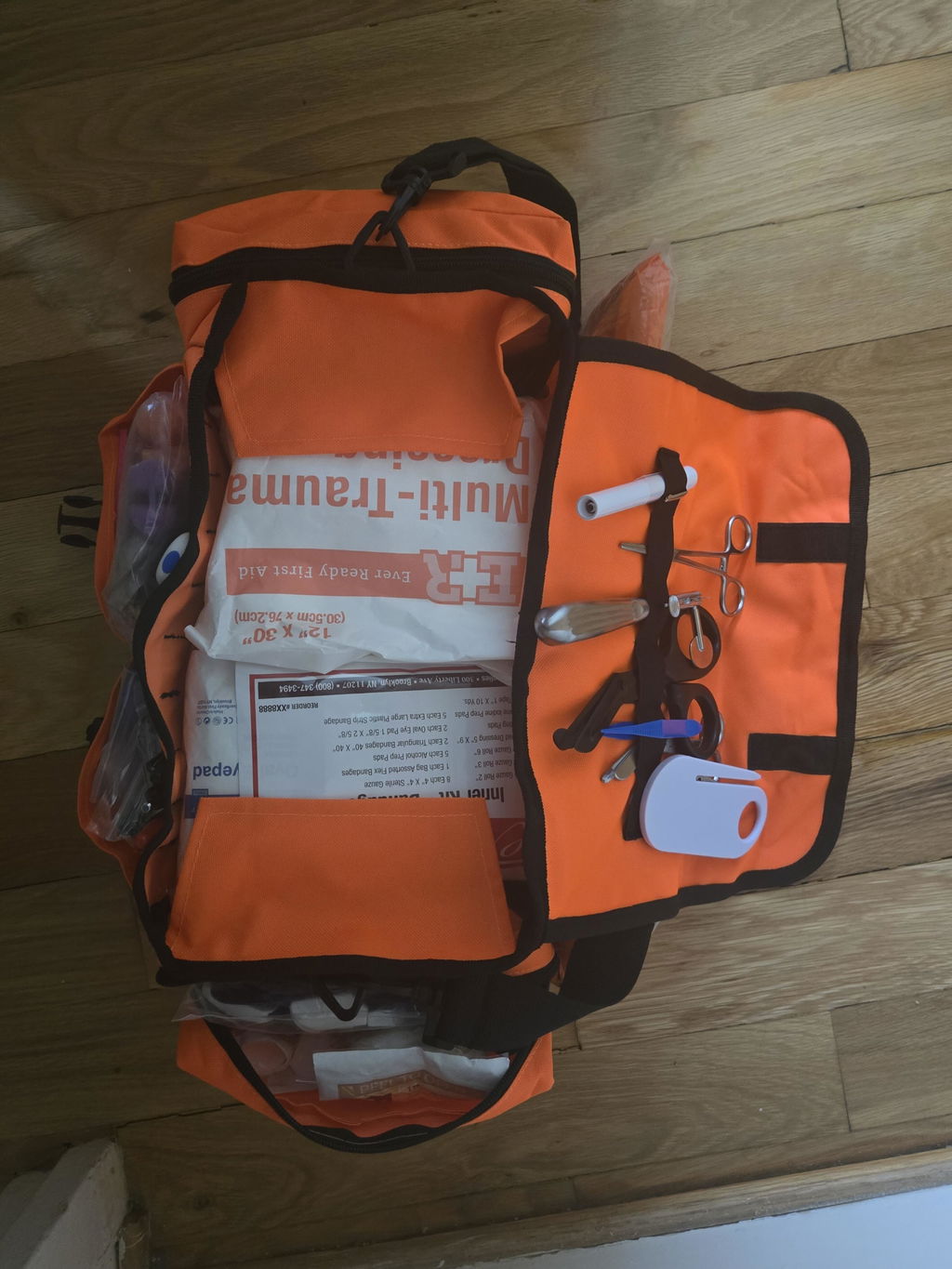
IFAK Component Deep-Dive: Specs, NSN, and Replacement Criteria
12 min reading time
12 min reading time

Most IFAK guides tell you what components to buy. This one tells you why those specific components, what they do at the cellular level, and what specs separate the gear that works under load from the gear that fails. If you have ever wondered what makes a CAT Gen 7 different from a $15 windlass tourniquet, or why kaolin matters in hemostatic gauze, this is the reference.
This post is a companion to two earlier guides: What Is an IFAK covers the category overview; The Civilian IFAK covers the buyer's-guide angle. This one goes one level deeper — component specs, mechanisms of action, and the distinguishing technical features.
Components in a TCCC-compliant IFAK map to the MARCH framework: Massive Hemorrhage, Airway, Respiration, Circulation, Hypothermia. The order is not arbitrary — it reflects the time-to-death sequence for traumatic injury. Massive hemorrhage kills in 3–5 minutes. Airway obstruction kills in 5–10 minutes. Tension pneumothorax can kill in 15–30. Hypothermia is hours but compounds every other priority.
Pack the kit in MARCH order. Train interventions in MARCH order. When the call comes, your hand finds the tourniquet first — because that is what kills first.— Justin McAllister, ViTAC Solutions
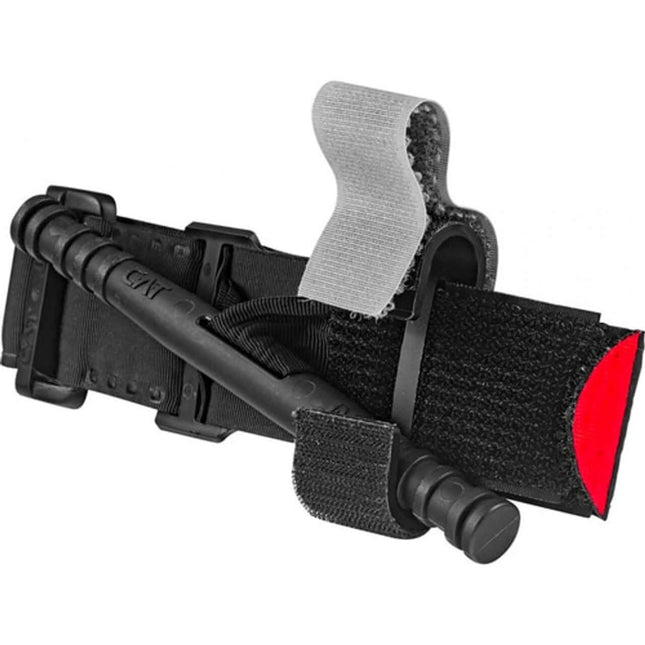
The CAT Gen 7 Combat Application Tourniquet is the CoTCCC-recommended commercial tourniquet, alongside the SOFTT-W. The mechanism: a windlass rod twisted to mechanically compress the limb, occluding arterial blood flow above the wound. Specs that matter:
The CAT and SOFTT-W are the only two windlass tourniquets currently CoTCCC-recommended. Counterfeits, off-brand windlass tourniquets, and strap-only devices without windlass mechanisms fail under arterial pressure. They are not substitutes.

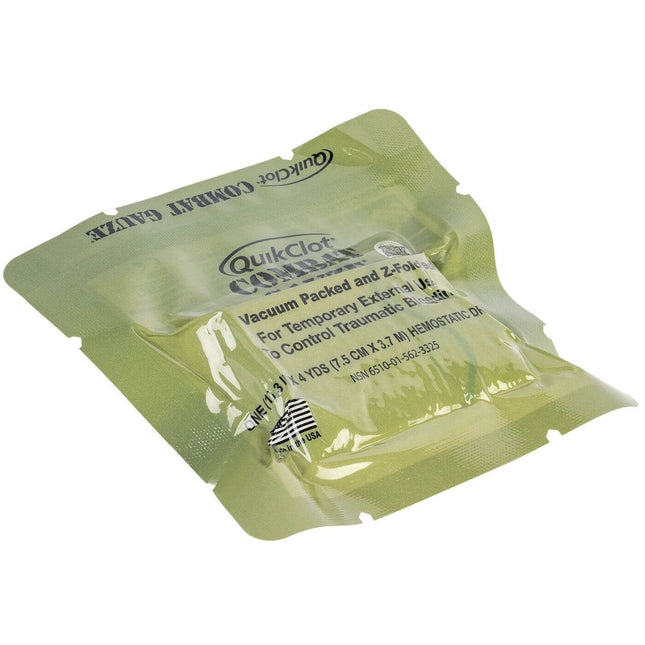
QuikClot Combat Gauze Z-Fold is the CoTCCC-recommended hemostatic dressing, in continuous use across all U.S. military branches since April 2008. Mechanism of action: kaolin (an inert clay mineral) impregnated into the gauze activates Factor XII in the body's intrinsic coagulation cascade, accelerating clot formation without generating heat and without introducing animal or human proteins.
Performance specs:
Off-brand gauze without kaolin does not perform the same. The kaolin chemistry is the active ingredient. Verify before purchase. The hemostatics collection covers verified options.
An ETD overwraps wound packing to maintain compression hands-free. Specs that matter:
The NPA is a soft, flexible tube inserted through a nostril and advanced into the posterior pharynx, holding the tongue clear of the airway in unresponsive casualties. The airway naturally occludes when the tongue falls back — the NPA keeps it open. Specs:
The 28F NPA (4-Pack) covers standard adult sizing and multi-kit stocking.
Penetrating thoracic trauma creates two simultaneous risks: air entering the chest cavity (pneumothorax) and the wound becoming a one-way valve that builds intrathoracic pressure (tension pneumothorax — fatal in 15–30 minutes). Vented chest seals address both. The one-way silicone valve allows trapped air to escape on exhalation while preventing re-entry on inhalation.
Specs:
The HyFin Vented Chest Seal Twin Pack is the TCCC-standard paired seal for kit building.
High-velocity penetrating trauma almost always produces an exit wound, often larger than the entry. Sealing only the entry wound leaves the exit wound drawing air on inhalation. Standard sweep: expose the chest fully, look front, sides, and back, feel for additional wounds, seal both before moving on. Two seals per kit is the minimum for a reason.

Trauma patients lose core temperature aggressively — blood loss reduces metabolic heat production, exposure accelerates conductive loss, and shock impairs thermoregulation. Hypothermia under 35°C compounds bleeding through the lethal triad: hypothermia, acidosis, coagulopathy. Mortality roughly doubles. The Mylar blanket reflects radiant body heat and reduces convective loss. Specs:
Blunt-tip stainless steel shears for cutting through clothing, seatbelts, and gear without injuring the patient. The blunt tip is non-negotiable — sharp-tipped scissors lacerate skin under the material being cut. Standard sizing: 7.5 inches with serrated lower blade. Stage at the top of the kit.
Body Substance Isolation. Latex gloves are obsolete for first response due to allergy risk. Two pair minimum per kit — the first pair is often contaminated or torn during the initial intervention.
Tourniquet application time gets written on the casualty's forehead or tourniquet strap in clear digits (e.g. "TQ 14:32"). EMS and trauma surgeons need that timestamp to assess limb viability and determine reperfusion timing. An unknown application time removes critical decision data from the receiving team.
| Component | Standard / NSN | Shelf Life | Replace After |
|---|---|---|---|
| CAT Gen 7 tourniquet | CoTCCC-recommended | No formal expiration; degrades with use | Any deployment (real or training); visible windlass wear |
| QuikClot Combat Gauze | NSN 6510-01-562-3325 | 5 years from manufacture | Expiration date or any pouch damage |
| Vented chest seal (paired) | CoTCCC-aligned | 5 years from manufacture | Expiration date or pouch seal compromised |
| Pressure dressing (ETD) | FDA Class II | 5 years from manufacture | Expiration date |
| NPA (28F) | FDA Class II | 3–5 years from manufacture | Expiration date or lubricant integrity |
| Mylar blanket | No formal standard | Indefinite if sealed | Visible damage to packaging or material |
Authentic CAT Gen 7 tourniquets are manufactured by North American Rescue under strict QA/QC. Counterfeits fail strap stitching, windlass strength, or buckle retention under load — sometimes during the initial twist, sometimes after first use. Authenticity verification is built into the packaging. Buy from authorized distributors only.
No. Tampons are designed for slow, low-pressure menstrual flow. They are not pressure-rated, not hemostatic, not absorbent enough at arterial pressures, and packing them into a wound delays the application of actual hemostatic gauze. Use the gear designed for the task.
Vented chest seals are the current CoTCCC-aligned standard for penetrating thoracic trauma. Non-vented seals can seal a wound but provide no pressure relief against tension pneumothorax — the casualty must be manually "burped" to release trapped air, which is unreliable under stress. New IFAK builds should use vented seals.
28 French (28F) is the workhorse for adult civilians. Field sizing rule: the NPA tip should reach from the nostril to the earlobe along the side of the face when held externally before insertion. Larger casualties may need 30F or 32F; smaller adults may take 26F.

OSHA minimum workplace kits don't include a tourniquet. Here's how to calculate station count, stock each station, and build bleed control coverage in any public...

One kit at the main entrance fails the 90-second coverage rule for most buildings. Here's how to run a coverage audit and calculate the correct...

Arterial hemorrhage kills in 3 minutes. Urban EMS takes 7–10. Every business needs CoTCCC-standard bleed control kits — here's how to select, deploy, and train...

40+ states mandate bleed control kits in schools — but most deployment plans miss classrooms and buses. Here's the placement standard that actually works.

Most of our trauma kits and first aid supplies qualify for HSA and FSA reimbursement. Don't let your benefits expire — invest them in gear that could save a life.


$124.95 - $224.73


$279.99

$37.49 - $139.46


$269.97 - $319.97

$49.95


$139.95 - $169.95


$25.99


$164.95

We've been downrange. We know what it costs to be unprepared. ViTAC was built by U.S. Army Special Operations veterans to make sure the people who run toward the threat — and the families who depend on them — have gear that works when everything is on the line.
— ViTAC Solutions Founders | 40+ years combined Special Operations experience