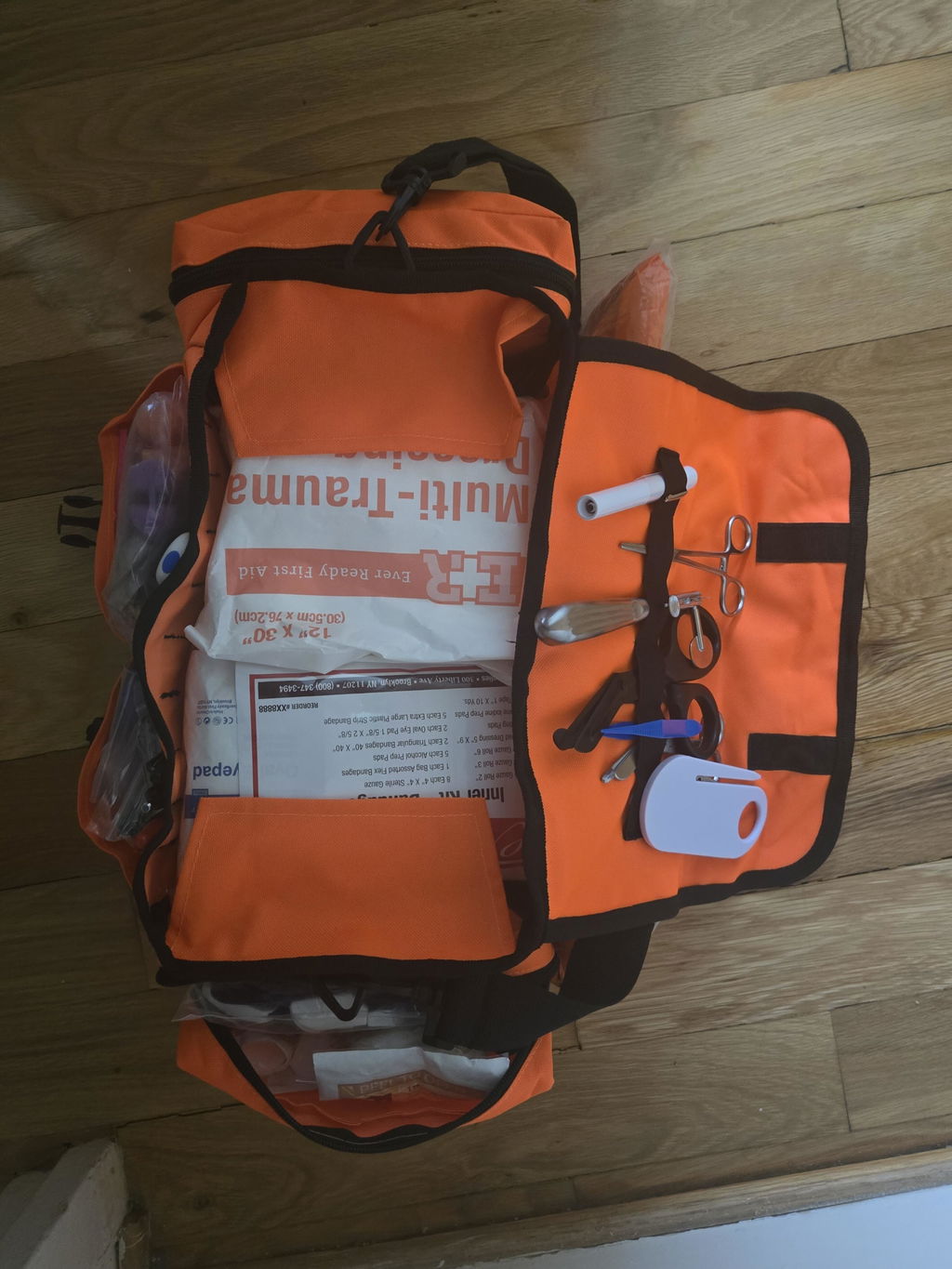
The Civilian IFAK: What Belongs Inside to Actually Save a Life
10 min reading time
10 min reading time

The civilian IFAK market is a mess. Search "best IFAK" and you will find $25 kits with counterfeit tourniquets sold next to $300 kits with components you would carry on a deployment. The signal-to-noise ratio is brutal, and the consequences of buying wrong are not theoretical — a counterfeit CAT tourniquet failing on a femoral bleed kills the casualty as effectively as having no tourniquet at all.
This guide cuts past the marketing. What follows is the honest breakdown of what an IFAK is, what belongs inside one if it is going to do its job, and how to choose between a pre-built kit and building your own. The standard is set by TCCC — Tactical Combat Casualty Care — the same protocol every U.S. military branch and most law enforcement agencies use. If your kit does not meet that standard, it is not a serious IFAK.
IFAK stands for Individual First Aid Kit. The "individual" part matters: it is the kit on your person, sized for one casualty's interventions, designed for one user's reach. It is not a household first aid box. It is not a road-trip medical bag. It is a focused trauma kit built around the leading causes of preventable death in the field.
The TCCC framework, organized as MARCH, defines the priorities:
Everything in your IFAK should support one of those five priorities. Anything that does not — extra band-aids, antiseptic wipes, ibuprofen — belongs in a separate first aid kit, not the IFAK.
A civilian IFAK that meets the TCCC standard contains, at minimum, the components below. This is not a wish list — it is the floor.
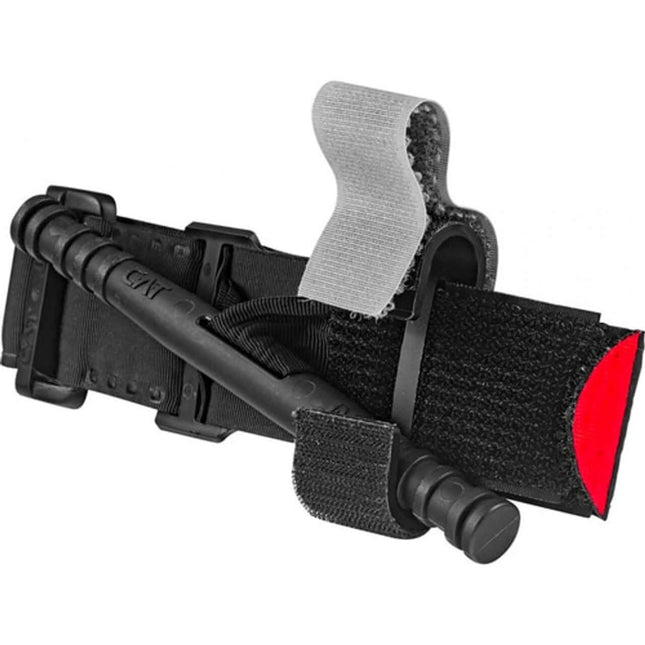
A CAT Gen 7 or SOF-T GEN 4 windlass tourniquet. These are the only two CoTCCC-recommended commercial tourniquets, and they are the standard for a reason — proven across decades of combat use, tested under hemorrhage conditions, designed for one-handed application. Anything else is a compromise. Anything dramatically cheaper than retail on these is counterfeit.
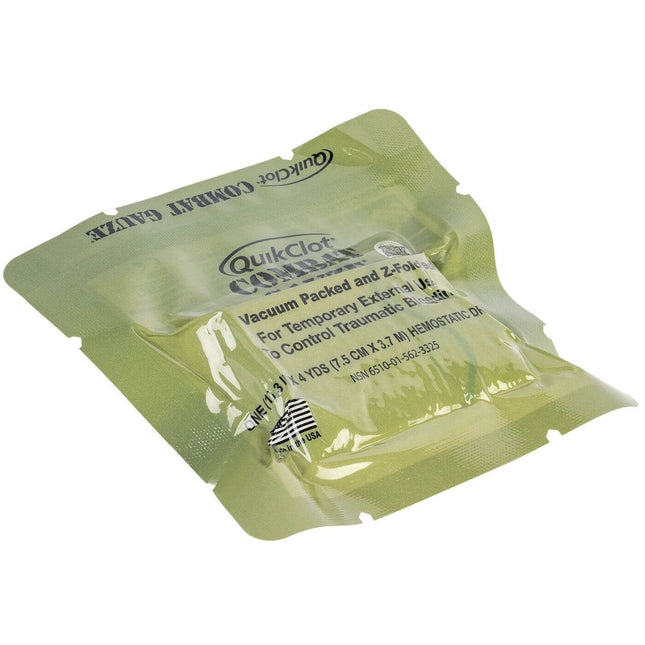
QuikClot Combat Gauze Z-Fold is the CoTCCC-recommended hemostatic dressing of choice — kaolin-impregnated, Z-folded for rapid wound packing, used by every U.S. military branch. For wounds the tourniquet cannot reach: junctional bleeds, neck wounds, deep extremity wounds.
An emergency trauma dressing (ETD) or Israeli bandage. Overwraps the wound packing to maintain compression hands-free. Self-contained — no separate tape required.
Vented chest seals, paired (entry and exit). The vented design allows trapped air to escape the chest cavity, which is what prevents tension pneumothorax. The HyFin Vented Chest Seal Twin Pack is the TCCC-standard choice for vented occlusive coverage.
NPA with water-based lubricant. 28 French sizes the workhorse for adults. Manages an unresponsive casualty's airway when the tongue threatens to obstruct. The 28F NPA (4-Pack) covers standard adult sizing.
Two pairs of nitrile gloves for BSI. Permanent marker to write the tourniquet application time on the casualty's forehead — EMS needs that timestamp. Mylar emergency blanket for hypothermia prevention. These are not optional accessories; they are functional MARCH components.
That is a complete TCCC-compliant IFAK. The ViTAC Tactical IFAK is built to exactly this spec, with a CAT Gen 7, QuikClot Combat Gauze, vented chest seals, NPA, and a rip-away MOLLE pouch designed for fast one-handed extraction.

The CAT tourniquet and QuikClot Combat Gauze are the two most counterfeited items in the trauma-kit market. Counterfeit tourniquets fail under load. Off-brand "QuikClot" does not contain kaolin and does not work. If a kit is dramatically cheaper than the market average, the components are not authentic. Verify your source. Buy from authorized distributors. This breakdown of counterfeit risk covers what to look for.
Both paths can produce a TCCC-compliant kit. Both have failure modes.
| Approach | Pros | Cons | Best For |
|---|---|---|---|
| Pre-built TCCC IFAK | Components vetted, organized, ready to deploy; faster path to capability | Less customization; you inherit the curator's choices | First-time buyers; people who want capability without spending hours sourcing components |
| Build your own | Total control over components, layout, and pouch; matches exact use case | Risk of buying counterfeit components; risk of skipping critical items; costs more in time and often money | Experienced users with specific carry constraints (plate carrier vs. belt vs. EDC pocket) |
For most civilians, a pre-built TCCC-compliant kit from a trusted source is the right answer. You get the right components, vetted for authenticity, in a layout designed for fast deployment. The time you would have spent sourcing components goes into training instead — which is where the real capability lives.
A counterfeit CAT tourniquet failing on a femoral bleed kills the casualty as effectively as having no tourniquet at all.ViTAC Solutions — Verified Sourcing Standard
The kit is useless if you cannot reach it. Match the carry method to your daily reality:

An IFAK that has not been inspected in two years is not a kit you should bet a life on. The maintenance discipline:
The kit is half the answer. The training is the other half — and most civilians never take it.
A tourniquet placed too low does not stop arterial bleeding. Hemostatic gauze that is not packed correctly does not work. A chest seal applied to the entry wound while the exit wound is missed will not prevent tension pneumothorax. None of this is intuitive. All of it is teachable in two hours.
Stop the Bleed is the civilian standard. It is free. It is taught nationwide. If you carry an IFAK, take the class. If you have already taken it, take a refresher every two years — under stress, the muscle memory is what executes, not the knowledge.
Yes. In all 50 U.S. states, civilians can legally own and carry tourniquets, hemostatic gauze, chest seals, NPAs, and the rest of the TCCC-standard components. No medical license is required for the gear itself. What is required is the training to use it correctly.
Hemostatic gauze and chest seals run 5-year shelf lives from manufacture. Inspect every six months for packaging damage. Replace any tourniquet that has been used in real-world deployment or training drills — fatigued elastic and a worn windlass do not perform like new. Annual audit is the minimum standard.
TCCC — Tactical Combat Casualty Care — is the evidence-based trauma protocol used across the U.S. military. CoTCCC, the Committee on TCCC, recommends specific components based on field-validated performance. A TCCC-compliant kit contains CoTCCC-recommended tourniquets (CAT Gen 7, SOF-T GEN 4), CoTCCC-recommended hemostatics (QuikClot Combat Gauze), and the supporting tools that complete MARCH-priority interventions. Kits that skip these components are not TCCC-compliant — they are something else.
A serious civilian IFAK is built to TCCC standards, runs on authentic CoTCCC-recommended components, lives within reach of where you spend your day, and gets used by someone who has trained on it. Anything less is theater. Anything more is overkit for civilian use cases.

OSHA minimum workplace kits don't include a tourniquet. Here's how to calculate station count, stock each station, and build bleed control coverage in any public...

One kit at the main entrance fails the 90-second coverage rule for most buildings. Here's how to run a coverage audit and calculate the correct...

Arterial hemorrhage kills in 3 minutes. Urban EMS takes 7–10. Every business needs CoTCCC-standard bleed control kits — here's how to select, deploy, and train...

40+ states mandate bleed control kits in schools — but most deployment plans miss classrooms and buses. Here's the placement standard that actually works.

Most of our trauma kits and first aid supplies qualify for HSA and FSA reimbursement. Don't let your benefits expire — invest them in gear that could save a life.


$124.95 - $224.73


$279.99

$37.49 - $139.46


$269.97 - $319.97

$49.95


$139.95 - $169.95


$25.99


$164.95

We've been downrange. We know what it costs to be unprepared. ViTAC was built by U.S. Army Special Operations veterans to make sure the people who run toward the threat — and the families who depend on them — have gear that works when everything is on the line.
— ViTAC Solutions Founders | 40+ years combined Special Operations experience