When to Use a Bleed Control Kit vs. a First Aid Kit
8 min reading time
8 min reading time
Under stress, decision time collapses. Research on human performance in medical emergencies consistently shows that bystanders who have not pre-decided which intervention to use default to the most familiar one — which is almost always the standard first aid kit, regardless of injury severity. That default costs lives in hemorrhage events. The correct decision is not complicated, but it must be made in advance and anchored to specific observable signals, not general impressions of severity.
This post covers exactly how to identify life-threatening hemorrhage and when each kit type is the right tool — so that decision is already made before you need it.
A standard first aid kit and a bleed control kit address fundamentally different injury types. Using the wrong one wastes time. The table below defines the boundary:
| Injury Type | Correct Kit | Why |
|---|---|---|
| Minor cuts, scrapes, small burns, sprains | Standard first aid kit | Body's clotting cascade manages the bleed; wound cleaning and dressing is the priority |
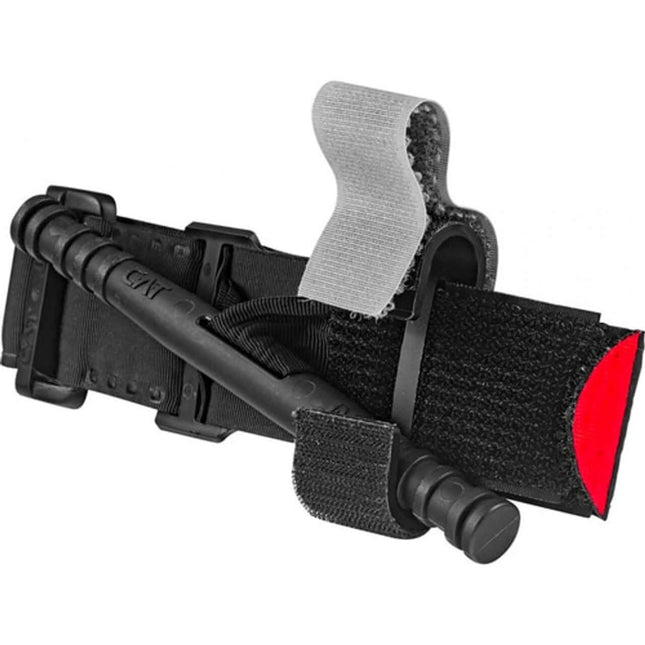
| Arterial or high-volume bleeding on a limb | Bleed control kit | Tourniquet is required; standard gauze and bandages cannot match the volume or pressure |
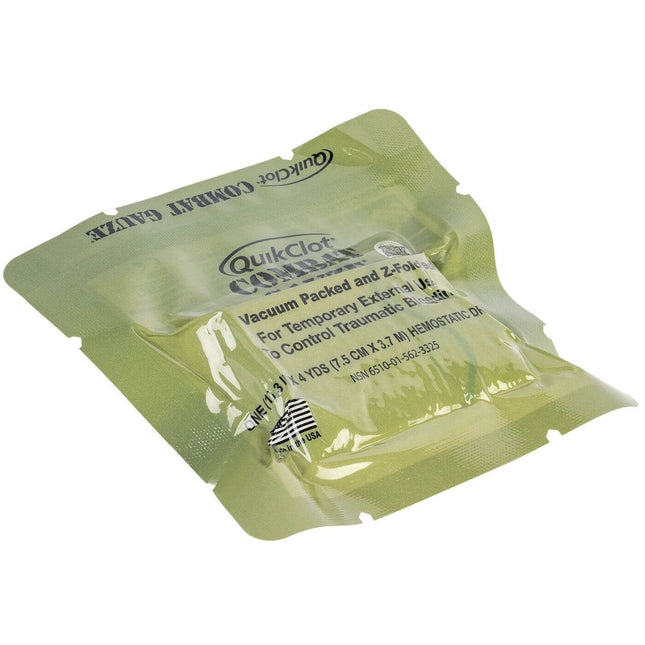
| Deep cavity wound (neck, groin, axilla) | Bleed control kit | Hemostatic gauze and wound packing are required; standard dressings sit on top of the wound |
| Penetrating chest wound | Bleed control kit | Chest seal required to prevent tension pneumothorax; no equivalent in standard first aid |
| Suspected shock from blood loss | Bleed control kit | Source hemorrhage control is the only intervention that slows deterioration |
The decision criterion is not “is there a lot of blood” — it is “is this bleed outpacing the body's ability to clot.” The MARCH protocol places Massive hemorrhage first in the trauma priority sequence for exactly this reason: uncontrolled bleeding kills faster than any other survivable injury mechanism. These five signals identify life-threatening hemorrhage:
If any of these signals are present, the bleed control kit is the correct tool. Do not start with the standard first aid kit and escalate — that sequence costs the interval needed to find, open, and switch kits.
Standard first aid kits are the correct response for wounds that are bleeding but not at a rate that will produce shock. These include lacerations less than one inch deep with controllable bleeding, abrasions and road rash, minor burns covering a limited surface area, and contusions. If direct pressure with a dressing slows or stops visible bleeding in under three minutes and the patient is alert and oriented, the standard kit is appropriate and sufficient.
The standard first aid kit also handles the secondary steps after hemorrhage control — cleaning and protecting the wound once the bleeding has been stopped by a tourniquet or pressure dressing. It is not obsolete in trauma scenarios; it handles the follow-on care after the bleed control kit has addressed the primary threat.
Field Note: Don't Escalate
The most common error in civilian trauma response is applying direct pressure to a wound that requires a tourniquet, then escalating only after the first dressings fail. This sequence adds 60–120 seconds to tourniquet application. If the injury mechanism or wound location suggests arterial involvement, skip to the tourniquet. Distal pulses and wound appearance can be assessed after the bleed is controlled.
OSHA general industry standards require employers to maintain adequate first aid supplies for the hazards present in their specific workplace. In environments where penetrating trauma is a plausible injury mechanism — construction, manufacturing, agriculture, logistics, security operations — OSHA's “adequate” standard increasingly includes hemorrhage control capability beyond a standard first aid kit.
Independently of federal OSHA requirements, several states have enacted legislation mandating bleed control kits in specific public venues (schools, government buildings, sports facilities). These mandates are expanding. Organizations operating in those environments should verify current state requirements rather than relying on OSHA minimums. Non-compliance after an incident creates liability exposure that far exceeds the cost of the kit.
Workplace risk assessment is the operative document. A construction site with angle grinders and nail guns faces different hemorrhage risk than a retail office. The assessment determines which kit types are required and how many, based on the probability of severe injury, the number of people at risk, and the time-to-EMS at that location.
The only staging position that works is one where the responder does not have to think about where the kit is or which one to open. Both kits should be in fixed, labeled locations. The bleed control kit should be distinct — different color, explicit labeling, or separate mount point from the standard first aid kit.
In a vehicle, the bleed control kit goes in the front seat area — center console top, visor, or door pocket. The standard kit goes in the trunk or secondary storage. In a workplace, the bleed control kit should co-locate with the AED station; the standard first aid kit can be in the break room, front office, or other common area. Separation prevents the wrong kit from being grabbed in a high-stress moment.
A compact bleed control kit in an IFAK pouch mounts to standard wall brackets and fits in a vehicle door pocket. Stage it separately from your standard first aid supplies so the decision about which kit to grab is made by its location, not by reading a label under stress.
Can you use one kit for both minor wounds and life-threatening bleeding?
Not effectively. A bleed control kit does not contain wound-cleaning supplies, burn treatment, or minor bandaging materials. A standard first aid kit lacks tourniquets and hemostatic gauze. Keep both available and staged separately so each is accessible when it is the correct tool.
What if I only have one kit?
A bleed control kit is the higher-priority investment in environments where penetrating trauma is plausible — a gunshot wound, a construction accident, a vehicle crash. A standard first aid kit handles more frequent, lower-severity needs. If you have to choose one, choose based on the realistic risk profile of your environment.
Does staging location matter as much as kit contents?
Both matter. A complete kit in an inaccessible location is no better than a missing kit. Stage the bleed control kit where a responder will reach in the first 30 seconds of a trauma response — vehicle front seat, wall mount near high-risk equipment, or on-person for tactical environments.
The decision between kits comes down to one question: is this bleed outpacing the body's clotting response? Spurting blood, rapid dressing saturation, junctional wound location, or signs of shock all answer yes. In those cases, reach for the bleed control kit. For everything else, the standard kit is sufficient. Pre-stage both separately, train on recognition before the event, and the decision makes itself.
For the foundational primer on what a bleed control kit is and who needs one, see What a Bleed Control Kit Is and Why You Need One. For the complete component breakdown, see What Belongs in a Bleed Control Kit.
Browse ViTAC Bleed Control Kits

OSHA minimum workplace kits don't include a tourniquet. Here's how to calculate station count, stock each station, and build bleed control coverage in any public...

One kit at the main entrance fails the 90-second coverage rule for most buildings. Here's how to run a coverage audit and calculate the correct...

Arterial hemorrhage kills in 3 minutes. Urban EMS takes 7–10. Every business needs CoTCCC-standard bleed control kits — here's how to select, deploy, and train...

40+ states mandate bleed control kits in schools — but most deployment plans miss classrooms and buses. Here's the placement standard that actually works.

Most of our trauma kits and first aid supplies qualify for HSA and FSA reimbursement. Don't let your benefits expire — invest them in gear that could save a life.


$124.95


$279.99

$37.49 - $139.46


$299.95 $269.95


$139.95 - $169.95

$49.95


$25.99


$164.95

We've been downrange. We know what it costs to be unprepared. ViTAC was built by U.S. Army Special Operations veterans to make sure the people who run toward the threat — and the families who depend on them — have gear that works when everything is on the line.
— ViTAC Solutions Founders | 40+ years combined Special Operations experience