Scenario-Based Training for Church Safety Teams
8 min reading time
8 min reading time
A policy binder tells people what to do. Training is what makes them able to do it — quickly, correctly, and under conditions that bear no resemblance to reading a document at a desk.
On December 29, 2019, a gunman stood up during a worship service at West Freeway Church of Christ in White Settlement, Texas. The entire event — from the moment the attacker rose to the moment he was stopped by a volunteer security team member — lasted approximately six seconds. Six seconds. No committee meeting. No policy review. No time to remember which section of the binder covered this scenario. The outcome was shaped entirely by what one person had trained to do before that Sunday — not by what was written down anywhere.
That is not a story about one exceptional individual. It is a story about the irreducible gap between documentation and performance — between knowing what the plan says and being able to execute it when the conditions are nothing like the conditions under which the plan was written.
Most churches that take safety seriously have a written plan of some kind. Many have detailed documents — protocols, role descriptions, contact trees, response flowcharts. Those documents have real value. They are not the problem. The problem is when the document becomes the destination rather than the starting point — when having the binder is treated as equivalent to being prepared.
A written plan is what your team knows before training. What they can actually do under pressure is what training builds. The two are not the same thing.
There is a well-documented principle in human performance research: skills learned in one context do not automatically transfer to a different one. Reading a protocol at a desk, in a quiet room, with time to think, is a fundamentally different cognitive experience than executing that same protocol in a crowded sanctuary with elevated heart rate, ambient noise, and a compressed timeline. The brain does not retrieve written knowledge the same way it retrieves practiced muscle memory.
Scenario-based training for churches addresses this directly. It introduces stress before the real event. It forces team members to make decisions under conditions that approximate the cognitive and emotional load of an actual emergency — not a comfortable simulation of one. The discomfort of a well-designed drill is not a side effect. It is the mechanism of learning. What feels awkward or uncertain in a practice scenario is exactly what would have failed in a real one.
Effective church security training is not a single afternoon event. It is a recurring practice built across these five functional areas — each of which degrades without repetition and improves dramatically with it.
A written church safety training plan is the foundation — the documented intention that makes structured training possible. It deserves to exist, to be thorough, and to be maintained. But it answers a different question than training answers. The document answers: what should happen? Training answers: can our team actually make it happen, right now, under pressure?
Those two questions have different answers in almost every church that has never run a scenario drill. And the only way to find out which applies to yours is to test it — not by reading the plan again, but by putting the team in a simulated situation and watching what actually happens.
What surfaces in that test is not a judgment on the team's character or commitment. It is information — exactly the information needed to move from a plan that looks right on paper to a team that performs when the paper is nowhere in sight.
If your team has a written plan but has never run a scenario drill, you have documented your intentions — not your capabilities. Church preparedness drills and live scenario training through ViTAC Solutions and Protect His House are designed to close that gap: surfacing coordination failures, building response confidence, and converting policy into performance.
The goal is not to find everything wrong. It is to find it in a drill, not an incident — while there is still time to fix it.
Explore Training & Scenario ExercisesThe West Freeway Church of Christ shooting (December 29, 2019, White Settlement, Texas) is referenced using publicly available reporting and official statements. Keith Thomas Kinnunen was killed at the scene by a volunteer security team member. No graphic details are reproduced. This article is intended for educational and preparedness purposes.

OSHA minimum workplace kits don't include a tourniquet. Here's how to calculate station count, stock each station, and build bleed control coverage in any public...

One kit at the main entrance fails the 90-second coverage rule for most buildings. Here's how to run a coverage audit and calculate the correct...

Arterial hemorrhage kills in 3 minutes. Urban EMS takes 7–10. Every business needs CoTCCC-standard bleed control kits — here's how to select, deploy, and train...

40+ states mandate bleed control kits in schools — but most deployment plans miss classrooms and buses. Here's the placement standard that actually works.

Most of our trauma kits and first aid supplies qualify for HSA and FSA reimbursement. Don't let your benefits expire — invest them in gear that could save a life.


$124.95


$279.99
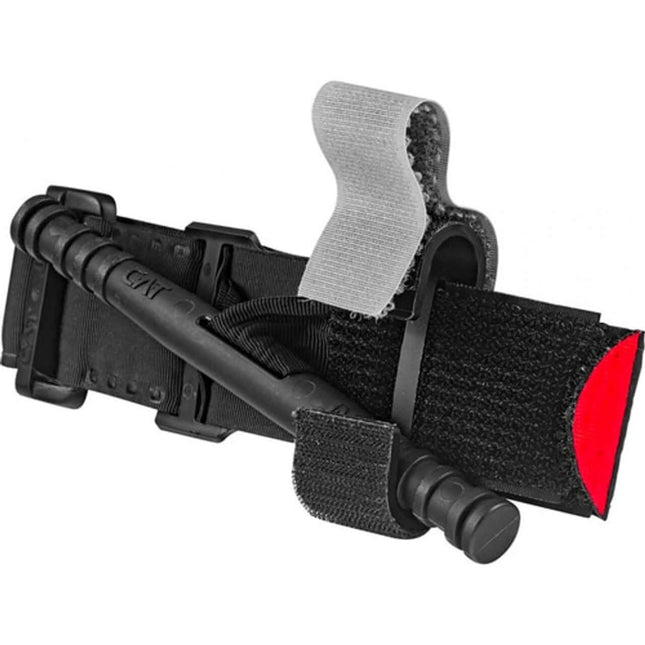

$37.49 - $139.46


$299.95 $269.95


$139.95 - $169.95

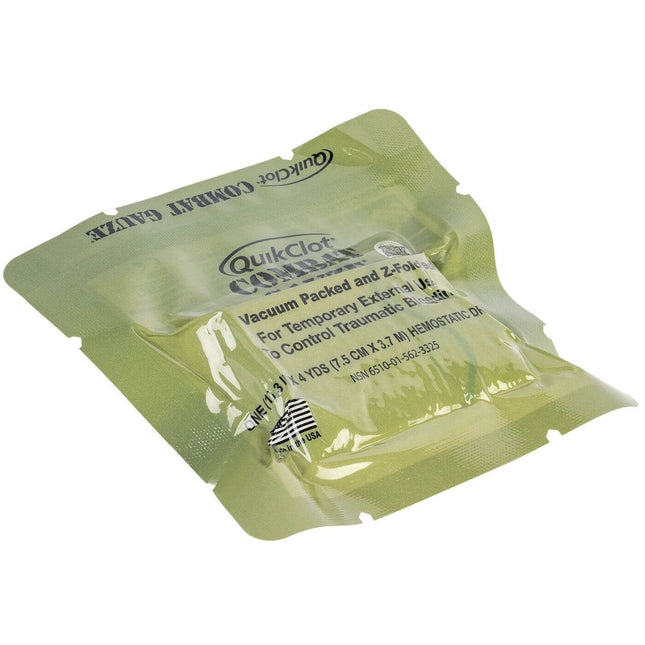
$49.95


$25.99


$164.95

We've been downrange. We know what it costs to be unprepared. ViTAC was built by U.S. Army Special Operations veterans to make sure the people who run toward the threat — and the families who depend on them — have gear that works when everything is on the line.
— ViTAC Solutions Founders | 40+ years combined Special Operations experience