A rural 911 call takes 14 minutes to get help on scene, on average, according to NHTSA data. In some counties that number runs past 30. That's the baseline for places with roads and cell coverage. Step off the trailhead, and the number stops being a statistic and becomes irrelevant — there's no ambulance coming until someone drives out and finds one.
Severe arterial bleeding can cause death in three to five minutes, per TCCC guidelines. Run that math against a 30-minute response window and the gap isn't close. Whoever is standing next to the injured person is the only trauma response that exists until they reach a road, a radio, or a rescue team. That's the entire premise behind the ViTAC Adventurer IFAK: it's built for the person who is, functionally, the first responder by default.
The Remote Risk Profile Is Different From Urban Trauma
Backcountry injuries don't look like the ones EMS crews see most often in cities. Falls, lacerations from tools and terrain, and fracture-related bleeding dominate incident reports from hiking, hunting, and overlanding trips. Penetrating chest trauma and gunshot wounds — the injuries that drive tactical kit design for law enforcement and military use — are comparatively rare in wilderness settings.
That distinction matters when you're choosing a kit. A trauma kit built for urban tactical response and one built for a multi-day backcountry trip solve different problems, even though both are organized around the same MARCH framework. The Adventurer IFAK is scoped deliberately: it prioritizes hemorrhage control, wound management, and fracture stabilization because those are the injuries a hiker, hunter, or overlander is statistically most likely to face, hours from the nearest road.
MARCH-Mapped: What's Actually In the Kit
Every component in the Adventurer IFAK maps to MARCH, the CoTCCC-developed trauma assessment sequence used by military medics and tactical first responders: Massive hemorrhage, Airway, Respiration, Circulation, Hypothermia. It's the same clinical logic that governs kits built for law enforcement and combat use, adapted to the injury patterns actually seen in the backcountry.
Massive Hemorrhage
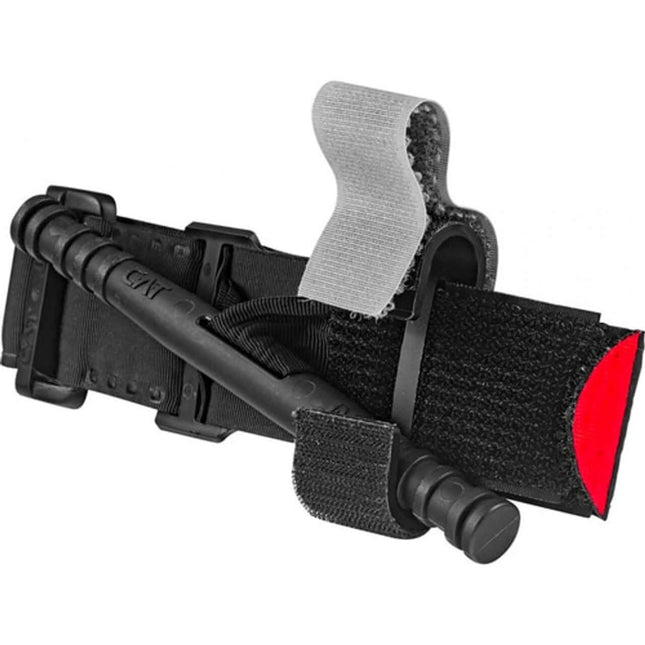
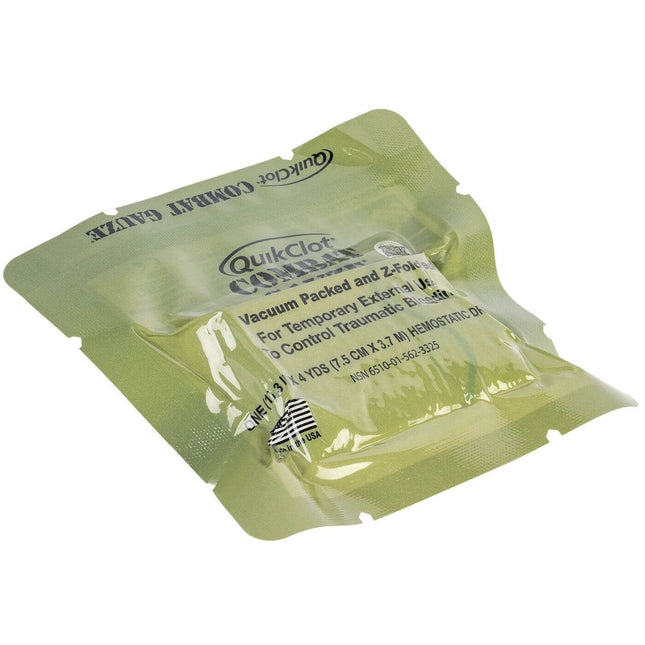
A CAT windlass tourniquet and hemostatic gauze form the core of the kit. A correctly applied CAT tourniquet has over 4,000 documented combat applications since 2005, with a correct-application survival rate above 87%, and stops limb hemorrhage in under three minutes. QuikClot hemostatic gauze clots roughly five times faster than plain gauze, which matters for junctional wounds where a tourniquet can't be placed.
Airway and Respiration
The Adventurer kit is scoped for extremity and environmental trauma — the injury categories that actually show up on hiking, hunting, and overlanding trips. It does not include a chest seal or nasopharyngeal airway. If your trip profile includes a realistic risk of penetrating chest trauma — hunting parties carrying firearms, for instance, or backcountry travel in areas with vehicle or industrial hazards — step up to the ViTAC Tactical IFAK or the Elite Enhanced IFAK Pro, both of which include NPA and chest seal capability.
Circulation, Hypothermia, and Fracture Care
Pressure dressings, splinting material, and wound care supplies round out the kit for orthopedic injuries from falls and impacts — the most common circulation-disrupting trauma in remote terrain. A rip-away, MOLLE-compatible pouch allows one-handed access under stress, which matters when you're treating yourself rather than a partner.
The Adventurer IFAK is HSA/FSA eligible. The CARES Act removed the prescription requirement for OTC trauma supplies purchased with HSA/FSA funds, so the full kit qualifies. Keep your receipt — the IRS lookback period for HSA audits is three years from the date you file.
Adventurer IFAK vs. Tactical-Focused Kits
The right kit depends on the injuries you're actually likely to face, not the injuries that look impressive in a product photo. Here's how the Adventurer compares to ViTAC's other individual kits for a straightforward decision.
| Kit | Best For | Chest Seal / NPA | Price |
|---|---|---|---|
| ViTAC Adventurer IFAK | Hiking, hunting, overlanding, remote day trips | Not included | $164.95 |
| ViTAC Tactical IFAK | Law enforcement, tactical, penetrating trauma risk | Included | $198.95 |
| Elite Enhanced IFAK Pro | High-risk operational environments, professional use | Included | $164.95 |
The kit you carry should match the injuries you're statistically likely to face, not the ones that photograph best.Justin McAllister, Owner, ViTAC Solutions
Scenario Match: Who This Kit Is Built For
The Adventurer IFAK is built for day hikes, multi-day backcountry trips, hunting, overlanding, and remote vehicle response — anywhere evacuation is measured in hours instead of minutes. It's sized to clip onto a pack or belt without adding meaningful weight, and the rip-away pouch keeps access fast when a fall or a blade injury happens with no one else around to help.
For a full scenario-based comparison across ViTAC's entire IFAK lineup, see the IFAK vs. Trauma Kit Decision Matrix.
FAQ
Does the Adventurer IFAK include a chest seal?
No. It's scoped for extremity and environmental trauma — the injury patterns most common in backcountry settings. For chest trauma capability, use the ViTAC Tactical IFAK or Elite Enhanced IFAK Pro.
Is the tourniquet in this kit one-handed?
Yes. The CAT windlass tourniquet is designed for true one-handed application, which matters if you're treating your own injury with no partner present.
Can I use HSA or FSA funds to buy this kit?
Yes. The Adventurer IFAK qualifies for HSA/FSA reimbursement under the CARES Act provision that removed the prescription requirement for OTC trauma supplies.
How is this different from a general hiking first aid kit?
Most hiking first aid kits are built around blister care and minor cuts. The Adventurer IFAK is built around MARCH — the same trauma protocol used by military and tactical medics — with a CAT tourniquet and hemostatic gauze as the core components, not an afterthought.
Bottom Line
Rural EMS response runs 14 minutes on a good day and over 30 in some counties. In the backcountry, there's no response at all until you create one. The ViTAC Adventurer IFAK puts a CAT tourniquet, hemostatic gauze, and fracture care in a one-handed, MOLLE-compatible pouch built around the injuries hikers, hunters, and overlanders actually face.
Review the full kit contents and gear up before your next trip into terrain where help is hours away: Shop the ViTAC Adventurer IFAK.