Premium IFAK Trauma Kit: A Component-by-Component Breakdown
5 min reading time
5 min reading time
Uncontrolled bleeding kills in 3–5 minutes. Rural EMS averages 14 minutes. The math doesn't lie — what's in your vehicle kit matters more than how fast an ambulance can respond. The Premium IFAK Trauma Kit w/Tourniquet & Chest Seals is built to close that gap with four CoTCCC-aligned components. This is the breakdown.
The kit centers on the Premium IFAK Trauma Kit w/Tourniquet & Chest Seals — a packaged response to the two injuries most likely to kill before EMS arrives: arterial hemorrhage and tension pneumothorax.
The Committee on Tactical Combat Casualty Care (CoTCCC) reviews and recommends trauma equipment based on field performance data from military medicine. When a component is CoTCCC-recommended, it has been evaluated against the same standard U.S. military uses in combat. The civilian first aid market is saturated with kits that don't meet this bar. Understanding why this kit does requires looking at each component.
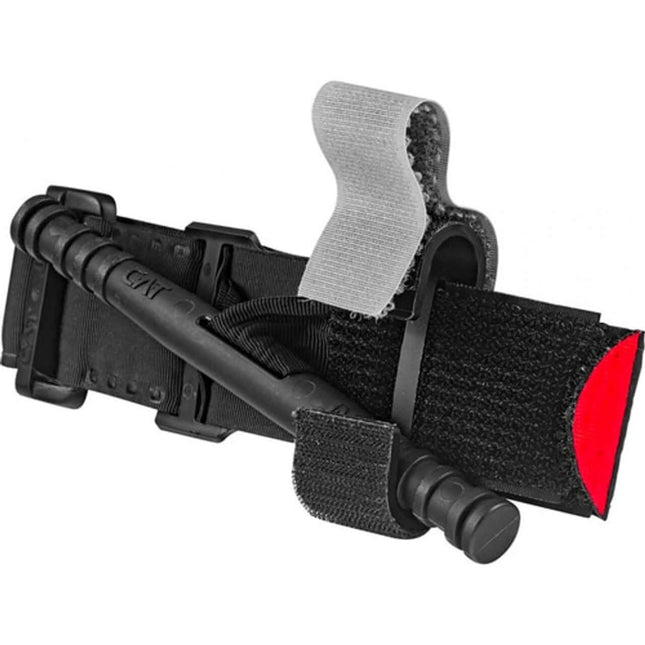
The Combat Application Tourniquet Gen 7 is CoTCCC-recommended and has over 4,000 documented combat applications since 2005, with an 87%+ correct-application survival rate in field studies. It applies with one hand, locks with a windlass, and secures with a Time of Application (TCA) strap. One-hand application is not marketing language — it is the operational reason the CAT is the military standard in environments where one limb may already be compromised.
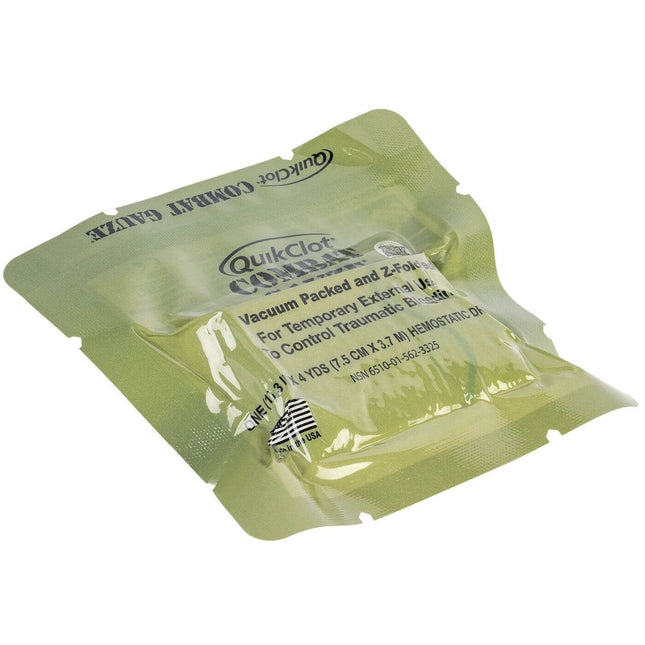
QuikClot Combat Gauze has been CoTCCC-recommended since April 2008. It uses kaolin-impregnated z-fold gauze to accelerate the body's clotting cascade, with documented 5x faster clotting versus plain gauze under 3 minutes of sustained pressure. NSN: 6510-01-562-3325. Not all hemostatic gauze carries CoTCCC endorsement — the recommendation applies specifically to kaolin-based products manufactured by Teleflex (formerly Z-Medica). Off-brand alternatives with no kaolin impregnation do not qualify.
Field Note: Counterfeit Gauze Is a Real Problem
Counterfeit QuikClot and knockoff hemostatics are sold through online marketplaces at prices that undercut legitimate stock. Legitimate QuikClot Combat Gauze is manufactured by Teleflex and sold through authorized distributors. Verify the kaolin impregnation and CoTCCC recommendation before trusting any hemostatic gauze with a life. ViTAC sources through authorized supply channels only.
The Emergency Bandage (Israeli Bandage) is an IDF-developed pressure dressing that functions as both primary wound cover and improvised compression device for junctional wounds — groin, axilla, neck — where a standard limb tourniquet cannot reach. It applies one-handed, closes with a velcro cinch, and maintains consistent pressure without constant manual hold. This addresses the MARCH framework's M (Massive hemorrhage) at wound sites beyond limb tourniquet reach.
Penetrating chest trauma — including blunt force from vehicle accidents — can cause a tension pneumothorax: air accumulates in the pleural space, collapses the lung, and compresses the heart. A vented chest seal allows air to exit through a one-way valve on exhalation while preventing re-entry on inhalation. Without it, pressure builds without release and becomes fatal. These address the MARCH framework's R (Respiration).
Every component in this kit maps directly to the MARCH framework — the CoTCCC protocol that structures trauma care priority in the first minutes after injury:
| MARCH Step | Component | Coverage |
|---|---|---|
| M — Massive hemorrhage | CAT Gen 7 + Israeli Bandage + QuikClot | Limb, junctional, and wound-packed bleeding |
| A — Airway | Not included | Add NPA for full coverage |
| R — Respiration | Vented chest seals | Tension pneumothorax prevention |
| C — Circulation | Israeli pressure dressing | Wound compression, shock management |
| H — Hypothermia | Not included | Add thermal blanket for full coverage |
Is this kit HSA/FSA eligible?
Yes. Trauma kits and TCCC-standard medical supplies are generally HSA/FSA eligible as qualified medical expenses. Retain your purchase receipt and product documentation for reimbursement filing.
What is the shelf life on the components?
QuikClot Combat Gauze carries a 5-year shelf life from the manufacture date; chest seals are rated identically at 5 years. CAT tourniquets should be visually inspected every 6 months for webbing integrity and windlass function, and replaced every 3–5 years or after any training deployment.
Does this kit cover a complete MARCH response?
It covers M (hemorrhage control), R (tension pneumothorax), and C (circulation/pressure). A complete vehicle trauma setup should also include an NPA for airway management and a thermal blanket for hypothermia prevention. See the vehicle trauma kit build guide for full staging recommendations.
The Premium IFAK Trauma Kit w/Tourniquet & Chest Seals is not a general first aid kit with upgraded packaging. It is a purpose-built, CoTCCC-aligned trauma response kit addressing the four injury types most likely to produce preventable death before EMS arrives: arterial hemorrhage, junctional hemorrhage, wound-packed bleeding, and tension pneumothorax. Every component carries documented military or CoTCCC endorsement.
Stage it within driver's reach. Inspect quarterly.

OSHA minimum workplace kits don't include a tourniquet. Here's how to calculate station count, stock each station, and build bleed control coverage in any public...

One kit at the main entrance fails the 90-second coverage rule for most buildings. Here's how to run a coverage audit and calculate the correct...

Arterial hemorrhage kills in 3 minutes. Urban EMS takes 7–10. Every business needs CoTCCC-standard bleed control kits — here's how to select, deploy, and train...

40+ states mandate bleed control kits in schools — but most deployment plans miss classrooms and buses. Here's the placement standard that actually works.

Most of our trauma kits and first aid supplies qualify for HSA and FSA reimbursement. Don't let your benefits expire — invest them in gear that could save a life.


$124.95


$279.99

$37.49 - $139.46


$299.95 $269.95


$139.95 - $169.95

$49.95


$25.99


$164.95

We've been downrange. We know what it costs to be unprepared. ViTAC was built by U.S. Army Special Operations veterans to make sure the people who run toward the threat — and the families who depend on them — have gear that works when everything is on the line.
— ViTAC Solutions Founders | 40+ years combined Special Operations experience