ANSI/ISEA Z308.1: What Workplace Bleed Control Kits Must Include
5 min reading time
5 min reading time
Uncontrolled bleeding is the leading cause of preventable death after traumatic injury. OSHA requires first aid supplies commensurate with workplace hazards. Until the 2021 revision of ANSI/ISEA Z308.1, most legally compliant workplace kits contained no meaningful hemorrhage control equipment. That changed. Here is what the current standard requires — and where compliance stops and genuine trauma readiness begins.
ANSI/ISEA Z308.1 is the American National Standard for Minimum Requirements for Workplace First Aid Kits and Supplies. The 2021 edition — the current governing version — defines two content classes based on workplace hazard level:
| Class | Environment | Hemorrhage Control Requirement |
|---|---|---|
| Class A | Low-to-moderate risk (offices, retail, light industrial) | Pressure dressing and elastic bandage; windlass tourniquet not required by standard |
| Class B | High-risk (heavy industrial, demolition, mining, construction) | Windlass tourniquet and hemostatic dressing required by standard, in addition to all Class A items |
For Class B environments, a windlass tourniquet is no longer optional — it is a written compliance requirement. For Class A, adding a tourniquet and hemostatic gauze moves a kit from baseline compliance to operational readiness. The standard permits additions beyond the minimum; it does not prohibit them.
ANSI/ISEA compliance sets a legal floor. The MARCH framework defines what actually saves lives after traumatic injury: Massive hemorrhage, Airway, Respiration, Circulation, Hypothermia. A Class A compliant kit addresses minor wound care. It does not address arterial bleeding, which kills in 3–5 minutes. Rural EMS averages 14 minutes response time nationally.
Field Note: Compliance Is the Floor, Not the Ceiling
An ANSI/ISEA compliant kit satisfies OSHA inspection. It does not guarantee effective hemorrhage control. Treating compliance as the ceiling means accepting preventable mortality as an acceptable operational risk. A CoTCCC tourniquet and hemostatic gauze add less than $100 per kit and are reimbursable through most workplace safety budget lines.
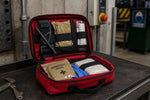
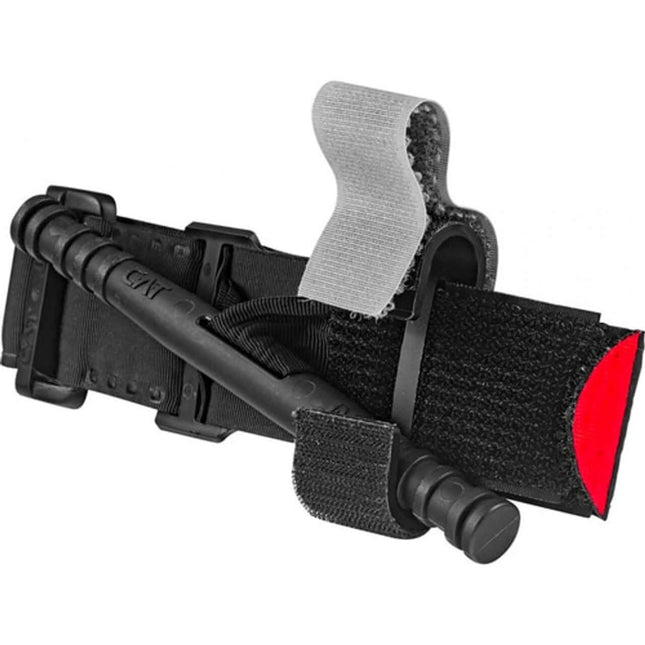
The General Purpose First Aid Kit Pro meets ANSI/ISEA Z308.1 requirements while including a CAT® tourniquet and HyFin® chest seals — trauma-capable additions beyond the standard minimum. This allows organizations to satisfy OSHA inspection requirements and genuine emergency readiness with a single procurement decision.
For organizations with tactical personnel — security teams, law enforcement liaisons, site protection roles — the Tactical Individual First Aid Kit exceeds ANSI/ISEA at the individual carry level and aligns with TCCC protocols. For the law enforcement-specific procurement distinction between ANSI compliance and TCCC-grade kits, see Navigating Trauma Kit Procurement for Law Enforcement with TCCC Compliance.
Budget constraints should not determine whether workers have access to hemorrhage control equipment. Federal funding mechanisms apply directly to workplace and organizational bleed control procurement:
Aligning procurement cycles with federal grant application windows — typically Q3 for most programs — reduces out-of-pocket cost and enables standardization across sites. For a bulk procurement framework specific to law enforcement, see How Law Enforcement Agencies Should Procure IFAKs and Trauma Kits in Bulk.
Does ANSI/ISEA Z308.1 compliance satisfy OSHA?
Yes. OSHA 29 CFR 1910.151 requires adequate first aid supplies commensurate with workplace hazards. ANSI/ISEA Z308.1 is the recognized consensus standard for demonstrating compliance. Kits meeting the 2021 edition satisfy OSHA general industry inspection requirements in most settings.
What is the maintenance requirement for compliant kits?
The 2021 standard requires regular inspection and replenishment after use. Most safety programs schedule quarterly kit inspections. Hemostatic gauze and chest seals carry a 5-year shelf life from manufacture date; tourniquets should be visually inspected semi-annually for webbing integrity and windlass function.
Can we add components beyond the standard minimum?
Yes. ANSI/ISEA Z308.1 sets minimum content requirements. Organizations can and should add components based on site-specific hazard assessment. Adding CoTCCC-standard tourniquets and hemostatic gauze to a Class A kit does not disqualify compliance — it exceeds it.
ANSI/ISEA Z308.1-2021 raised the workplace first aid compliance floor. Class B environments now require windlass tourniquets by written standard. For Class A, the standard still permits kits that cannot stop arterial bleeding. Procurement decisions that stop at compliance accept that gap. Closing it does not require a significant budget increase — it requires a tourniquet and hemostatic gauze added to every kit.

OSHA minimum workplace kits don't include a tourniquet. Here's how to calculate station count, stock each station, and build bleed control coverage in any public...

One kit at the main entrance fails the 90-second coverage rule for most buildings. Here's how to run a coverage audit and calculate the correct...

Arterial hemorrhage kills in 3 minutes. Urban EMS takes 7–10. Every business needs CoTCCC-standard bleed control kits — here's how to select, deploy, and train...

40+ states mandate bleed control kits in schools — but most deployment plans miss classrooms and buses. Here's the placement standard that actually works.

Most of our trauma kits and first aid supplies qualify for HSA and FSA reimbursement. Don't let your benefits expire — invest them in gear that could save a life.


$124.95


$279.99

$37.49 - $139.46


$299.95 $269.95


$139.95 - $169.95

$49.95


$25.99


$164.95

We've been downrange. We know what it costs to be unprepared. ViTAC was built by U.S. Army Special Operations veterans to make sure the people who run toward the threat — and the families who depend on them — have gear that works when everything is on the line.
— ViTAC Solutions Founders | 40+ years combined Special Operations experience