TCCC-Compliant Trauma Kits for Law Enforcement Procurement
8 min reading time
8 min reading time
When an officer goes down in the field, the outcome is determined in the first four minutes — not by the ER, not by the ambulance, not by anyone else on scene. It's determined by the gear on his belt and the training behind it. That's why TCCC-compliant trauma kit procurement isn't a budget line item. It's a force protection decision.
This guide breaks down exactly what procurement officers, agency heads, and tactical coordinators need to know: what TCCC compliance actually means, how to build a kit that meets the standard, where to find grant funding, and how to work with a vendor who knows the difference between an IFAK and a wall-mount bleed control station.
Tactical Combat Casualty Care is the military standard for managing preventable death in high-threat environments. The three leading causes of preventable battlefield death — extremity hemorrhage, junctional hemorrhage, and tension pneumothorax — are exactly what TCCC guidelines are designed to address. Law enforcement adopted this framework because the threat profile matches: violent incidents, delayed EMS access, and officers who may be the only medical resource on scene.
A TCCC-compliant kit isn't a grab bag of first aid supplies. It's a purposefully assembled system built around a specific injury sequence. Every item earns its place by addressing a documented, lethal threat.
Field Note: The Three Killers TCCC Addresses
Everything else in the kit supports these three interventions.
At minimum, a compliant kit contains the following. No substitutions on life-safety items — counterfeit and off-brand tourniquets have documented failure rates under operational pressure.
| Category | Required Item | Why It's There |
|---|---|---|
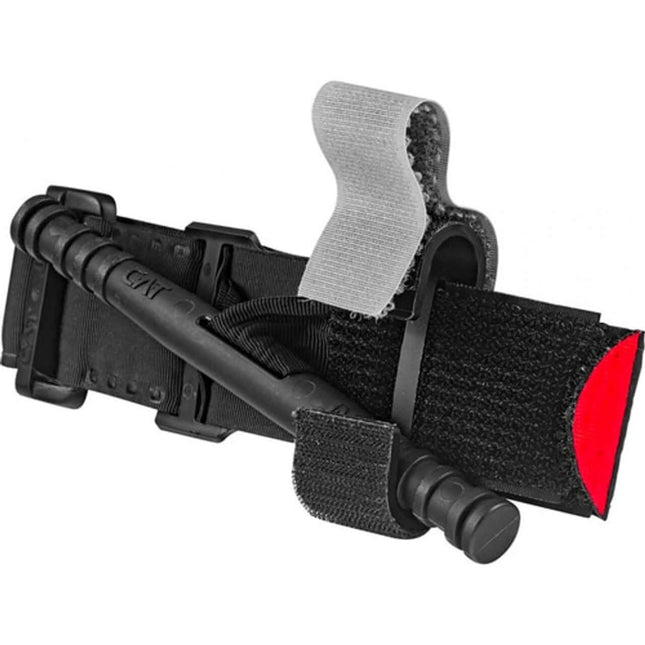
| Hemorrhage Control | CAT Gen 7 or SOFTT-W tourniquet | Stops life-threatening extremity bleeding in under 60 seconds |
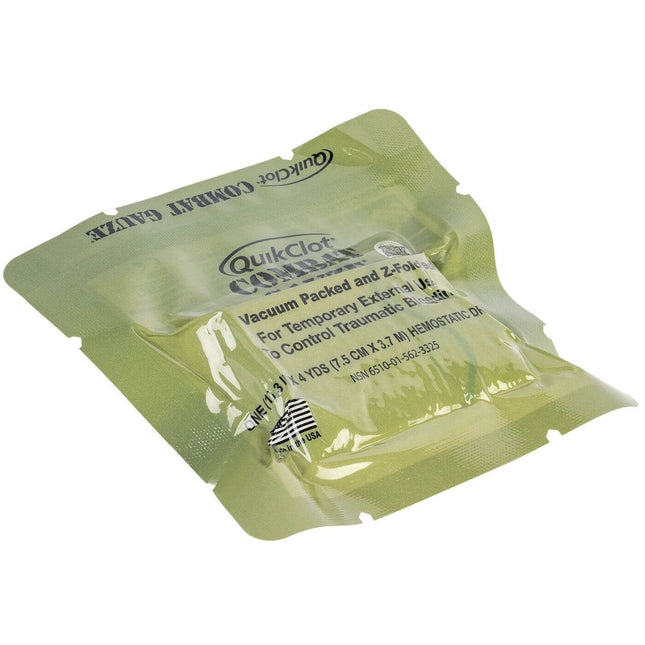
| Wound Packing | QuikClot Combat Gauze (CoTCCC-approved) | Controls junctional and truncal hemorrhage where tourniquets can't go |
| Chest Trauma | HyFin Vent chest seal (x2) | Prevents tension pneumothorax from penetrating chest wounds |
| Wound Coverage | Emergency trauma dressing / Israeli bandage | Pressure dressing for wound stabilization post-packing |
| Airway Management | 28Fr NPA with lube | Maintains airway in unconscious or partially obstructed casualty |
| Documentation | TCCC casualty card | Time of tourniquet application — critical for hospital handoff |
| Gloves | Nitrile, 2 pair minimum | BSI — officer protection during treatment |
ViTAC's Tactical IFAK — TCCC Compliant Trauma Kit is assembled to this standard, sourced from verified manufacturers, and used by agency procurement officers across 23+ jurisdictions.
These aren't interchangeable, and buying the wrong format for the wrong purpose is a common procurement mistake.
An individual first aid kit (IFAK) is worn by a single officer — on a belt, plate carrier, or duty bag. It's designed for self-treatment or buddy-aid in the first 60–90 seconds of a casualty event. The officer who goes down needs to reach his own kit without anyone's help.
A bleed control station is a mounted or centralized kit positioned in high-traffic areas — patrol vehicles, school lobbies, government buildings, range facilities. It's built for bystander use and rapid grab-and-go deployment. It doesn't replace the IFAK. It supplements it.
Field Note: Procurement Rule
Every officer on duty needs a body-worn IFAK. Every vehicle, facility, and public-access location needs a wall-mount or vehicle-mount bleed control kit. These are separate line items — not either/or.
For bulk procurement across multiple vehicles or facilities, ViTAC's bulk IFAK purchase program gives institutional buyers consistent kit configurations, verified documentation, and agency-level pricing.
The ANSI/ISEA Z308.1-2015 standard establishes minimum first aid kit requirements for workplace environments. It's the regulatory baseline for OSHA compliance — and it's not the same as TCCC.
ANSI compliance gets you bandages, burn treatments, and eye wash. TCCC compliance gets you hemorrhage control, airway management, and penetrating trauma intervention. For law enforcement and tactical operators, ANSI-only kits are undersized for the threat environment.
ViTAC's Rapid Response Trauma Kit | Advanced Bleeding Control is built to exceed both standards — ANSI-compliant for workplace regulatory requirements, TCCC-configured for the actual threat.
Trauma kit procurement doesn't have to compete with patrol vehicle budgets. There are established federal funding channels specifically available for this purpose.
The JAG program funds a wide range of law enforcement equipment and training. Trauma kits and officer safety gear are allowable expenditures. Administered through the Bureau of Justice Assistance (BJA), applications are submitted at the state or local level.
For agencies responsible for school security, this grant covers trauma kit placement and training programs. It's specifically designed to fund initiatives that enhance school safety — bleed control stations and Stop the Bleed training both qualify.
Agencies with a demonstrated terrorism prevention or response mission can access HSGP funding for equipment and training. Trauma kits for tactical units and patrol officers are within scope.
Field Note: Grant Documentation
ViTAC works directly with procurement officers on grant-compatible documentation, product specifications, and sole-source justification letters. Request a quote formatted for your grant application.
A tourniquet in the hands of an untrained officer is not a life-saving device. It's a liability. CoTCCC guidelines are explicit: TCCC equipment requires TCCC training. That means tourniquet application, wound packing technique, chest seal placement, and airway management — practiced until the sequence is automatic under stress.
Stop the Bleed certification is free, takes two hours, and is available in every state. TCCC/TCCC-MP training is available through military medical schools, civilian training programs, and law enforcement academies. There is no acceptable substitute for hands-on training with the actual equipment officers will carry.
If your agency is procuring kits without a training program attached, the procurement is incomplete.
TCCC compliance means the kit is specifically equipped to address the three leading causes of preventable death — extremity hemorrhage, junctional hemorrhage, and tension pneumothorax — using CoTCCC-approved items and methods. Not all trauma kits meet this standard. Kits must contain a certified tourniquet (CAT Gen 7 or SOFTT-W), CoTCCC-approved hemostatic dressing, and vented chest seals as the baseline.
A single TCCC-compliant IFAK works as the individual carry standard for most patrol and tactical roles. Specialized units — K9, SWAT, underwater recovery — may require supplemental components. ViTAC can build role-specific kit configurations for agencies with differentiated duty profiles.
At minimum: itemized product specifications, unit pricing, manufacturer certifications, and CoTCCC/TCCC compliance documentation. ViTAC provides grant-ready documentation packages on request — reach out before your application deadline.
Your officers are already operating in an environment where EMS response times may exceed 10 minutes and penetrating trauma is a realistic threat. A TCCC-compliant kit on every officer, trained hands to use it, and a vendor who can document the whole package for grant compliance — that's the standard. ViTAC builds kits to that standard and works directly with procurement officers to get agencies equipped without the runaround.
Browse ViTAC law enforcement trauma kits and request a bulk quote.

OSHA minimum workplace kits don't include a tourniquet. Here's how to calculate station count, stock each station, and build bleed control coverage in any public...

One kit at the main entrance fails the 90-second coverage rule for most buildings. Here's how to run a coverage audit and calculate the correct...

Arterial hemorrhage kills in 3 minutes. Urban EMS takes 7–10. Every business needs CoTCCC-standard bleed control kits — here's how to select, deploy, and train...

40+ states mandate bleed control kits in schools — but most deployment plans miss classrooms and buses. Here's the placement standard that actually works.

Most of our trauma kits and first aid supplies qualify for HSA and FSA reimbursement. Don't let your benefits expire — invest them in gear that could save a life.


$124.95


$279.99

$37.49 - $139.46


$299.95 $269.95


$139.95 - $169.95

$49.95


$25.99


$164.95

We've been downrange. We know what it costs to be unprepared. ViTAC was built by U.S. Army Special Operations veterans to make sure the people who run toward the threat — and the families who depend on them — have gear that works when everything is on the line.
— ViTAC Solutions Founders | 40+ years combined Special Operations experience