Law Enforcement Trauma Kit by Deployment Role: Individual Carry, Vehicle, and Supervisor Configuration
5 min reading time
5 min reading time
Uncontrolled hemorrhage is the leading cause of preventable death after traumatic injury. Officers face three distinct trauma profiles — extremity gunshot wounds, penetrating chest trauma, and multi-casualty events — and no single kit configuration addresses all three at the same performance level. The IFAK on an officer's vest manages the first. The vehicle kit staged in the patrol car handles the second. The duty bag or supervisor kit addresses the third. Collapsing all three into one kit produces a compromised kit for all three.
This guide maps CoTCCC component requirements to each deployment role and identifies the ViTAC configuration for each.
Tactical Combat Casualty Care (TCCC) structures trauma response around the MARCH sequence: Massive hemorrhage, Airway, Respiration, Circulation, Hypothermia. The vest-mounted IFAK must address M at minimum — the threat most likely to kill before EMS arrives. The vehicle kit absorbs the components that can't fit on the body without exceeding carry weight and profile limits: NPA, chest seal pair, additional hemostatic gauze.
Access speed is the second variable. A vest-mounted IFAK must deploy one-handed, in the dark, under stress. A vehicle kit has an extra 30 seconds of access time and can carry more volume without consequence. A supervisor kit doesn't need to be reachable in five seconds — it needs to be comprehensive enough to manage a multi-victim incident until EMS arrives.
Field Note: One Kit Can't Do Everything
A vest-mounted IFAK sized for individual carry cannot contain an NPA, a second tourniquet, a chest seal pair, and hemostatic gauze without exceeding weight and profile constraints. Attempting to consolidate all three deployment roles into one SKU forces a choice: overweight the individual kit, or leave documented gaps in the vehicle kit. Configure by role.
| Deployment Role | Primary Threat Profile | Minimum CoTCCC Components | ViTAC Configuration |
|---|---|---|---|
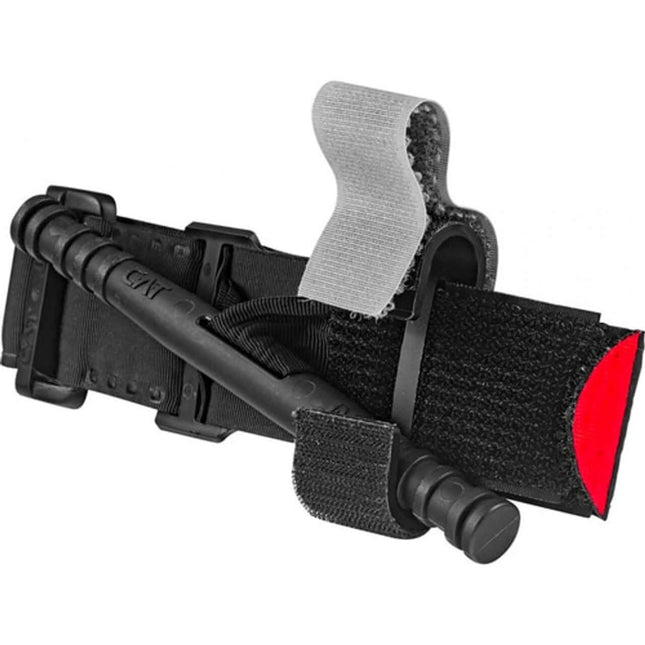
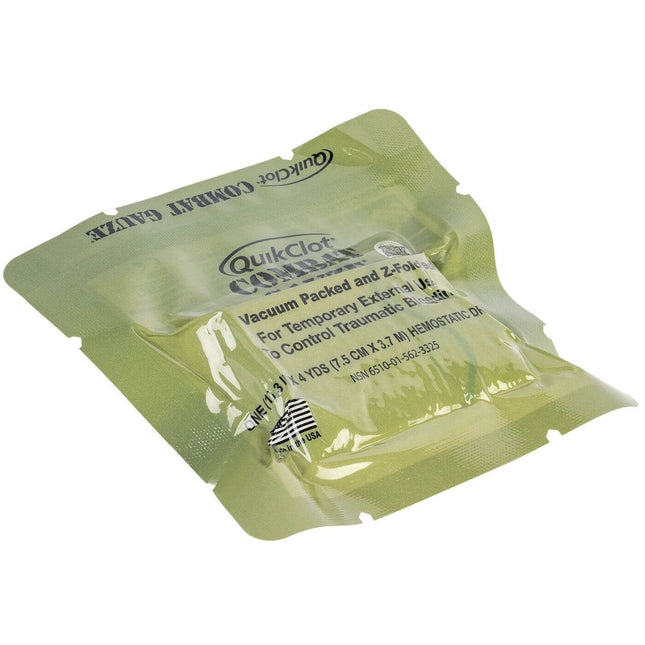
| Individual carry (vest/belt) | Extremity gunshot, stab wound | CAT Gen 7 or SOFTT-W, QuikClot Combat Gauze (NSN 6510-01-562-3325), pressure dressing, gloves | ViTAC TCCC IFAK |
| Patrol vehicle staging | Penetrating chest trauma, MVA, airway compromise | Full individual IFAK components + vented chest seal pair, NPA with lubricant, second hemostatic gauze roll | TORK Advanced Pro IFAK |
| Duty bag / patrol supervisor | Multi-casualty events, extended operations, augmenting individual kits | Multiple tourniquets, hemostatic gauze rolls, chest seal pairs, airway adjuncts — configured for 3+ simultaneous casualties | Mass Casualty configurations |
Urban patrol with sub-7-minute EMS response can anchor on individual carry kits as the primary trauma system — vehicle kits supplement. Rural patrol with 14-minute-plus EMS response needs vehicle kits configured for higher acuity: chest seal and airway capability is not optional when EMS is 20+ minutes out. SWAT and tactical units require NPA and chest seal capability at the individual carry level — the standard patrol IFAK baseline is insufficient for dynamic entry environments where penetrating chest trauma is the primary kill mechanism.
Agencies equipping fewer than 50 officers can standardize on two SKUs: individual carry and vehicle. Agencies above 100 officers should separate procurement into three tiers — individual carry, vehicle, and supervisor/reserve — with distinct inspection and replacement cycles for each. A single SKU at scale either over-equips individual kits or under-equips vehicle kits — both produce avoidable survivable-injury gaps.
For compliance standards and grant programs that fund this equipment, see Bleed Control Kit Procurement Standards for Large Organizations and Law Enforcement IFAK Procurement: TCCC Standards and Grant Funding.
Do patrol officers need an NPA in their individual carry kit?
CoTCCC recommends NPA at the individual kit level for tactical units in high-risk environments. For standard patrol, the decision depends on training level and agency protocol. At minimum, every patrol vehicle should stage one NPA — airway compromise from penetrating facial or chest trauma is not manageable with a tourniquet alone.
Can a single kit SKU serve both individual carry and vehicle staging?
Not effectively. Individual carry kits are weight- and profile-constrained by the officer's load configuration. Vehicle kits are not. A single SKU produces either an overweight individual kit or an under-equipped vehicle kit. The correct approach is two distinct SKUs with separate inspection and replacement schedules.
How should RFQ specifications reference CoTCCC components?
List each component by manufacturer name or NSN where applicable: CAT Gen 7 or SOFTT-W by name, QuikClot Combat Gauze Z-Fold (NSN 6510-01-562-3325). Requiring named components or NSN equivalents prevents substitution with items that meet the description but not the CoTCCC recommendation standard.
The deployment role determines the configuration. A vest-mounted IFAK, a vehicle kit, and a supervisor kit serve distinct threat profiles — equipping each role correctly means the right capability is accessible at the right moment, without compromising any tier.
For duty-ready officer and agency kit options, see the Law Enforcement First Aid Kits collection.

OSHA minimum workplace kits don't include a tourniquet. Here's how to calculate station count, stock each station, and build bleed control coverage in any public...

One kit at the main entrance fails the 90-second coverage rule for most buildings. Here's how to run a coverage audit and calculate the correct...

Arterial hemorrhage kills in 3 minutes. Urban EMS takes 7–10. Every business needs CoTCCC-standard bleed control kits — here's how to select, deploy, and train...

40+ states mandate bleed control kits in schools — but most deployment plans miss classrooms and buses. Here's the placement standard that actually works.

Most of our trauma kits and first aid supplies qualify for HSA and FSA reimbursement. Don't let your benefits expire — invest them in gear that could save a life.


$124.95


$279.99

$37.49 - $139.46


$299.95 $269.95


$139.95 - $169.95

$49.95


$25.99


$164.95

We've been downrange. We know what it costs to be unprepared. ViTAC was built by U.S. Army Special Operations veterans to make sure the people who run toward the threat — and the families who depend on them — have gear that works when everything is on the line.
— ViTAC Solutions Founders | 40+ years combined Special Operations experience