How Law Enforcement Should Procure IFAKs and Trauma Kits in Bulk
10 min reading time
10 min reading time
Bulk IFAK procurement isn't a price-shopping exercise — it's a readiness decision. Choose wrong and you've equipped a patrol division with kits that fail under stress, fall outside TCCC alignment, or quietly expire on a shelf. Choose right and every officer carries the same gear, trained the same way, ready for the calls that don't allow second chances.
Here's how to build a procurement strategy that holds up to operational scrutiny — and how to fund it.
The Committee on Tactical Combat Casualty Care (CoTCCC) sets the standard for battlefield trauma response — and that standard has crossed over into law enforcement for one reason: it works. TCCC-aligned kits are built around the leading preventable causes of death in the field — massive hemorrhage, airway compromise, and tension pneumothorax — using the MARCH algorithm (Massive Hemorrhage, Airway, Respiration, Circulation, Hypothermia/Head injury).
Before you compare prices, confirm every kit on your shortlist contains, at minimum:
If a vendor can't tell you which CoTCCC list their tourniquet appears on, that's the answer. Move on. ViTAC's flagship Tactical Individual First Aid Kit (IFAK) – TCCC Compliant and the Tactical Operator Response Kit (TORK®) – Advanced from North American Rescue both meet the standard out of the box.
Field Note — Counterfeit Tourniquets Are a Documented Risk
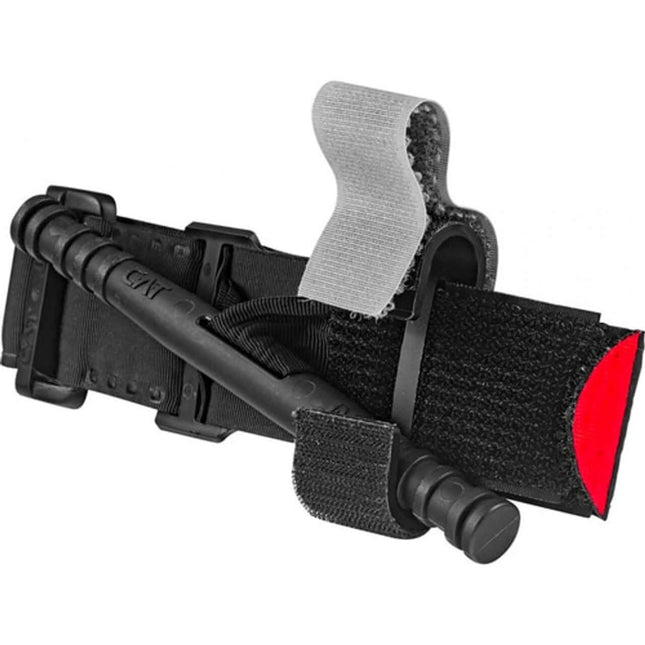
North American Rescue and the U.S. military have publicly documented counterfeit CAT tourniquets failing in the field — windlasses snapping, stitching tearing, plastic clips fracturing under load. Bulk-purchased "CAT-style" tourniquets from unverified online sellers are not the same product as a genuine CAT Gen 7 or SOFTT-W. Insist on authorized-distributor sourcing in writing as part of any RFQ.
ANSI/ISEA Z308.1 is the workplace and industrial first aid standard. It's relevant for booking, station, and facility kits — and it's the right benchmark when an agency is equipping non-tactical spaces like records divisions, training academies, or administrative buildings. The standard defines two kit classes:
What ANSI/ISEA Z308.1 does not cover: massive hemorrhage control, penetrating trauma, or any of the threats a duty officer is statistically more likely to face. A Class A or B kit is not a duty IFAK. Both are required — paired together, not interchangeable. Use Z308.1 for facility compliance and TCCC-aligned IFAKs for the officers carrying them.

Trauma kit procurement is an eligible expense under several federal and state grant programs. The most relevant for law enforcement and school resource officer (SRO) outfitting:
| Grant Program | Eligibility | Use for Trauma Kits |
|---|---|---|
| Edward Byrne Memorial Justice Assistance Grant (JAG) | State, local, and tribal law enforcement agencies | Equipment purchases, including officer safety and trauma response gear |
| Bureau of Justice Assistance (BJA) Programs | Law enforcement agencies, prosecutors, and tribal entities | Officer safety initiatives, including bleed control kits and IFAKs |
| STOP School Violence Act Grant Program | School districts and law enforcement agencies serving them | SRO trauma kits, classroom bleed control stations, and active threat response equipment |
| FEMA Homeland Security Grant Program (HSGP) | State and local agencies through the State Administering Agency (SAA) | Mass casualty kits, response cache buildouts, and standardization initiatives |
Two practical notes. First, grant cycles run on a calendar — most have hard application windows that close months before the funds are available. Build your procurement timeline around the award date, not the fiscal year. Second, every grant requires sole-source justification or a competitive quote process. A vendor who can produce a clean, line-itemed quote with TCCC alignment documented up front saves your grants administrator a week of back-and-forth.
ViTAC is a (pending) Service-Disabled Veteran-Owned Small Business (SDVOSB), which qualifies certain agency procurements for set-aside consideration. Start with the Request For Quote portal — quotes are returned with grant-ready line items and TCCC documentation included.

A bulk procurement that buys the same kit for every officer regardless of assignment is a bulk procurement that wastes money on the wrong gear. Patrol, SRO, K9, and tactical assignments have different threat profiles and different access requirements. Build the order around roles.
| Role / Assignment | Recommended Configuration | Why |
|---|---|---|
| Patrol Officer (Duty Belt) | Tactical IFAK Pro w/TQ & Chest Seals or Trauma Kit – Patrol Pro | Compact, MOLLE-compatible, full MARCH coverage on the belt or vest. |
| Patrol Vehicle | Headrest IFAK | Vehicle-Mounted Trauma Kit or Patrol Vehicle Trauma Kit | Sized for 2–4 occupants. Keeps trauma capability with the cruiser, not just the officer. |
| School Resource Officer | SRO Crisis Response Kit | Built specifically for the SRO mission — bridges active threat to EMS arrival. |
| K9 Handler | K9 Handler IFAK | Dual-Purpose Kit | Treats the handler and the working dog. The only IFAK in the catalog designed for two patients. |
| SWAT / Tactical Operator | Tactical Operator Response Kit (TORK®) – Advanced | Operator-grade NAR build. Tourniquet, hemostatic, chest seals, NPA, needle decompression. |
| Mass Casualty / Active Threat | Crisis Incident Response Kit | Multi-Person Trauma Bag | MARCH-organized, 2–4 critical patient capacity, designed for trained team response. |
Browse the full institutional catalog by collection: Law Enforcement IFAKs · Tactical Medical Kits · Mass Casualty Kits · Trauma Refill Packs.
Training Is Not Optional
A trauma kit on a duty belt without training behind it is a liability, not a capability. CoTCCC's published guidelines, Stop the Bleed certification, and the Bureau of Justice Assistance's VALOR program all assume the officer carrying the gear has been trained to apply it under stress. Build training into the procurement budget — not as an afterthought. ViTAC's Life Saver Seminar delivers hands-on bleeding control training for agency teams.
The procurement decision doesn't end at delivery. Three follow-on items separate agencies that are ready from agencies that look ready on paper:
ViTAC supports custom loadouts and recurring agency relationships through the Custom Medical Kits program and the Agency + Corporate Procurement portal. The Trauma Refill Packs collection exists specifically to make post-incident restocking fast.
An IFAK is built for life-threatening trauma — massive hemorrhage, airway compromise, penetrating chest wounds. A workplace first aid kit (ANSI/ISEA Z308.1) is built for cuts, sprains, and minor burns. Both belong in a department. Neither replaces the other.
Yes. Officer safety equipment, including TCCC-aligned trauma gear, is an established eligible expense under JAG and BJA officer safety initiatives. Confirm the specific solicitation language with your state administering agency before submitting.
Inspect every six months. Replace any used components within 24–48 hours of an incident. Tourniquets show degradation over time even unused — most manufacturers recommend service-life replacement on a five-year cycle, sooner if the kit lives in a hot vehicle.
Yes. Custom configurations, agency branding, and standardized loadouts across patrol, SRO, K9, and tactical assignments are all available. Start with the RFQ portal and a procurement officer will return a line-itemed quote with documentation.

Bulk IFAK procurement done right is a force multiplier. Done wrong, it's a budget line that bought the wrong gear, on the wrong schedule, with no training behind it. Lead with TCCC alignment. Match the kit to the role. Use the grants that exist. Build the refill program in from day one.
ViTAC Solutions is built by U.S. Army Special Forces veterans and trusted by 23+ law enforcement agencies. Start a procurement conversation at the Request For Quote portal, or contact the team directly at support@vitacsolutions.com.

OSHA minimum workplace kits don't include a tourniquet. Here's how to calculate station count, stock each station, and build bleed control coverage in any public...

One kit at the main entrance fails the 90-second coverage rule for most buildings. Here's how to run a coverage audit and calculate the correct...

Arterial hemorrhage kills in 3 minutes. Urban EMS takes 7–10. Every business needs CoTCCC-standard bleed control kits — here's how to select, deploy, and train...

40+ states mandate bleed control kits in schools — but most deployment plans miss classrooms and buses. Here's the placement standard that actually works.

Most of our trauma kits and first aid supplies qualify for HSA and FSA reimbursement. Don't let your benefits expire — invest them in gear that could save a life.


$124.95


$279.99

$37.49 - $139.46


$299.95 $269.95


$139.95 - $169.95

$49.95


$25.99


$164.95

We've been downrange. We know what it costs to be unprepared. ViTAC was built by U.S. Army Special Operations veterans to make sure the people who run toward the threat — and the families who depend on them — have gear that works when everything is on the line.
— ViTAC Solutions Founders | 40+ years combined Special Operations experience