How to Choose the Right IFAK: A Use-Case Selection Guide
11 min reading time
11 min reading time
Severe arterial bleeding causes death in 3 to 5 minutes. The national average EMS response time is over 14 minutes. That gap is what your IFAK fills — and it only fills it if you choose the right one. The wrong format, the wrong components, or a kit sized for someone else's role will cost you the seconds that matter.
This is a selection guide, not a product review. If you need a primer on what an IFAK is and who needs one, start with First Aid Kits vs. Trauma Kits vs. IFAKs. If you're worried about counterfeit components, read Why Your $25 IFAK Might Get You Killed. If you've decided to buy and you're working out which configuration fits your actual role — you're in the right place.
3–5
Minutes to exsanguination from severe arterial bleeding
14+
Minutes: national average EMS response time (NHTSA)
0
Seconds available to reconsider your kit choice when you need it
Before selecting a kit, lock in three things. Every other consideration is secondary.
Carry method. Where the kit lives determines its format. On-body (duty belt, plate carrier, bag) demands compact and fast-access. Vehicle carry allows larger kits with broader coverage. Fixed-location staging — home, range, office — allows the most capability but the least portability.
Threat profile. A standard IFAK covers hemorrhage: tourniquet, wound packing, and pressure dressing. An advanced IFAK covers the full MARCH protocol — Massive hemorrhage, Airway, Respiration, Circulation, Hypothermia. Know which problems you're equipping for before you buy.
Training level. Chest seals, nasopharyngeal airways, and needle decompression devices are advanced interventions. Buying them without the training to use them wastes kit space and adds weight without adding capability. Start with what you can deploy correctly under stress.
Field Note: The MARCH Standard
MARCH is the trauma treatment priority sequence used in military and tactical medicine: Massive hemorrhage → Airway → Respiration → Circulation → Hypothermia. The IFAK you choose should match how far down that sequence your training takes you. Full breakdown: M.A.R.C.H. Trauma Care — A Simple Guide to Saving Lives.
Match your role to the right IFAK configuration. Each row represents a validated use case with the corresponding ViTAC kit recommendation.
| Use Case | Carry Method | Priority Capability | ViTAC Option | Price |
|---|---|---|---|---|
| Civilian / EDC | Bag, pocket, glove box | TQ + hemostatic gauze + chest seal | On-Hand OHFAK / M-FAK Mini | $65–$102 |
| Law Enforcement (Duty) | MOLLE duty belt, rip-away | Full MARCH: TQ + gauze + chest seal + NPA | ViTAC TCCC IFAK / Recon IFAK Pro | $183–$199 |
| Vehicle / Motorist | Center console, headrest, under seat | Rapid access, multi-occupant coverage | ViTAC Vehicle Trauma Kit | $259 |
| Tactical Operator | Plate carrier MOLLE, rip-away | Full MARCH + NPA + needle decompression | TORK® Advanced / Solo IFAK (NAR) | $204–$221 |
| Home / Range | Counter, cabinet, range bag | Bleeding control, multi-user accessible | Enhanced IFAK Pro / MediTac Premium IFAK | $130–$165 |
Every IFAK fits one of four structural formats. Format determines access speed, carrying options, and maximum capability. Choose the format first, then select within it.
Configuration 01
Compact / EDC
Smallest footprint in the lineup. Fits a bag side pocket, glove compartment, or cargo pocket. Covers core hemorrhage control: tourniquet, hemostatic gauze, chest seal. Not full MARCH — built to stop the bleeding until EMS gets there.
Verified ViTAC Options
► On-Hand OHFAK by Emerge Survival — $65
► M-FAK Mini by North American Rescue — $102
Configuration 02
Duty MOLLE / Rip-Away
The law enforcement and patrol standard. Rip-away design allows one-motion access from a duty belt or vest. Full MARCH coverage: tourniquet, hemostatic gauze, chest seal, NPA airway. Built for the officer who may treat a downed partner before EMS arrives.
Verified ViTAC Options
► ViTAC TCCC IFAK (Army SF-designed) — $199
► Recon IFAK Pro by Elite First Aid �� $183
Configuration 03
Vehicle-Mounted
Designed to live in your vehicle and cover multiple occupants — not just yourself. Larger capacity than an on-body IFAK. Access from center console, under-seat, or headrest mount. Vehicle interior temperatures exceed 140°F in summer; verify your hemostatic gauze and chest seals are stored appropriately.
Verified ViTAC Option
► ViTAC Vehicle Trauma Response Kit — $259
Configuration 04
Advanced Operator
Mounts to a plate carrier or chest rig. Packs the most capability into the smallest IFAK footprint — needle decompression, NPA airway, full MARCH coverage. For TCCC-trained personnel only. Buying this kit without the training to deploy every component is carrying dead weight.
Verified ViTAC Options
► TORK® Advanced by North American Rescue — $219
► Solo IFAK by North American Rescue — $221
Browse the full IFAK collection for all 18 verified configurations.
Regardless of format, every functional IFAK must contain these four components from verified manufacturers. Generic substitutes for any of these items are a life-safety failure.
Tourniquet
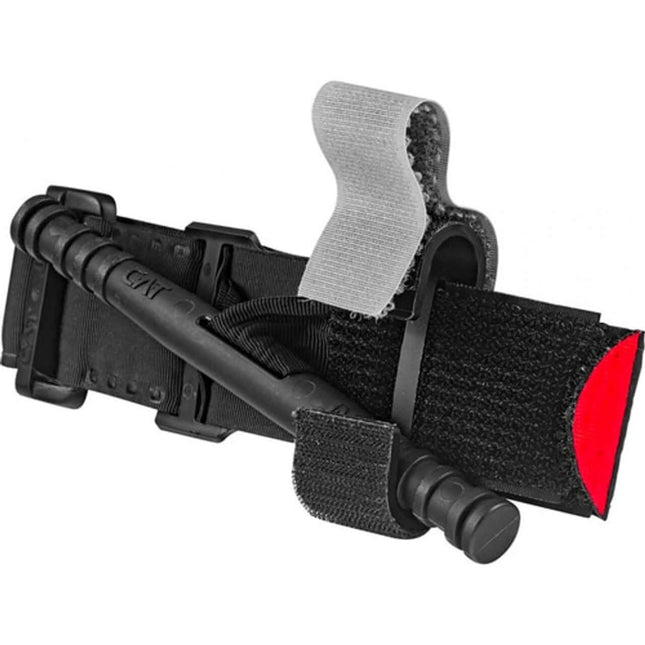
CAT® Gen 7 or SOFTT-W only. Windlass design, CoTCCC-recommended. The CAT has 4,000+ documented combat applications since 2005. Elastic "tourniquets" are not equivalents — they do not generate sufficient occlusion pressure on large-vessel bleeding.
Hemostatic Gauze
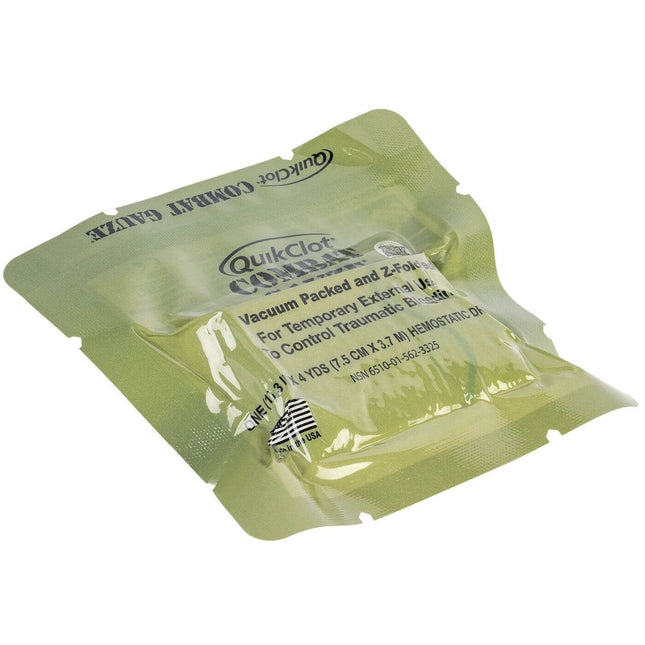
Must be kaolin-based. QuikClot® Combat Gauze is the CoTCCC-recommended standard (NSN 6510-01-562-3325). Kaolin activates the clotting cascade 5x faster than plain gauze. Tampons and non-hemostatic gauze are not substitutes.
Chest Seal
Must be vented. HyFin® Vented Chest Seal (NAR) is the military standard. Venting prevents tension pneumothorax — the buildup of air pressure in the chest cavity that can kill even after the wound is sealed. Buy in twin packs: entry and exit wounds both need sealing.
Pressure Dressing
Israeli bandage (6") or NAR Emergency Trauma Dressing (ETD). Both allow one-handed application and integrate a pressure bar for wound compression. Required for wound packing when hemostatic gauze is applied — gauze packs, dressing holds.
Field Note: The Price Floor
A functional trauma IFAK starts at $65. Below that threshold, you are buying a first aid kit with trauma-themed packaging. The four components above have a real cost floor because they are manufactured to specific standards. A windlass tourniquet that fails under pressure, or hemostatic gauze without a kaolin active agent, can make outcomes worse by giving you false confidence. Counterfeit IFAKs are a documented problem. Full breakdown: Why Your $25 IFAK Might Get You Killed.
What is the minimum a civilian IFAK needs to include?
A windlass tourniquet, kaolin-based hemostatic gauze, a vented chest seal, a pressure dressing, and nitrile gloves. That covers the four leading mechanisms of preventable traumatic death: arterial limb bleeding, junctional wound bleeding, chest wound, and cross-contamination. Advanced components like NPAs and needle decompression devices add capability only when paired with training to use them.
Can I use an HSA or FSA to buy an IFAK?
Yes. Most ViTAC trauma kits and IFAKs qualify as HSA/FSA-eligible medical expenses — pay at checkout with your benefits card. ViTAC provides itemized receipts and product contents lists for reimbursement documentation. Full guide: ViTAC HSA/FSA Eligibility Guide.
How often do IFAK supplies need to be replaced?
Hemostatic gauze and chest seals carry a 5-year shelf life from manufacture — check the expiration dates on your components. Tourniquets should be replaced after any application and after extended exposure to extreme heat (vehicle dashboards can exceed 140°F in summer). Replace everything immediately after use. The quarterly check takes under two minutes and keeps your kit mission-ready.
The right IFAK isn't the most expensive or the most loaded. It's the kit you can reach in under 5 seconds, configured for your environment, stocked with components your training covers. A civilian in a bag needs different gear than an officer on a duty belt. The matrix above maps that out — use it.
ViTAC carries verified, component-authentic IFAKs from North American Rescue, Elite First Aid, MediTac, and the ViTAC-branded TCCC lineup, built by Army Special Forces veterans who have used this gear in the field. Every kit ships with authenticated components at or above CoTCCC standards. Browse the full IFAK collection and match your kit to your use case.

OSHA minimum workplace kits don't include a tourniquet. Here's how to calculate station count, stock each station, and build bleed control coverage in any public...

One kit at the main entrance fails the 90-second coverage rule for most buildings. Here's how to run a coverage audit and calculate the correct...

Arterial hemorrhage kills in 3 minutes. Urban EMS takes 7–10. Every business needs CoTCCC-standard bleed control kits — here's how to select, deploy, and train...

40+ states mandate bleed control kits in schools — but most deployment plans miss classrooms and buses. Here's the placement standard that actually works.

Most of our trauma kits and first aid supplies qualify for HSA and FSA reimbursement. Don't let your benefits expire — invest them in gear that could save a life.


$124.95


$279.99

$37.49 - $139.46


$299.95 $269.95


$139.95 - $169.95

$49.95


$25.99


$164.95

We've been downrange. We know what it costs to be unprepared. ViTAC was built by U.S. Army Special Operations veterans to make sure the people who run toward the threat — and the families who depend on them — have gear that works when everything is on the line.
— ViTAC Solutions Founders | 40+ years combined Special Operations experience