Four wound closure components exist for a reason: no single one closes every laceration. Butterfly strips, Steri-Strips, surgical adhesive, and sutures each carry a different tension threshold, wear time, and infection profile. Pick the wrong one and the wound reopens, scars wider, or gets infected before it heals.
This breaks down each component by mechanism, limit, and correct use case — not as a general wound-care overview, but as a hardware comparison. If you’re stocking an IFAK or trauma bag, this is the spec sheet you need before you buy.
Butterfly Strips: The Field-Expedient Baseline
Butterfly strips are two adhesive wings connected by a narrow non-adhesive bridge. The wings anchor to intact skin on either side of the wound; the bridge spans the laceration without touching it, so the strip doesn’t stick to the wound bed itself.
Mechanism: point-contact adhesion at two anchor pads. No continuous bond along the wound length, so the closure force comes from two small adhesive zones instead of one continuous strip. That’s the weak point versus Steri-Strips.
Hard limit: lacerations under 1 inch, straight edges, low-tension skin (forehead, shin, forearm). Anything longer, anything jagged, or anything over a joint exceeds what two adhesive wings can hold.
Steri-Strips: Continuous-Bond Reinforcement
Steri-Strips replace the two-point adhesion of butterfly strips with a continuous adhesive surface running the full length of the strip. That single design difference changes the entire performance envelope.
Mechanism: full-length medical-grade adhesive that spreads closure tension evenly across the wound instead of concentrating it at two anchor points. That’s why Steri-Strips shrug off minor movement and moisture that would peel a butterfly strip within hours.
Wear time: 5-10 days, releasing naturally as the wound epithelializes underneath. Do not peel them off early — let the adhesive fail on its own schedule.
Ceiling: 1-2 inch lacerations, moderate tension, surgical incision reinforcement after a provider closes deeper layers. Past that length or tension, the strip separates before the wound has closed.
Both butterfly strips and Steri-Strips fail the same way in the field — wet or oily skin. Irrigate, control bleeding completely, and pat the surrounding skin bone-dry before placing either component. A strip applied to damp skin loses 50%+ of its rated hold time.
Sutures and Staples: Where Adhesive Strips Stop Working
Sutures and staples exist because adhesive strips can’t hold tension across gapping wounds, joints, or lacerations over 2 inches. Both are mechanical closures. Thread or metal pierces the tissue itself and holds the edges under direct load. No adhesive strip does that.
| Component | Closure Mechanism | Length Ceiling | Field-Applicable? |
|---|---|---|---|
| Butterfly Strip | Point-contact adhesive | < 1 inch | Yes |
| Steri-Strip | Continuous adhesive bond | 1-2 inches | Yes |
| Dissolvable Suture | Thread through tissue | Any length, layered closure | No — provider only |
| Surgical Staple | Metal clip through skin edges | Any length, scalp/linear wounds | No — provider only |
Dissolvable sutures use materials like polyglycolic acid that break down through hydrolysis over weeks. That makes them suited for internal or layered closure a strip can’t reach. Staples close faster than sutures on linear wounds, mainly scalp lacerations, but both need sterile technique and a provider’s hands. Don’t carry either expecting to use them yourself — the clean, immobile setup they require isn’t something field conditions give you.
An adhesive strip holds skin. A suture holds tissue under load. Match the component to the wound, not the wound to what’s in the bag.ViTAC Field Standard
Bleeding Control Comes Before Any Closure Component
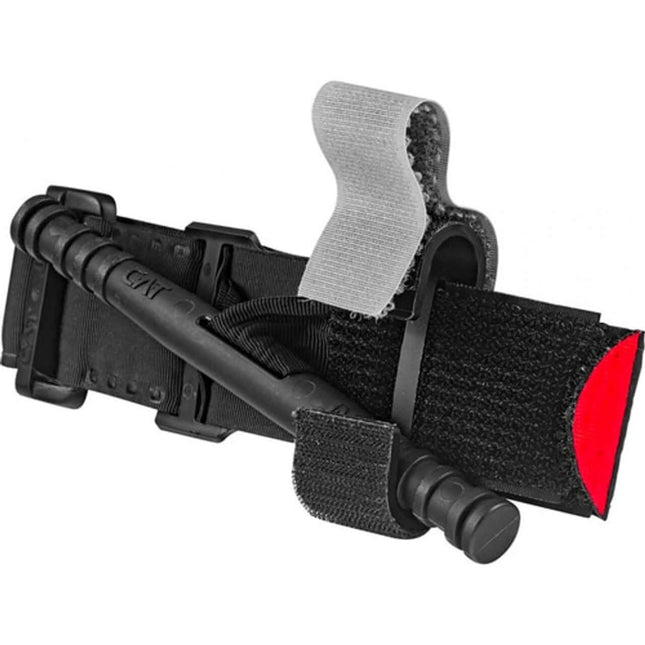
Uncontrolled bleeding is the leading cause of preventable death after traumatic injury, according to DHS Stop the Bleed guidance. No wound closure component — strip, staple, or suture — adheres or holds on an actively bleeding wound. Direct pressure has to fully stop the bleed first.
If a wound hasn’t stopped bleeding after 10 minutes of direct pressure, it’s not a closure-strip situation — it’s a bleeding-control situation. Run the MARCH framework first: Massive hemorrhage, Airway, Respiration, Circulation, Head injury/Hypothermia. Closure strips are a late-stage step, not a first response.
Stocking the Right Components
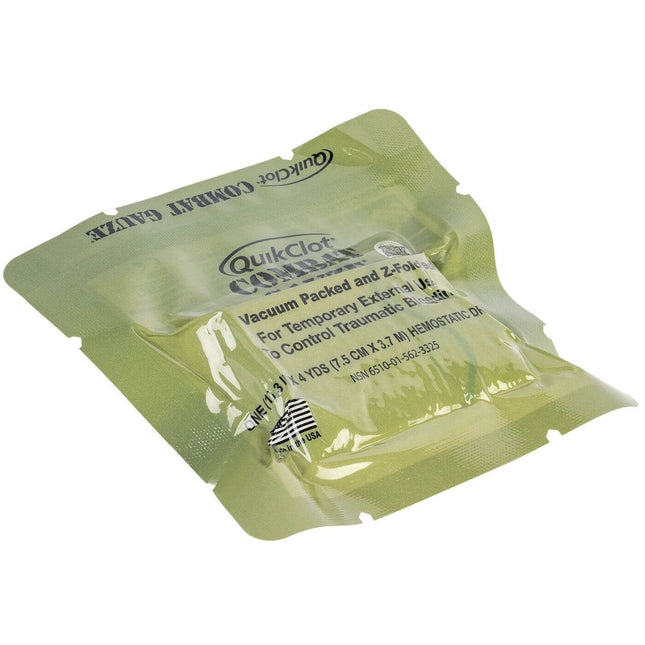
A trauma-ready kit carries both adhesive components, not one or the other, because wound length varies and you don’t get to choose in advance. Pair closure strips with a hemostatic option for anything that starts as a bleeding control problem before it becomes a closure problem.

FAQ
Can I use a butterfly strip on a wound longer than 1 inch?
No. Past 1 inch, the two-point adhesion can’t hold tension across the full wound length. Use a Steri-Strip for 1-2 inch lacerations, or seek professional closure beyond that.
How long do Steri-Strips stay on?
5-10 days. Let them release on their own as the wound heals underneath — don’t peel them early.
Why can’t I just staple a deep cut myself?
Staples require sterile technique and precise tissue alignment. Get the placement wrong and you risk infection or a scar that heals badly. This one’s provider-only.
Bottom line
Butterfly strips hold small, clean, low-tension cuts. Steri-Strips extend that range to 1-2 inches with a continuous bond. Past that, or across a joint, or on a gapping wound — the component options run out and the wound needs professional sutures or staples. Match the tool to the wound, and control the bleed before you reach for any of them.
Stock both adhesive components in a kit built for real lacerations, not just scrapes — shop the ViTAC Tactical IFAK.