Stop the Bleed — the federal hemorrhage control initiative — estimates that 20 percent of trauma deaths in the United States are potentially preventable with proper bleeding control applied before EMS arrives. In most of those cases, the first person on scene is not a paramedic. It is a bystander with no equipment. A first trauma kit changes that equation. This guide covers what to buy first, why each item matters, and how to configure a kit that is with you when it is needed.
Trauma Kit vs. First Aid Kit
A standard first aid kit addresses minor injuries: cuts, scrapes, minor burns. These are appropriate products for their intended use. A trauma kit is built for a different category of problem entirely — life-threatening hemorrhage, penetrating thoracic injuries, and compromised airways. The tools required to address these emergencies — tourniquets, hemostatic gauze, chest seals — are not found in a first aid kit. Starting with a first aid kit when the threat is a gunshot wound or serious crush injury is a mismatch that costs lives.
Build the trauma kit first. Minor injuries are survivable without a bandage. Major hemorrhage is not survivable without a tourniquet.
What Is an IFAK?
IFAK stands for Individual First Aid Kit. The format originated in military medicine as a compact, standardized package for point-of-injury care in combat. It is configured for one patient — the individual carrying it — and prioritizes the interventions most likely to prevent death in the first minutes after injury: hemorrhage control, airway management, and thoracic injury treatment.
Civilians have adopted the IFAK format because the threat profile is the same. Extremity hemorrhage, penetrating wounds, and airway compromise occur in vehicle accidents, workplace incidents, and home emergencies at the same rates as in tactical environments. The IFAK addresses these consistently. It is the baseline configuration for a first trauma kit.
The Four Items Your First Kit Must Have
Tourniquet
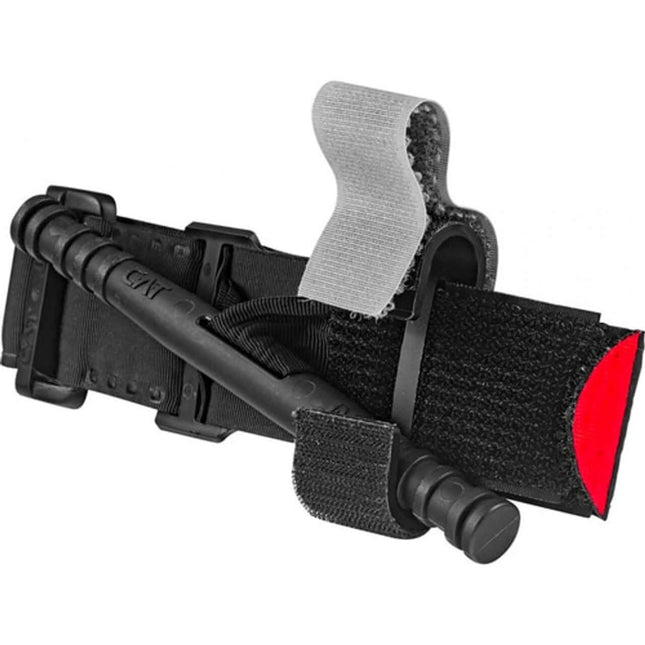
A windlass tourniquet is the single most important item in any trauma kit. Life-threatening limb hemorrhage — femoral or brachial artery disruption — is fatal without immediate compression. The CAT GEN 7 | Combat Application Tourniquet is the TCCC Committee standard, designed for one-handed self-application, and features a stabilizing plate that prevents rod slip under arterial pressure loads. The SOF Tourniquet (SOF-T) GEN 4 is the alternative military-standard option for those who prefer a wider band design. Either meets the standard. Counterfeits of both circulate widely — purchase from verified distributors only.
Application rules: place high and tight on the limb, two to three inches above the wound, not over a joint. Tighten until bleeding stops. Record time of application on the tourniquet strap or on the skin with a permanent marker. See Tourniquets 101 for step-by-step application technique.
A loosely applied tourniquet can worsen blood loss by partially restricting venous return while leaving arterial flow intact. Tighten it until the bleeding stops — not until it is uncomfortable.

Hemostatic Gauze
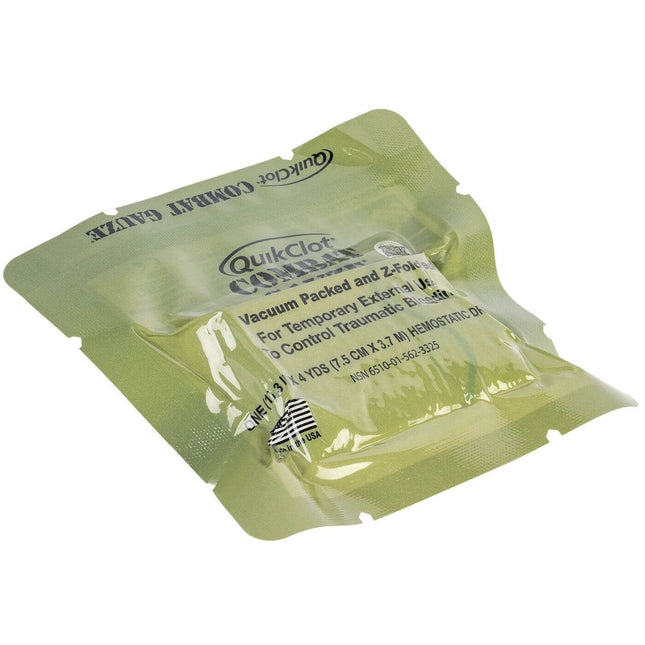
Tourniquets work on limbs. Junctional wounds — groin, axilla, neck — require wound packing with hemostatic gauze. QuikClot Combat Gauze Z-Fold is kaolin-impregnated, Z-fold packaged, and the TCCC Committee's preferred hemostatic dressing. Pack the wound firmly, with continuous pressure for a minimum of three minutes. Packing too loosely fails to compress the bleeding vessel. For more on hemostatic mechanism and technique, see How QuikClot Gauze Stops Bleeding Fast.
Chest Seals
Penetrating chest wounds — from gunshots, stab wounds, or impalement — can allow air to enter the pleural space, collapsing the lung. Vented chest seals apply over the wound and create a one-way valve that lets air escape without allowing re-entry. Apply two seals to any penetrating chest wound: anterior and posterior, or both anteriorly if only an entry wound is accessible. Vented seals are the correct specification — non-vented seals can cause tension pneumothorax if misapplied.
The bystander on scene is frequently the only person in position to intervene in the window that matters. A kit within reach changes that.CoTCCC Point-of-Injury Care Doctrine
Pressure Dressing and Supporting Components
After tourniquet or wound packing, a pressure dressing secures the gauze and maintains compression. Add nitrile gloves — multiple pairs, no intervention begins without them — trauma shears to cut through clothing without skin contact, a permanent marker to record tourniquet time, and an emergency blanket for hypothermia management in shock patients. The Bleeding Control Pack – Intermediate provides the full baseline configuration in a single organized package.

Advanced Additions After Your Baseline Is Built
Splinting and Immobilization
SAM splints are lightweight, moldable to any limb geometry, and re-usable for training. They are appropriate additions once the hemorrhage control baseline is covered. Splinting reduces pain, prevents secondary injury during transport, and signals to arriving EMS that the limb has been assessed. Do not add splinting supplies at the expense of bleeding control components — hemorrhage kills faster than an unsupported fracture.
Airway Adjuncts
Nasopharyngeal airways (NPAs) are appropriate for kit builders who have completed training that covers insertion technique. An NPA maintains an open airway in unconscious patients with a gag reflex. Include water-based lubricant for insertion. Without insertion training, an NPA belongs in the kit as a hand-off item for EMS, not as a primary intervention.
Add items to your kit in the order that injury kills. Hemorrhage control first, airway second, thoracic third. Splinting and advanced airway tools come after the baseline is assembled and trained on — not before.
How to Carry Your Kit
Everyday Carry Options
A kit that is not with you provides no benefit. EDC configurations prioritize accessibility over capacity. Belt pouches offer the fastest access in emergencies and work in most environments. Ankle kits maximize concealment at the cost of access speed. Sling bags and fanny packs expand capacity while remaining portable. The Small Rip Away Tactical Trauma Kit is configured for belt or bag carry — compact enough for daily use, rip-away design for immediate one-handed access.
Vehicle and Home Storage
A vehicle-staged kit complements what you carry on your person. Keep it accessible in the vehicle — under the seat, in a seat-back pouch, or within reach of the driver position. Temperature extremes degrade adhesive surfaces and some sealed components. Browse Vehicle-Ready Kits for weather-resistant staging options built for automotive environments. Home kits should have a fixed, known location accessible to all household members.
| Staging Location | Key Requirements |
|---|---|
| Body (EDC) | One-handed access, compact format |
| Vehicle | Temperature-resistant, within reach of driver seat |
| Home | Fixed location known to all household members |
| Work or office | Accessible desk drawer or discreet bag |
A kit in the trunk of a car does not help the driver who is pinned in the front seat. Stage a dedicated kit within reach of the driver position. Vehicle staging requires two kits if the trunk is not accessible from the passenger compartment.
Maintenance and Upgrades
Inspection and Restocking
Inspect every kit quarterly. Check expiration dates on hemostatic gauze, chest seals, and gloves. Verify tourniquet strap integrity and windlass function. Confirm packaging is intact on all sterile items — a broken seal means the item is no longer sterile. Replace anything used in training immediately. A kit with missing or expired components is not an operational kit. The Elite Pro-II Trauma Kit w/268 Supplies provides a documented component list against which to audit your configuration.
Upgrading as Skills Develop
Your first kit is a baseline. After completing Stop the Bleed or TECC-level training, expand the kit to match your skill set. Advanced airway tools, extended care supplies, and multi-patient configurations all become appropriate as training confirms you can use them correctly. Add items in order of clinical priority — not by what is most impressive or most expensive. The kit evolves with demonstrated skill, not with aspiration.
Bottom Line
Build the hemorrhage control baseline first: tourniquet, hemostatic gauze, chest seals, pressure dressing, gloves. Stage it where you will have it when it is needed — on your person, in your vehicle, and in your home. Train on it. Inspect it quarterly. The Premium IFAK Trauma Kit w/Tourniquet & Chest Seals delivers the complete baseline configuration in a single package and is the recommended first purchase for anyone starting from zero.