What Is a Tourniquet: Mechanics, Myths, and Who Should Carry One
7 min reading time
7 min reading time
A tourniquet is a constriction device applied to a limb to stop arterial blood flow. The mechanics are simple. The clinical impact is substantial: deployed correctly on an arterial bleed, a tourniquet extends a patient's survivable window from minutes to hours. It is the single most effective intervention available to a bystander in a limb hemorrhage emergency.
This article covers the mechanics, application fundamentals, device types, common misconceptions, and who should carry one.
A tourniquet applies circumferential pressure around a limb, compressing the underlying vasculature against the bone until arterial blood flow is occluded. The mechanism requires sufficient pressure to collapse both the superficial and deep arterial supply — veins are lower-pressure and will occlude before arteries, which is why partial application is actively harmful: it increases wound bleeding by maintaining arterial inflow while blocking venous drainage.
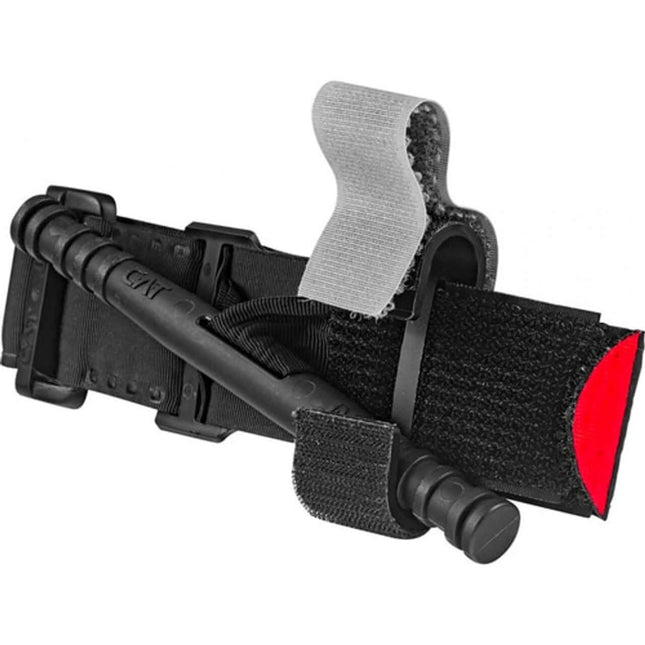
Modern commercial tourniquets use a windlass mechanism — a rigid bar twisted progressively to increase band tension until arterial occlusion is achieved. The CAT Gen 7 and SOFTT-W are the primary TCCC-approved designs. Both achieve complete arterial occlusion when applied correctly and are designed for single-hand application — critical when the injured person must self-apply.
Tourniquet application closes the Massive Hemorrhage step — the M in MARCH. Once bleeding is controlled, continue through Airway, Respiration, Circulation, and Hypothermia in sequence.
| Device Type | Arterial Occlusion | Application Speed | Reliability Under Stress |
|---|---|---|---|
| Commercial windlass (CAT, SOFTT-W) | Consistent, validated to TCCC standard | Fast; designed for single-hand application | High; purpose-built, tested design |
| Improvised (belt, cloth, windlass) | Variable; frequently fails to reach arterial occlusion threshold | Slow; construction under stress adds critical time | Low; dependent on materials and construction quality |
Improvised devices are a field-of-last-resort option, not a planned strategy. If improvised, ensure minimum 4 cm width, a rigid windlass, and a locking method to prevent unwinding. Commercial tourniquets run $30–40. Carry one before you need one.
This claim traces to 20th-century doctrine that overestimated tourniquet-associated amputation risk while underweighting the mortality risk of uncontrolled arterial hemorrhage. Retrospective analysis of combat casualty data from Iraq and Afghanistan documented that correctly applied commercial tourniquets at appropriate duration — under two hours — rarely cause permanent limb damage. The mortality risk of an uncontrolled arterial bleed in that timeframe is substantially higher than the limb-loss risk of a properly applied tourniquet.
Current TCCC and Stop the Bleed guidance indicates that for life-threatening limb hemorrhage, tourniquet application should not be delayed while direct pressure attempts are made. In single-responder situations, mass casualty environments, or high-volume arterial bleeds, tourniquet application is the appropriate first intervention — not a fallback.
Do not loosen a tourniquet in the field. Loosening reintroduces blood flow to the distal limb, potentially dislodging early clot formation and triggering hemorrhage resurgence. Conversion to alternative hemorrhage control is a medical professional decision made at the point of care, not a bystander decision.
Field Note: Pain Is Not a Reason to Loosen
Pain during correct tourniquet application is expected and indicates effective compression. Do not loosen the device in response to pain. Continue tightening until bleeding stops, then secure and document the time.
The Hartford Consensus recommended that tourniquet availability scale to match AED availability in public spaces. The reasoning is direct: arterial hemorrhage from extremity trauma kills in comparable timeframes to cardiac arrest, and the bystander intervention threshold is similar.
For life-threatening hemorrhage from an arm or leg that cannot be controlled by direct pressure — indicated by spurting blood, dressings saturating rapidly, or traumatic amputation. Junctional wounds (groin, axilla, neck) require wound packing with hemostatic gauze; a tourniquet cannot be applied there. For clinical decision indicators and placement rules, see When to Use a Tourniquet: The Decision Points That Save Lives.
Not typically, when used correctly and within standard timeframes. Combat casualty data documents that correctly applied commercial tourniquets carry low limb-loss rates. The mortality risk of an uncontrolled arterial bleed is substantially higher than the limb-loss risk of a properly applied tourniquet.
The bleed stops. If arterial bleeding continues after application, the tourniquet is not achieving occlusion — tighten the windlass further or apply a second tourniquet immediately above the first. Pain during correct application is expected and not a reason to loosen.
A tourniquet is a pressure device that stops arterial blood flow to a limb. Applied correctly — high and tight, windlass to occlusion, time documented — it is the most effective hemorrhage control intervention available to a bystander. The myths around amputation risk are not supported by modern trauma data.
The CAT Gen 7 and SOFTT-W are the two TCCC-approved windlass designs stocked at ViTAC. Carry one before you need it.

OSHA minimum workplace kits don't include a tourniquet. Here's how to calculate station count, stock each station, and build bleed control coverage in any public...

One kit at the main entrance fails the 90-second coverage rule for most buildings. Here's how to run a coverage audit and calculate the correct...

Arterial hemorrhage kills in 3 minutes. Urban EMS takes 7–10. Every business needs CoTCCC-standard bleed control kits — here's how to select, deploy, and train...

40+ states mandate bleed control kits in schools — but most deployment plans miss classrooms and buses. Here's the placement standard that actually works.

Most of our trauma kits and first aid supplies qualify for HSA and FSA reimbursement. Don't let your benefits expire — invest them in gear that could save a life.


$124.95


$279.99

$37.49 - $139.46


$299.95 $269.95


$139.95 - $169.95

$49.95


$25.99


$164.95

We've been downrange. We know what it costs to be unprepared. ViTAC was built by U.S. Army Special Operations veterans to make sure the people who run toward the threat — and the families who depend on them — have gear that works when everything is on the line.
— ViTAC Solutions Founders | 40+ years combined Special Operations experience