When to Use a Tourniquet: The Decision Points That Save Lives
7 min reading time
7 min reading time
Uncontrolled hemorrhage is the leading cause of preventable death after traumatic injury. From an arterial extremity wound, the window to exsanguination is 3 to 5 minutes. The national average EMS response time exceeds 14 minutes. In that gap, the decision to apply a tourniquet — and how fast it's executed — determines the outcome.
This article covers the clinical decision points, application technique, time management, and conversion protocols you need to know before you carry a tourniquet.
A tourniquet is indicated for life-threatening hemorrhage from a limb that cannot be controlled by direct pressure. Clinical indicators:
A tourniquet is not indicated for wounds that respond to direct pressure, for minor lacerations or venous ooze, or for wounds to the torso, neck, or head where a tourniquet cannot be applied — junctional wounds require hemostatic gauze and wound packing.
Field Note: Hemorrhagic Shock Masks the Bleed
A patient in hemorrhagic shock may present with slowed bleeding due to a drop in blood pressure — not because the wound has been controlled. If the mechanism and wound support major hemorrhage and the patient is deteriorating, treat for hemorrhage. Do not interpret shock-slowed bleeding as a controlled bleed.
Place the tourniquet 2–3 inches (5–7.5 cm) proximal to the wound on the arm or leg. Do not place directly over a joint. For proximal limb wounds where standard placement is not possible, apply as high as possible on the limb — "high and tight" is the TCCC default for penetrating trauma to the proximal limb.
A tourniquet that does not completely stop arterial flow is worse than no tourniquet. Partial occlusion of venous return while leaving arterial inflow intact increases blood loss from the wound. Tighten until bleeding stops. If the initial application does not control the bleed, tighten further or apply a second tourniquet immediately proximal to the first.
Record the exact time on the tourniquet, on the patient's skin, or on any available surface — immediately upon application, not at handoff. Application time is one of the most critical pieces of clinical information the receiving trauma team needs to manage the limb and assess reperfusion risk.
| Time from Application | Tissue Status | Clinical Significance |
|---|---|---|
| 0–30 minutes | Minor, reversible muscle pressure begins | Acceptable; standard field management window |
| 30–60 minutes | Tissue ischemia develops; pH drops distal to tourniquet | Increasing complication risk; expedite evacuation |
| 60–120 minutes | Crush injury building; still generally reversible with prompt care | Reassessment and conversion indicated if conditions allow |
| 120+ minutes | Nerve damage, compartment syndrome, potential irreversible ischemia | High-risk; conversion decision rests with medical authority |
The two-hour reassessment window is a clinical guideline derived from battlefield evacuation data, not a hard countdown. Extended tourniquet times have resulted in amputation — this is a documented risk. Prioritize evacuation time alongside hemorrhage control.
Conversion — transitioning to an alternative hemorrhage control method — is a medical authority decision. Do not attempt conversion in the field unless you have received training in conversion protocols, the patient is not in hemorrhagic shock, and alternative hemorrhage control (hemostatic gauze wound packing, pressure dressing) is available and prepared before releasing tourniquet tension.
In a civilian field setting without medical support, leave the tourniquet in place until the patient reaches hospital-level care. Never remove a tourniquet in the field without the resources to manage the bleed through alternative means.
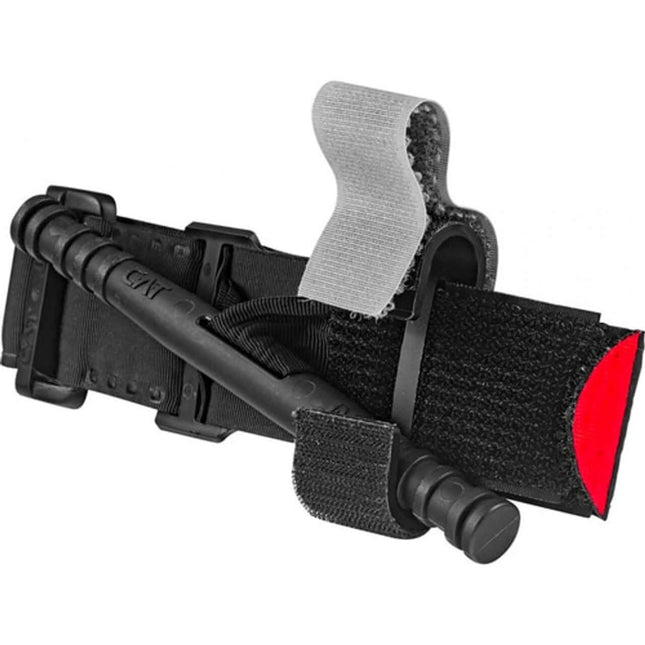
Commercial tourniquets significantly outperform improvised devices in arterial occlusion studies. The CAT and SOFTT-W consistently achieve complete arterial occlusion; improvised devices frequently do not. In the absence of a commercial tourniquet, a correctly constructed improvised device is better than no intervention.
Minimum requirements:
For most of the 20th century, tourniquets were taught as a last resort in both military and civilian medicine. The dominant concern was iatrogenic injury — nerve damage, compartment syndrome, and amputation attributed to tourniquet use. Standard Advanced Trauma Life Support (ATLS) training reinforced this avoidance posture into the 1990s.
The reappraisal came from battlefield mortality analysis. COL Ronald Bellamy's retrospective study of Vietnam-era fatalities identified a significant proportion of preventable combat deaths involving extremity hemorrhage from wounds that could have been controlled with tourniquet application. The data showed the risk of not applying a tourniquet in arterial bleed scenarios was substantially higher than the risk of applying one.
This drove the development of Tactical Combat Casualty Care (TCCC) in the 1990s, repositioning tourniquet application as a primary hemorrhage control intervention rather than a last resort. By 2005, Army Special Operations Command had issued individual tourniquets to every operator. By 2008, standard issue was Army-wide. Iraq and Afghanistan data confirmed the intervention worked: tourniquet-related limb loss rates decreased, and survival rates from extremity hemorrhage increased substantially.
Apply when life-threatening hemorrhage from a limb cannot be controlled by direct pressure. Indicators include spurting or pulsating blood, dressings saturating rapidly without the bleed slowing, or traumatic amputation. Do not apply for minor lacerations, venous bleeds controlled by pressure, or wounds to the torso or head.
2–3 inches proximal to the wound, on the arm or leg between the injury and the body. Do not place over a joint. For proximal limb wounds where standard placement is not possible, apply as high on the limb as possible — "high and tight" is the TCCC default.
Two hours is the clinical reassessment guideline derived from battlefield evacuation data. Complications including nerve damage, compartment syndrome, and irreversible ischemia increase beyond that threshold. Conversion or removal in the field is a trained medical professional decision — not a bystander decision.
Apply a tourniquet when you see life-threatening hemorrhage from a limb that direct pressure cannot control. Apply it high and tight. Tighten until bleeding stops. Record the time immediately. Get the patient to definitive care as fast as possible.
Carry the standard: the CAT Gen 7 is CoTCCC-recommended with 4,000+ documented combat applications since 2005 and the same tourniquet issued Army-wide since 2008. Don't develop the skill without carrying the gear.

OSHA minimum workplace kits don't include a tourniquet. Here's how to calculate station count, stock each station, and build bleed control coverage in any public...

One kit at the main entrance fails the 90-second coverage rule for most buildings. Here's how to run a coverage audit and calculate the correct...

Arterial hemorrhage kills in 3 minutes. Urban EMS takes 7–10. Every business needs CoTCCC-standard bleed control kits — here's how to select, deploy, and train...

40+ states mandate bleed control kits in schools — but most deployment plans miss classrooms and buses. Here's the placement standard that actually works.

Most of our trauma kits and first aid supplies qualify for HSA and FSA reimbursement. Don't let your benefits expire — invest them in gear that could save a life.


$124.95


$279.99

$37.49 - $139.46


$299.95 $269.95


$139.95 - $169.95

$49.95


$25.99


$164.95

We've been downrange. We know what it costs to be unprepared. ViTAC was built by U.S. Army Special Operations veterans to make sure the people who run toward the threat — and the families who depend on them — have gear that works when everything is on the line.
— ViTAC Solutions Founders | 40+ years combined Special Operations experience