How Many Bleed Control Kits Your Building Actually Needs
7 min reading time
7 min reading time
Most buildings with bleed control kits are underequipped, and most administrators who think they have adequate coverage do not. The common failure is single-kit deployment in a location that satisfies a regulatory checkbox but fails the operational test: can a responder reach the kit and return to the patient in 90 seconds or less? If the answer is no for any occupied area of the building, coverage is inadequate regardless of how many kits are on the inventory sheet. This post covers how to run a coverage audit and calculate the correct number of stations for your specific building.
The operational standard for bleed control kit placement mirrors AED placement guidelines: any person in an occupied area should be able to reach a kit and return to a patient within 90 seconds at a brisk walk. This is not a regulatory standard — it is a clinical one. Arterial hemorrhage produces irreversible shock in 3–5 minutes. A 90-second access standard leaves adequate time for intervention before that threshold.
To apply the 90-second rule to your building, walk each floor and count the time from the most remote occupied area to the nearest kit location. If any walk exceeds 90 seconds, that area needs its own station. Locked rooms, stairwells, and elevator lobbies that separate wings are natural barriers that require separate stations on each side.
A coverage audit answers three questions: Are there enough stations? Are they in the right locations? Are they stocked and functional? Run the audit in this sequence:
Step 1 — Map occupied areas. Draw or pull up a floor plan and mark every area with regular human occupancy, including parking structures, loading docks, and outdoor athletic areas. These are all in-scope for coverage assessment.
Step 2 — Apply the 90-second test. Walk from each marked area to the nearest kit station with a timer. Any area that fails the test needs a new station.
Step 3 — Identify specialized risk zones. Some areas generate disproportionate injury risk regardless of occupancy. These require dedicated stations independent of the 90-second calculation:
Step 4 — Inspect existing stations. Verify that every current station contains a complete, unexpired kit. A station on the wall with a depleted or expired kit does not count toward coverage.
Field Note: The Most Common Coverage Gap
The most common coverage gap found in building audits is the single kit near the main office that covers the administrative area but leaves the gym, cafeteria, or production floor on a 3–5 minute retrieval path. The administrative office is typically the lowest-risk area in the building. Deploy kits proportional to injury risk and occupancy density, not proximity to the person who ordered them.
Coverage requirements scale with both square footage and occupancy density. Neither factor alone is sufficient. A 10,000 square foot warehouse with 3 employees has different coverage needs than a 10,000 square foot gymnasium with 200 students. Use both dimensions:
| Floor Area (per floor) | Occupancy Density | Minimum Stations |
|---|---|---|
| Under 5,000 sq ft | Any | 1, located centrally |
| 5,000–10,000 sq ft | Low (<25 people) | 1–2 |
| 5,000–10,000 sq ft | High (>25 people) | 2–3 |
| 10,000–25,000 sq ft | Any | 3–4, plus specialized risk zones |
| 25,000+ sq ft | Any | 1 per 7,500 sq ft minimum, plus specialized zones |
Add one station for every specialized risk zone identified in Step 3, regardless of the square footage calculation. A manufacturing floor with four machine stations in a 4,000 square foot space may need more kits than the 1-station calculation suggests based on size alone.
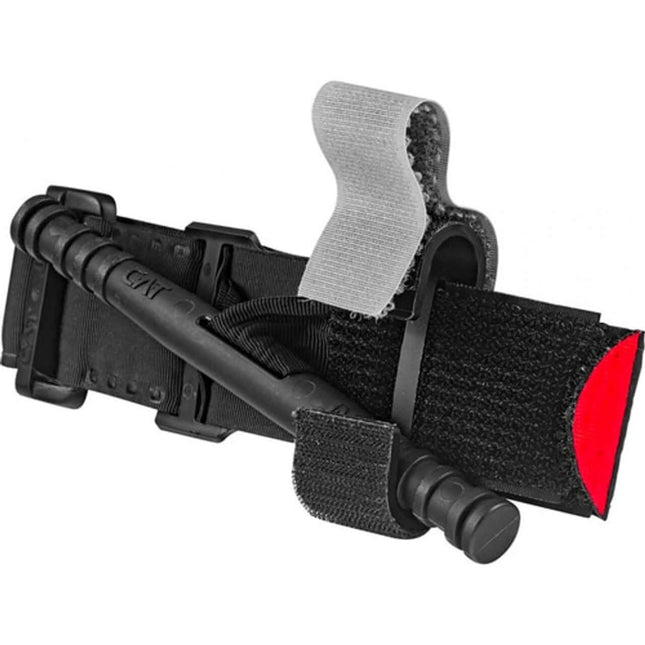
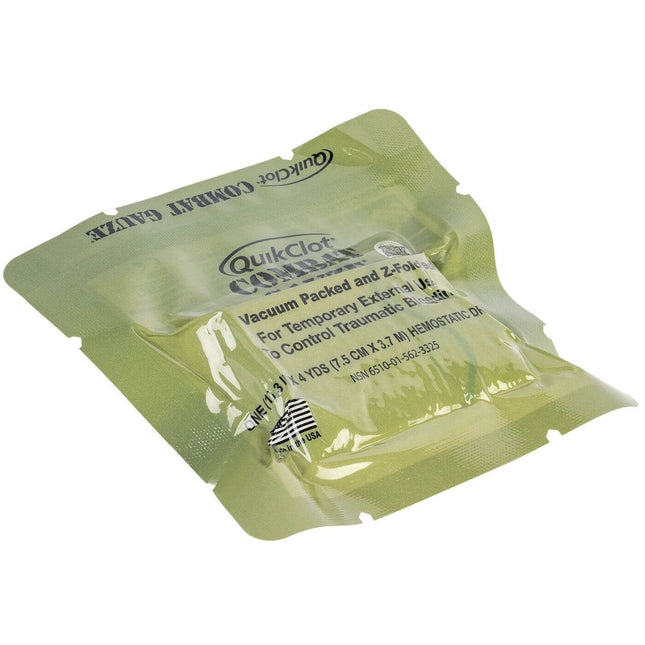
Every station should contain the same minimum kit to simplify training and reduce decision time when a responder grabs a kit under stress. Minimum station contents:
The ViTAC Intermediate Bleeding Control Pack contains all core components in a compact IFAK-format package. Uniform kit contents across all stations mean staff training applies to every location — they learn one layout, not ten variations.
Administrators who delay full coverage deployment typically cite budget constraints. The correct framing is not the cost of full coverage; it is the cost per station amortized over the kit's useful life. A bleed control kit deployed correctly has a 2–3 year service life before sterile component replacement is required. The upfront cost is a one-time procurement. The ongoing cost is quarterly inspection and annual sterile item replacement at a fraction of the initial kit cost.
Phased deployment is a viable budget strategy if it is structured correctly: highest-risk zones first, administrative areas last, with a defined completion timeline. Deploying the administrative office kit in year one and leaving the gym and cafeteria unprotected because of budget is the wrong sequence.
Bleed control coverage addresses the M in MARCH — Massive hemorrhage. A full institutional response capability covers all five MARCH priorities: Massive hemorrhage, Airway, Respiration, Circulation, and Hypothermia. Read the MARCH protocol guide for the complete framework beyond hemorrhage control.
For kit components and training basics, see what's inside a Stop the Bleed kit and how it works. For the case for public access deployment, see why businesses need public access bleed control kits. For venue-specific deployment guidance on churches and workplaces, see bleed control kits for churches and workplaces.
Can one kit per floor be adequate for a multi-story building?
Only if the building passes the 90-second test on every floor. In a large floor plate — 10,000 square feet or more — one central kit will fail the test for occupants at the building's perimeter. Walk the floor with a timer before accepting single-kit-per-floor as sufficient.
Do outdoor areas like parking lots and athletic fields need kits?
Yes. Any regularly occupied area with injury risk is in scope. Outdoor athletic fields require portable kits at field-side positions rather than wall-mounted stations. Parking structures need at least one station per level, positioned at the entry/exit or security booth.
How long does a bleed control kit last before components expire?
Sterile components — hemostatic gauze, gloves, and pressure dressings — carry a 3–5 year shelf life from manufacture. The tourniquet has no expiration date if stored out of UV light; inspect annually for strap brittleness and windlass function. Replace any expired or used component immediately; an incomplete kit does not count as coverage.
The right number of bleed control kits is the number required to satisfy the 90-second coverage test across all occupied areas of your building, plus one dedicated station for every specialized high-risk zone. Run the audit. Walk the floor. Time the retrieval paths. Add stations where the test fails. Stock every station with identical, unexpired kits and assign named inspection ownership.
Equip Your Building — Shop Bleed Control Kits

OSHA minimum workplace kits don't include a tourniquet. Here's how to calculate station count, stock each station, and build bleed control coverage in any public...

One kit at the main entrance fails the 90-second coverage rule for most buildings. Here's how to run a coverage audit and calculate the correct...

Arterial hemorrhage kills in 3 minutes. Urban EMS takes 7–10. Every business needs CoTCCC-standard bleed control kits — here's how to select, deploy, and train...

40+ states mandate bleed control kits in schools — but most deployment plans miss classrooms and buses. Here's the placement standard that actually works.

Most of our trauma kits and first aid supplies qualify for HSA and FSA reimbursement. Don't let your benefits expire — invest them in gear that could save a life.


$124.95


$279.99

$37.49 - $139.46


$299.95 $269.95


$139.95 - $169.95

$49.95


$25.99


$164.95

We've been downrange. We know what it costs to be unprepared. ViTAC was built by U.S. Army Special Operations veterans to make sure the people who run toward the threat — and the families who depend on them — have gear that works when everything is on the line.
— ViTAC Solutions Founders | 40+ years combined Special Operations experience