The Medical Response Layer Your Church Safety Plan Is Missing
7 min reading time
7 min reading time
Identifying a threat and stopping it are only two steps in a three-part equation. The third — and most neglected — is what happens in the minutes immediately after.
It is a Sunday morning. The congregation has gathered. The service is underway. In under thirty seconds, a man enters from the rear of the sanctuary. Two people are shot before anyone fully understands what is happening. Within seconds, the immediate threat is stopped. But two people are on the floor, bleeding. The next ambulance is eight minutes away.
What happens in those eight minutes is now the only thing that matters.
This is not a hypothetical constructed to alarm. On December 29, 2019, at West Freeway Church of Christ in White Settlement, Texas, a shooting unfolded during a live-streamed Sunday service. A volunteer security team member responded and stopped the threat within seconds — an act of courage that almost certainly prevented far greater loss of life. But the incident also laid bare a truth that every congregation in America needs to sit with: stopping a threat and saving lives are not the same thing. Both require preparation. Most churches have only thought seriously about the first.
A church safety plan that ends at threat identification and deterrence is, structurally, an incomplete plan. It addresses the front half of a crisis and leaves the back half to chance — or to whoever happens to be standing nearest when someone is injured and calling 911 is the only protocol in place.
Most church security conversations focus on the right things: access control, camera coverage, team positioning, communication protocols, response training. These are not wrong priorities. They are essential. But they are designed to interrupt a threat — and a threat, once interrupted, leaves behind a scene. That scene almost always includes injured people who need immediate care.
The medical reality of traumatic injury is unforgiving. In penetrating trauma — gunshot wounds specifically — uncontrolled hemorrhage is the leading preventable cause of death. The military learned this lesson at great cost and codified the response in the form of bleeding control training and equipment that has since moved into civilian emergency response. The underlying principle is simple: the person already standing next to the injured individual has more power over the outcome than the paramedic six minutes away.
Stopping a threat and saving lives are not the same thing. Both require preparation. Most churches have only thought seriously about the first.
A church medical response plan bridges this gap. It answers the questions that no security protocol addresses: Who is responsible for casualty care when the shooting stops? Where is the trauma equipment, and can it be reached in thirty seconds? Who has been trained to use it? How does the team communicate injury locations and patient status to incoming EMS?
The distinction is worth drawing clearly. Most church security infrastructure addresses only threat response. A complete church emergency response capability requires both layers working together.
The right column is not an upgrade for well-resourced congregations. It is the part of the plan that determines whether someone goes home from the hospital — or doesn't. A church that invests in cameras, radios, and armed responders but has no church trauma kit, no trained medical team members, and no casualty coordination protocol has prepared for only half of what a violent incident demands.
Developing a church medical response plan does not require a clinical staff or a budget most congregations don't have. It requires intentionality, a modest investment in properly stocked equipment, and a commitment to training the people who are already present every Sunday.
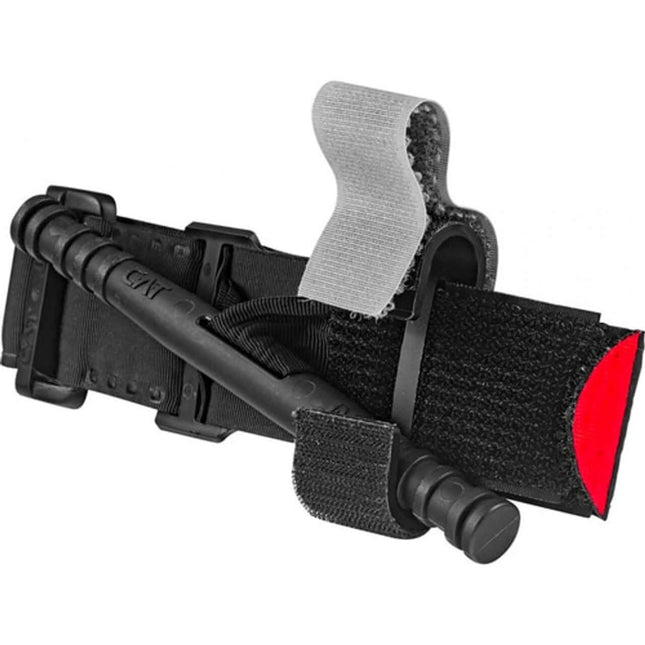
Begin with an honest audit. Does your current safety team include anyone with trauma care training? Is there a church trauma kit accessible from the sanctuary, the children's wing, and the primary gathering spaces — not locked in a cabinet, but reachable in seconds? Do team members know how to apply a tourniquet, pack a wound, and communicate patient status to incoming EMS?
The philosophy behind bleeding control for churches mirrors the logic that drives every other element of preparedness: the people already inside are the first responders. That is not a burden to resist — it is a responsibility that can be prepared for, trained toward, and carried with genuine confidence.
A security plan without a medical response layer assumes everything resolves when the threat does. It rarely does. The two or three minutes after a shooting, a stabbing, or a sudden medical crisis are often the most consequential of all — and they belong entirely to whoever is already in the room.
If your current church safety plan doesn't address trauma care, casualty coordination, or medical equipment placement, you have a gap that no camera or radio can close.
A readiness assessment is the clearest way to understand where your plan is strong and where it needs to grow.
Evaluate Your Medical ReadinessThe West Freeway Church of Christ incident (December 29, 2019) is referenced using publicly available reporting and official statements. No graphic details are reproduced. Statistical claims regarding hemorrhage timelines and EMS response are consistent with published emergency medicine literature and Stop the Bleed program guidance. This article is intended for educational and preparedness purposes.

OSHA minimum workplace kits don't include a tourniquet. Here's how to calculate station count, stock each station, and build bleed control coverage in any public...

One kit at the main entrance fails the 90-second coverage rule for most buildings. Here's how to run a coverage audit and calculate the correct...

Arterial hemorrhage kills in 3 minutes. Urban EMS takes 7–10. Every business needs CoTCCC-standard bleed control kits — here's how to select, deploy, and train...

40+ states mandate bleed control kits in schools — but most deployment plans miss classrooms and buses. Here's the placement standard that actually works.

Most of our trauma kits and first aid supplies qualify for HSA and FSA reimbursement. Don't let your benefits expire — invest them in gear that could save a life.


$124.95


$279.99

$37.49 - $139.46


$299.95 $269.95


$139.95 - $169.95

$49.95


$25.99


$164.95

We've been downrange. We know what it costs to be unprepared. ViTAC was built by U.S. Army Special Operations veterans to make sure the people who run toward the threat — and the families who depend on them — have gear that works when everything is on the line.
— ViTAC Solutions Founders | 40+ years combined Special Operations experience