Summer Tactical Readiness: Protocols for Extreme Heat, Dehydration, and Field Trauma
10 min reading time
10 min reading time
Between June and August, core body temperature becomes a threat multiplier. The Centers for Disease Control estimates more than 1,300 Americans die from heat-related illness each year — and that figure understates field-incident frequency because it counts only the cases that reach hospitals. For anyone operating in the field, at the range, or in remote terrain this summer, heat illness and dehydration are separate survivable threats that run alongside trauma risk. Addressing heat illness requires different protocols than addressing trauma. Confusing them — or treating one as a component of the other — is how people die preventably.
This guide covers the recognition criteria for heat illness, the dehydration thresholds that degrade decision-making and physical capability, how summer heat alters trauma care priorities, and what to inspect in your kit before summer operations start.
Heat illness is not a single event. It is a three-stage progression, and the correct intervention is stage-specific. Treating heat stroke the way you treat heat exhaustion costs time you do not have.
| Stage | Signs | Core Temp | Field Intervention |
|---|---|---|---|
| Heat Cramps | Painful muscle spasms (legs, abdomen). Sweating intact. Alert and oriented. | Normal or mildly elevated | Rest, shade, oral electrolytes, hydration. Not a medical emergency. |
| Heat Exhaustion | Heavy sweating, weakness, pale clammy skin, nausea, headache, dizziness. Oriented but fatigued. | Up to 104°F (40°C) | Remove from heat. Lay flat with legs elevated. Aggressive oral hydration. Cool the skin. Loosen clothing. Monitor closely. |
| Heat Stroke | Sweating absent or altered. Confusion, agitation, slurred speech, seizures, loss of consciousness. | Above 104°F (40°C) | Medical emergency. Immediate aggressive cooling: ice-water immersion if available, ice packs to neck, armpits, groin. Do not give fluids to a confused or unconscious patient. Evacuate immediately. |
The transition from exhaustion to stroke is the critical decision point. A patient who is confused and has stopped sweating in extreme heat is in heat stroke. Do not treat confusion as a signal to have them rest and drink water. Move immediately to aggressive cooling and evacuation.
Field Note: Confusion Changes the Protocol
Heat exhaustion responds to rest, shade, and oral hydration. Heat stroke does not. Attempting to force fluids on a confused patient creates aspiration risk. When confusion or loss of consciousness is present, shift to immediate whole-body cooling and call for evacuation — not after observation, now.
Dehydration at 1–2% of body weight loss degrades cognitive performance before the sensation of thirst becomes noticeable. At 3–4% loss, physical performance declines sharply and reaction time slows. At 6–8% loss, risk of heat exhaustion escalates significantly. These thresholds arrive faster than most people expect during sustained summer operations.
Sweat rates during moderate exertion in temperatures above 90°F average 1–1.5 liters per hour. An 8-hour field day without adequate replacement puts most individuals past the cognitive impairment threshold before they feel significantly thirsty. The field protocol for sustained summer operations:
Field Note: Thirst Is a Lagging Indicator
By the time thirst registers clearly, you are already 1–2% dehydrated — the threshold where decision-making quality begins to fall. This matters for anyone handling firearms, administering care, or navigating under load. The standard is pre-hydration before field time, not reactive drinking during it. Monitor urine color. Correct it before departure.
MARCH applies in summer exactly as it applies in any season: Massive Hemorrhage, Airway, Respiration, Circulation, Hypothermia — in that order. What changes is the threat environment the protocol operates in. Three specific factors alter how a summer trauma scenario unfolds.
Vasodilation — the body's thermal regulation mechanism — increases peripheral blood flow and skin perfusion in hot environments. An arterial injury under high-heat conditions loses volume faster than the same injury at baseline physiology. The standard three-to-five-minute arterial bleed window narrows in extreme heat. Apply the tourniquet decisively and early. Do not observe and assess while an arterial bleed is running.
A trauma patient who is already dehydrated and heat-stressed has a smaller physiological reserve than a baseline patient. Hemorrhagic shock and heat exhaustion share early symptoms — rapid pulse, pale skin, altered mental status — and compound each other. When a patient has both trauma and heat exposure, treat the hemorrhage first. Hemorrhage kills in minutes; heat illness, while critical, operates on a longer timeline once the bleed is controlled.
Post-hemorrhage hypothermia is not a cold-weather problem. A patient who has lost significant blood volume can drop core temperature even in summer conditions — particularly if transported in air conditioning, receiving fluids, or lying on a surface conducting heat away from the body. The Mylar emergency blanket in your IFAK addresses the hypothermia phase of MARCH regardless of the season. Apply it. The ambient temperature outside the truck does not change what is happening inside the patient.
Field Note: The Blanket Is Not Optional in July
Vasodilation-driven blood volume loss, combined with cooling measures and transport, can push a summer trauma patient into hypothermia faster than most people expect. After the bleed is controlled and the patient is shaded or in transport, apply the emergency blanket. Trauma-induced hypothermia worsens coagulopathy and increases mortality. The MARCH standard does not suspend for summer.
Heat degrades medical equipment on a timeline most operators do not account for. Before summer operations begin, inspect these items specifically.
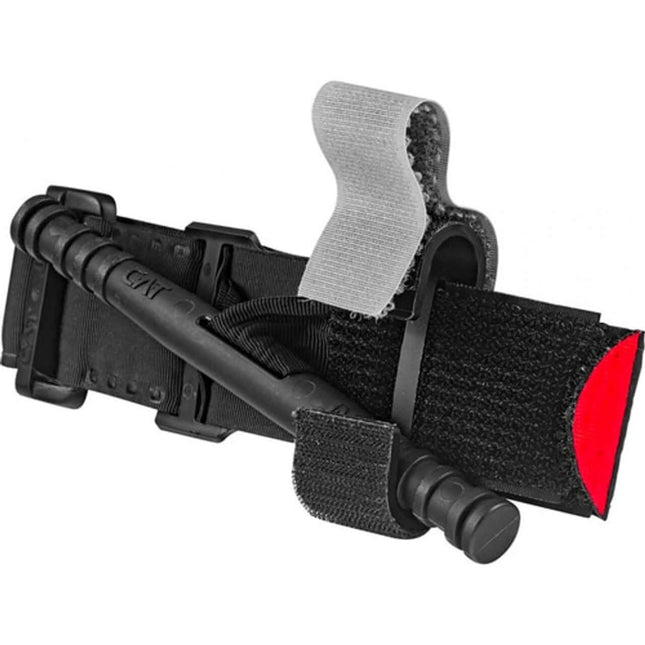
The CAT Gen 7 and SOFTT-W are heat-stable within normal operating parameters, but prolonged exposure to direct sun — dashboard staging, outdoor kit bags in direct sunlight — degrades elastomer components and Velcro retention over time. Inspect tourniquet straps for brittleness or UV discoloration quarterly. Inspect windlass rotation before every operational period. Replace any tourniquet with compromised Velcro retention or visible strap degradation. A tourniquet that slips under arterial pressure is functionally the same as no tourniquet.
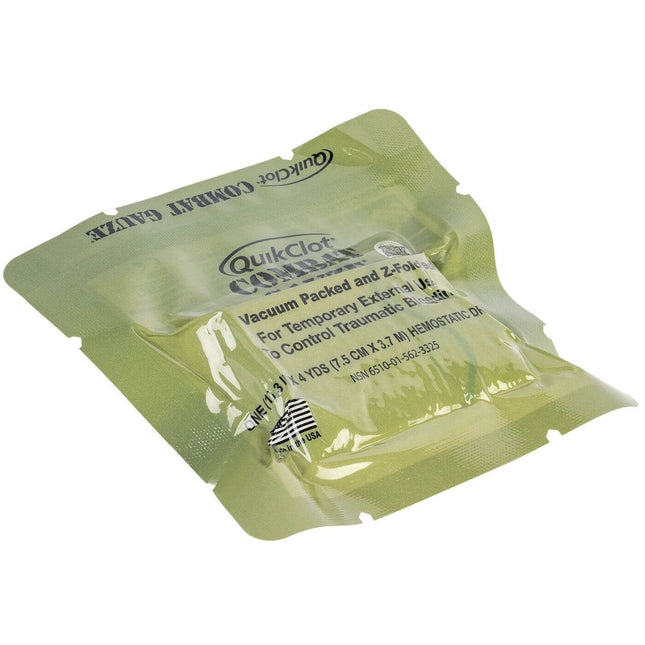
Foil packaging integrity is the critical variable. High heat causes foil seals to delaminate, bubble, or develop pinholes that allow moisture ingress — degrading the kaolin component and reducing clotting efficacy. Inspect packaging before every summer season. Any seal showing heat damage should be replaced regardless of the printed expiration date.
Adhesive-backed chest seals (HyFin, Russell Chest Seal) are designed to function on sweaty skin, but the adhesion margin decreases as sweat volume increases in extreme heat. Blot the application site dry before placement whenever possible. Stage backup chest seals on any multi-person operation. Test seal adhesion at the start of each summer season — if the adhesive is compromised, it will fail on a chest wall under stress.
A trauma kit in a dark vehicle under direct summer sun can reach internal temperatures exceeding 160°F — above the recommended storage threshold for most hemostatic agents and chest seal adhesives. Stage vehicle kits in the passenger compartment out of direct sun, or in a gear bag that provides thermal buffering. A mounted trunk kit in a parked vehicle in direct sun is not a maintained kit. It is a kit with an unknown failure point waiting to surface when it matters.
Yes. Ice packs to the neck, armpits, and groin are an effective field cooling method. Full ice-water immersion — a cooler, trough, or creek — reduces core temperature faster when available. Use whatever cold resource is on hand. The goal is aggressive cooling as fast as possible, not waiting for a clinical option. Do not delay.
Treat heat exhaustion in the field — rest, shade, hydration, cooling — and prepare for evacuation as a contingency from the start. Escalate to immediate evacuation priority if the patient becomes confused or loses consciousness, sweating stops in the heat, core temperature reaches or exceeds 104°F, or the patient does not improve within 30 minutes of field cooling. Any of those criteria mean heat stroke. Evacuate immediately.
Pre-season inspection at the start of summer, and quarterly for vehicle-staged kits. Any kit that has been stored in high heat should be inspected before the next use. Check foil packaging integrity, tourniquet strap condition, Velcro retention, and expiration dates on all time-sensitive components. Replace anything compromised — do not carry a kit you have not verified.
Yes. Vasodilation increases peripheral blood flow in hot environments, which means arterial hemorrhage progresses faster than in temperate conditions. Apply early and decisively. The standard guidance to apply within the first three minutes of a hemorrhagic injury becomes even more critical when ambient temperature accelerates volume loss. Do not observe an arterial bleed to decide whether a tourniquet is necessary.
Summer operations add two distinct threat layers to your field risk profile: heat illness and dehydration. Both are survivable with early recognition and correct protocol. Both can kill when misidentified or treated too late. MARCH applies in full regardless of ambient temperature — run every phase, including hypothermia prevention, in July. Pre-hydrate before field time, carry electrolytes, and inspect your trauma gear before the season starts.
Make sure your field kit is current-date, fully stocked, and summer-inspected. Browse ViTAC's IFAK collection to find the build that matches your summer mission.

OSHA minimum workplace kits don't include a tourniquet. Here's how to calculate station count, stock each station, and build bleed control coverage in any public...

One kit at the main entrance fails the 90-second coverage rule for most buildings. Here's how to run a coverage audit and calculate the correct...

Arterial hemorrhage kills in 3 minutes. Urban EMS takes 7–10. Every business needs CoTCCC-standard bleed control kits — here's how to select, deploy, and train...

40+ states mandate bleed control kits in schools — but most deployment plans miss classrooms and buses. Here's the placement standard that actually works.

Most of our trauma kits and first aid supplies qualify for HSA and FSA reimbursement. Don't let your benefits expire — invest them in gear that could save a life.


$124.95


$279.99

$37.49 - $139.46


$299.95 $269.95


$139.95 - $169.95

$49.95


$25.99


$164.95

We've been downrange. We know what it costs to be unprepared. ViTAC was built by U.S. Army Special Operations veterans to make sure the people who run toward the threat — and the families who depend on them — have gear that works when everything is on the line.
— ViTAC Solutions Founders | 40+ years combined Special Operations experience