Most people drive to work, haul their kids to practice, and commute through stretches where a serious accident is one bad decision away. The injuries that kill people in vehicle accidents — femoral artery lacerations, penetrating trauma from debris, tension pneumothorax — don't wait for an ambulance. They resolve in minutes, and not in the victim's favor.
A vehicle trauma kit doesn't replace paramedics. It closes the gap between when the injury happens and when trained responders arrive.
The Gap Between Incident and EMS
The National Highway Traffic Safety Administration tracks EMS response times nationwide. Urban median: 8 minutes. Rural areas run longer. In the field, arterial hemorrhage from a femoral or brachial artery can induce hemorrhagic shock in 3–5 minutes without intervention.
That math is not in your favor if your response plan starts with dialing 911.
CoTCCC — the Committee on Tactical Combat Casualty Care — developed the MARCH protocol because hemorrhage is the number-one preventable cause of death in trauma. The same framework that closes the survivability gap on the battlefield applies when your vehicle is the incident scene.

What Goes in a Vehicle Trauma Kit
A complete vehicle trauma kit follows MARCH priority. Every item serves a specific physiological function. Nothing is decorative, and the list is deliberately short.
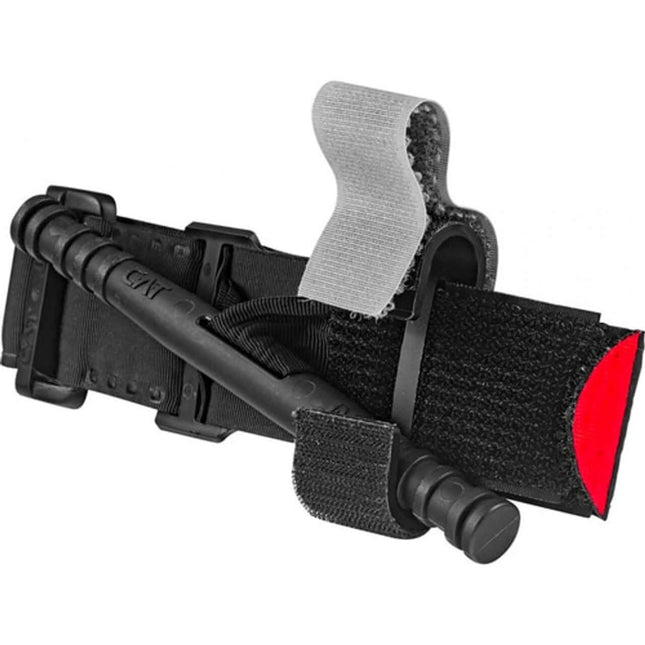
- Tourniquet (CoTCCC-approved): CAT Gen 7 or SOFTT-W. One minimum, two recommended. Stage it for single-handed application.
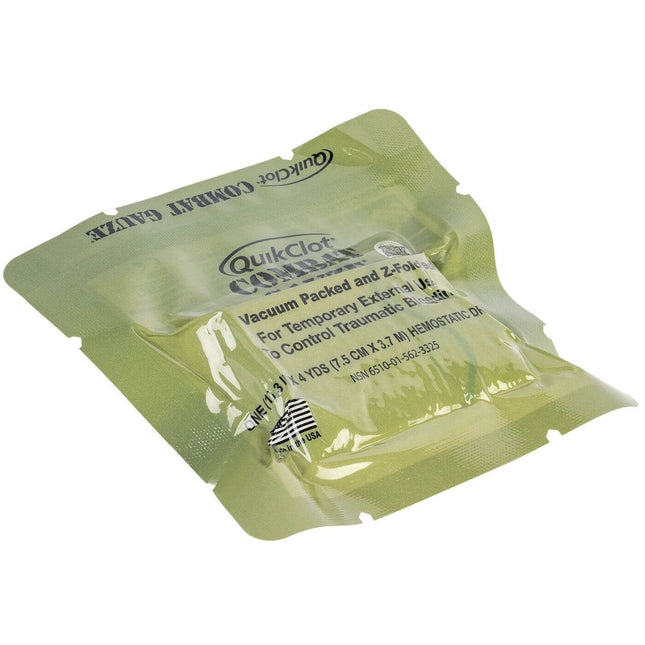
- Hemostatic gauze: QuikClot Combat Gauze, z-fold configuration. For junctional or non-extremity wounds where a tourniquet cannot be applied.
- Pressure dressing: Israeli-style compression bandage for wound packing and sustained pressure after gauze placement.
- Chest seals: HyFin Vented twin pack. Penetrating chest wounds require sealing both entry and exit points.
- Nasopharyngeal airway (NPA): With water-soluble lubricant. For airway compromise in unconscious victims — use only if trained.
- Trauma shears: To cut through clothing and expose wounds without repositioning a victim you shouldn't be moving.
- Emergency blanket: Blood loss accelerates hypothermia. Hypothermia accelerates coagulopathy. The blanket costs two dollars and saves the tourniquet work you already did.
- Nitrile gloves: Two pairs. Always first. Bloodborne pathogen protection is non-negotiable.

EMS arrives in 8 minutes. Arterial hemorrhage doesn't wait.— MARCH Protocol, CoTCCC
Choosing Your Format
Vehicle trauma kits come in three primary configurations. The right choice depends on your vehicle type, how many people you're equipping, and how fast you need to access the kit under stress.
| Format | Best For | Trade-Off |
|---|---|---|
| Rip-Away IFAK Pouch | Headrest mounting, seatback staging, single-handed grab | Limited supply capacity; requires deliberate pre-staging |
| Vacuum-Sealed Bag Kit | Under-seat storage, compact vehicles, glove box carry | Slower under stress; must break seal before access |
| Tactical Trauma Backpack | Patrol vehicles, trucks, multi-person or mass-casualty response | Larger footprint; not single-hand accessible from the driver's seat |
For most civilian vehicles, a rip-away IFAK staged on the headrest or seatback gives the best access profile. A passenger can reach it when the driver is the victim. It transfers to wherever the casualty is if the injury happened outside the vehicle.
MARCH: Priority Order in Your Vehicle
MARCH gives you a decision sequence when adrenaline has compromised your ability to improvise. Execute in order. Don't skip ahead.
- Massive Hemorrhage: Apply a tourniquet to any extremity wound. High and tight — as close to the torso as possible. Note the time. Don't second-guess it: tourniquet-preventable deaths are 100% preventable.
- Airway: Unconscious victim? Jaw thrust first, check for obstruction. Insert an NPA if the airway is compromised and you are trained on its use. Do not insert an NPA if you haven't trained with one.
- Respiration: Penetrating chest wound? Apply a vented chest seal to both entry and exit wounds. Watch for signs of tension pneumothorax: asymmetrical chest rise, worsening respiratory distress, tracheal deviation.
- Circulation: Pack non-compressible wounds with hemostatic gauze. Apply firm, direct pressure for a minimum of three minutes. Secure with a pressure dressing.
- Hypothermia: Wrap the victim with an emergency blanket. Shock and blood loss drop core temperature fast. Hypothermia kills patients who survived the initial injury.

Owning a vehicle trauma kit is step one. Knowing how to use it under stress is step two — and it matters more. Stop the Bleed training runs two hours and covers tourniquet application, wound packing, and direct pressure technique. The American College of Surgeons certifies instructors nationwide. TCCC and TECC courses cover the full MARCH protocol for those who want higher-level competency. A kit you haven't trained with is inventory, not capability.
Frequently Asked Questions
Does a vehicle trauma kit replace a standard first aid kit?
No. A trauma kit is built for life-threatening injuries: arterial bleeding, penetrating chest wounds, airway compromise. A standard first aid kit handles minor injuries — cuts, burns, blisters, OTC medications. You need both. Keep a first aid kit in the glove box and stage the trauma kit for immediate access.
Is it legal to carry a tourniquet in my vehicle?
Yes, in all 50 states. CoTCCC-approved tourniquets like the CAT Gen 7 are not regulated items and are sold without restriction. Many states have Good Samaritan statutes providing legal protection for bystanders who render care in good faith — but the specifics vary by jurisdiction. Check your state's statutes if that's a concern.
How often should I replace the supplies in my vehicle trauma kit?
Inspect quarterly. Replace hemostatic gauze, chest seals, and gloves every 2–3 years or whenever packaging shows any damage. CoTCCC-approved tourniquets (CAT Gen 7, SOFTT-W) have no formal expiration if stored away from UV exposure and sustained heat. Vehicles in direct sun experience temperature extremes that degrade adhesives and packaging — inspect more frequently if your vehicle sits outside.
The Bottom Line
A vehicle trauma kit costs less than a month of streaming subscriptions. The training takes two hours. The gap between a survivable injury and a preventable death is measured in minutes — and right now, that gap belongs to whoever is standing closest to the casualty when it opens.
Equip your vehicle. Train on what's inside it.