5 Trauma Skills to Practice Before You Need Them
4 min reading time
4 min reading time
Ask anyone who carries a firearm and an IFAK daily what they actually use more often. It's never the firearm. The skills that close the gap between an injury and a hospital are perishable, and most people don't practice them. Here are the five that matter most, mapped to MARCH.
Two fingers on the wound, held steady, can stop most venous bleeding without any gear. It's the first skill because it requires nothing — no kit, no training equipment, no tools. Apply firm pressure and don't lift your fingers to check. If bleeding continues around your fingers, the pressure isn't centered on the source. Reposition before reaching for the tourniquet.
Field Note: Venous vs. Arterial
Venous bleeding is low-pressure and won't pulse against your fingers. Arterial bleeding will. Treat every bleed as arterial until you can verify otherwise.
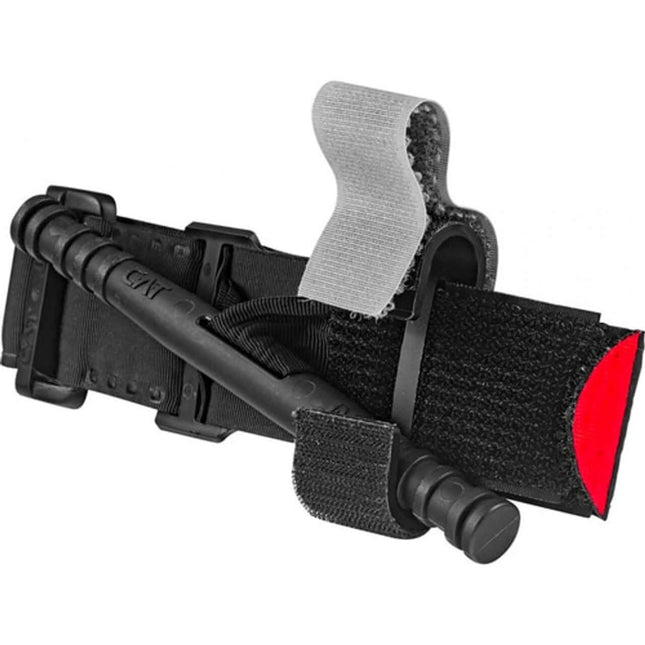
If direct pressure fails or bleeding is clearly arterial on a limb, apply a tourniquet before packing the wound. Placement: 2–3 inches above the wound on a single-bone segment (upper arm or upper thigh). Tighten until no distal pulse is present. Mark the time on the device. Do not remove once applied.
A tourniquet left in place for under 2 hours carries significantly less risk than arterial hemorrhage left unchecked for 2 minutes. The CAT Gen 7 is achievable one-handed in under 3 minutes with minimal practice — which means you practice it before you need it. For step-by-step technique, see Tourniquet Application: Complete Guide.
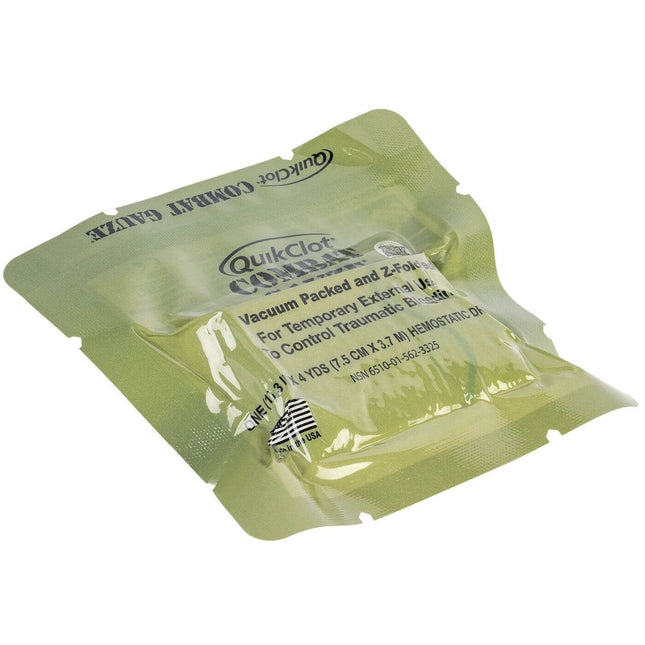
Wounds in junctional areas — armpit, groin, neck — can't be tourniqueted. They require direct wound packing with hemostatic gauze and continuous pressure until bleeding stops. The technique: one knuckle-length of gauze at a time, pressed firmly into the wound cavity, not layered over the surface. Do not release pressure to inspect the wound. The moment you lift off, you're starting from zero.
QuikClot Combat Gauze initiates clotting 5x faster than standard gauze — useful in high-bleed scenarios where time and available hands are limited. Once packed, wrap with an Israeli bandage to maintain pressure while addressing other casualties or preparing for transport.
A penetrating chest wound creates a pathway for air to enter the chest cavity. As pressure builds outside the lung, the lung collapses — a tension pneumothorax. A vented chest seal stops air entry while allowing trapped air to escape through one-way valves. Plan for two wounds: entry and exit.
The HyFin Compact Vented Chest Seal Twin Pack is sized for IFAK carry and designed for direct application over the wound site. Clear the skin surface of blood before applying to ensure the adhesive holds. Deploy before moving the patient.
Cold disrupts coagulation. A patient bleeding on bare ground loses heat faster than ambient temperature alone explains — the ground acts as a heat sink. Coagulation cascades are temperature-dependent: a cold patient stops clotting effectively, undoing the work of Skills 1 through 4.
Get the patient off bare ground. Cover with a mylar blanket or any insulating material. Insulate the head — the majority of body heat is lost through the scalp. In remote environments, hypothermia prevention is as operationally significant as hemorrhage control.
A kit you've never opened under stress is a kit you won't use effectively. Open your IFAK monthly. Reconfirm the location of every item by memory. Practice the tourniquet drill with your off hand — if your dominant arm is injured, you complete the task one-handed on yourself. Run it until your time is under 90 seconds.
For the full MARCH protocol sequence, see MARCH Trauma Care: The Protocol That Saves Lives.
How often should I practice tourniquet application?
Monthly is the minimum. CoTCCC guidelines treat tourniquet placement as a perishable skill. If you carry daily, run the drill at least once a month — with your off hand, from your actual carry position, under time.
Do I need formal training to use these five skills?
Stop the Bleed certification covers Skills 1 through 3 in a free 2-hour course available nationwide. For chest seal deployment and full MARCH sequencing, a civilian TCCC course adds roughly one day and significantly improves performance under stress.
What is the shelf life on IFAK consumables?
Hemostatic gauze and chest seals carry a 5-year shelf life from manufacture date. Tourniquets don't expire, but the windlass mechanism should be tested annually. Inspect packaging for integrity every 6 months — a punctured seal renders gauze unusable.
Five skills. None require a medic bag. All require repetition. Gear in a pouch you've never opened at speed is not a plan — it's a placeholder.
Build the kit. Then learn what's in it — view ViTAC IFAKs →

OSHA minimum workplace kits don't include a tourniquet. Here's how to calculate station count, stock each station, and build bleed control coverage in any public...

One kit at the main entrance fails the 90-second coverage rule for most buildings. Here's how to run a coverage audit and calculate the correct...

Arterial hemorrhage kills in 3 minutes. Urban EMS takes 7–10. Every business needs CoTCCC-standard bleed control kits — here's how to select, deploy, and train...

40+ states mandate bleed control kits in schools — but most deployment plans miss classrooms and buses. Here's the placement standard that actually works.

Most of our trauma kits and first aid supplies qualify for HSA and FSA reimbursement. Don't let your benefits expire — invest them in gear that could save a life.


$124.95


$279.99

$37.49 - $139.46


$299.95 $269.95


$139.95 - $169.95

$49.95


$25.99


$164.95

We've been downrange. We know what it costs to be unprepared. ViTAC was built by U.S. Army Special Operations veterans to make sure the people who run toward the threat — and the families who depend on them — have gear that works when everything is on the line.
— ViTAC Solutions Founders | 40+ years combined Special Operations experience