Bleed Control Kits for Churches and Workplaces
7 min reading time
7 min reading time
The average EMS response time in the U.S. is 7–10 minutes in urban environments and considerably longer in rural areas. A patient with uncontrolled arterial hemorrhage can reach irreversible shock in 3–5 minutes. Churches, offices, warehouses, and event venues are not inherently high-risk environments — but they aggregate people, and aggregated people produce incidents at predictable rates. A bleed control kit staged at the right location in a public-assembly building closes the gap between when an injury occurs and when trained responders arrive. This post covers how to calculate coverage, what to stock, and how to maintain readiness across a multi-station deployment.
Standard workplace first aid kits — regulated by OSHA 29 CFR 1910.151 — are built for minor injuries. The OSHA minimum standard does not include a tourniquet, hemostatic gauze, or chest seal. That standard was written before the Hartford Consensus, TECC, and Stop the Bleed campaign established the clinical and epidemiological case for bystander hemorrhage control. OSHA minimum compliance does not mean adequate hemorrhage preparedness. The clinical priority framework governing trauma response — MARCH — designates massive hemorrhage control as the first intervention before airway, respiration, circulation, or hypothermia management.
Churches face a different risk profile than industrial workplaces, but the core gap is the same. A congregation of 500 people meeting weekly generates roughly the same actuarial exposure to severe trauma events as a mid-size office. Parking lot accidents, falls with laceration injury, and medical emergencies that produce hemorrhage as a secondary complication all occur in religious gathering contexts. The absence of machinery does not mean the absence of hemorrhage risk.
Coverage math for public-assembly buildings follows the same rule as AED deployment: any person in the building should be able to reach a kit and return to the patient within 90 seconds. That translates to approximately one station per floor per 10,000 square feet, adjusted for occupancy density and areas where movement may be restricted during an incident.
| Facility Type | Occupancy | Minimum Stations | Notes |
|---|---|---|---|
| Church (single floor) | Under 200 | 2 | Sanctuary + lobby/entrance |
| Church (multi-floor) | 200–600 | 4–6 | One per floor; additional in children's wing and parking area |
| Office building | Per floor | 1–2 per floor | Co-locate with AED; add station in any shop floor or loading dock |
| Warehouse / industrial | Any | 1 per 5,000 sq ft + vehicle kit per forklift/truck | High laceration and crush injury risk requires denser coverage |
| Event space (variable) | Variable | 1 per 250 attendees | Stage portable kits at staff positions during large events |
All stations should be wall-mounted at eye level, clearly labeled with a red bleed control identifier, and co-located with the AED unit wherever one exists. Responders trained to find one find the other.
Minimum kit contents for each station in a church or workplace deployment:
The ViTAC Intermediate Bleeding Control Pack contains all core components in a compact IFAK-format package. Stocking identical kits at every station simplifies training — staff learn one contents layout rather than navigating varied configurations under stress.
Field Note: Double-Kit Stations
Two kits per station is not redundancy for redundancy's sake. In a mass casualty event with multiple casualties, a single kit is depleted on the first patient. In a scenario where two people are injured simultaneously, one kit means one person goes untreated until a second responder locates another station. Double-kit stations are the practical minimum for public-assembly venues with occupancy over 100.
Public-access bleed control kits serve a population that has not been trained to use them. That reality should drive kit design and station labeling choices. The three design criteria that matter in an untrained-responder scenario:
A bleed control station is only as effective as its most recent inspection. Station maintenance requires assigned ownership — a named person, not a department or role. Assign one person per building wing or floor. Inspection intervals:
Log the inspection date and inspector name in a logbook mounted at the station. This creates accountability and provides documentation in the event of a post-incident review. Vague "we check them annually" policies produce kits with expired gloves and missing tourniquets.
Do OSHA-compliant first aid kits meet bleed control requirements?
No. OSHA 29 CFR 1910.151 sets a minimum that predates the clinical case for bystander hemorrhage control. Compliant kits typically include bandages and antiseptic — not a tourniquet, hemostatic gauze, or chest seal. OSHA compliance is a legal floor, not a preparedness standard.
What is the minimum kit for a single-station church deployment?
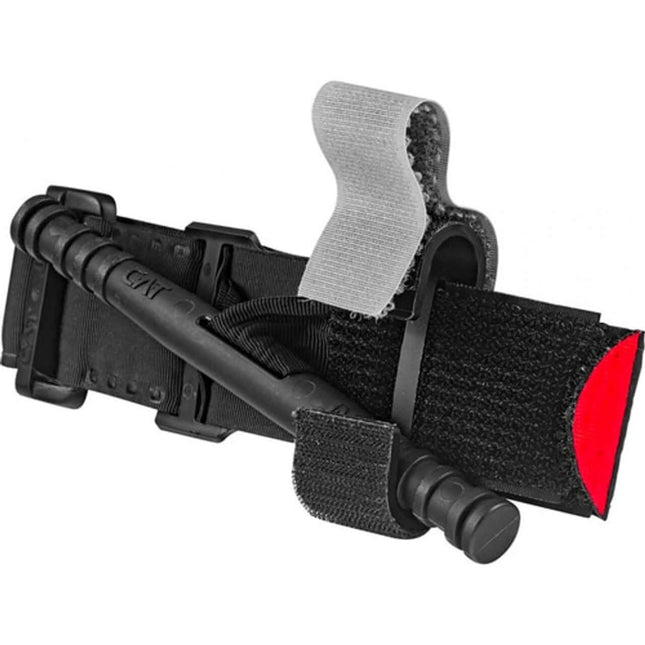
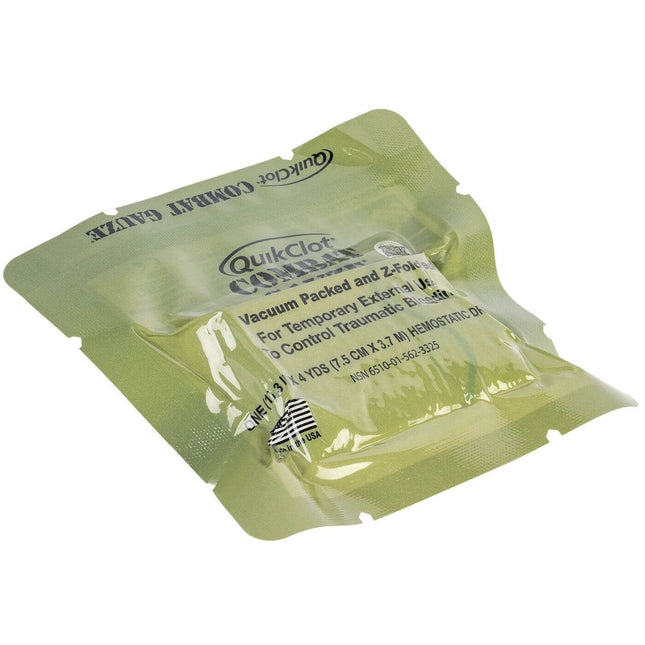
Two CAT Gen 7 tourniquets, one package of kaolin-based hemostatic gauze, one pressure dressing, trauma shears, nitrile gloves (3 pairs), and a permanent marker. Add a printed instruction card for untrained-responder access. The ViTAC Intermediate Bleeding Control Pack covers all these components.
How often do bleed control station components need to be replaced?
Sterile components — hemostatic gauze, gloves, pressure dressings — carry a 3–5 year shelf life from manufacture date. The tourniquet is mechanical with no expiration if stored correctly; inspect the windlass for function and the strap for brittleness annually. Replace any sterile item that is expired, punctured, or has been used, including in training.
Churches and workplaces require bleed control coverage proportional to their occupancy and floor area. The minimum kit is tourniquet, hemostatic gauze, pressure dressing, shears, gloves, and marker. Two kits per station is the practical minimum for venues over 100 occupants. Co-locate with AEDs, assign named maintenance owners, and inspect quarterly. The CAT Gen 7 and ViTAC Intermediate Bleeding Control Pack are the verified starting point for any station build-out.
For building-wide coverage calculation and station count methodology, see how many bleed control kits your building actually needs. For the organizational case for public-access deployment, see why businesses need public access bleed control kits.
Equip Your Building — Shop Bleed Control Kits

OSHA minimum workplace kits don't include a tourniquet. Here's how to calculate station count, stock each station, and build bleed control coverage in any public...

One kit at the main entrance fails the 90-second coverage rule for most buildings. Here's how to run a coverage audit and calculate the correct...

Arterial hemorrhage kills in 3 minutes. Urban EMS takes 7–10. Every business needs CoTCCC-standard bleed control kits — here's how to select, deploy, and train...

40+ states mandate bleed control kits in schools — but most deployment plans miss classrooms and buses. Here's the placement standard that actually works.

Most of our trauma kits and first aid supplies qualify for HSA and FSA reimbursement. Don't let your benefits expire — invest them in gear that could save a life.


$124.95


$279.99

$37.49 - $139.46


$299.95 $269.95


$139.95 - $169.95

$49.95


$25.99


$164.95

We've been downrange. We know what it costs to be unprepared. ViTAC was built by U.S. Army Special Operations veterans to make sure the people who run toward the threat — and the families who depend on them — have gear that works when everything is on the line.
— ViTAC Solutions Founders | 40+ years combined Special Operations experience