The Golden Hour: What It Means for Church Medical Readiness
7 min reading time
7 min reading time
Surviving the initial event is only part of the equation. What happens in the minutes that follow — before any advanced care arrives — is often what determines whether someone survives at all.
On September 24, 2017, a gunman opened fire on a congregation leaving Sunday service at Burnette Chapel Church of Christ in Antioch, Tennessee. One person was killed. Seven others were wounded. What followed the immediate violence — the frantic minutes of response, the effort to keep the injured alive until emergency services arrived — illustrated something that rarely makes headlines but matters enormously: surviving the attack and surviving the injuries are two separate challenges. The first is often beyond anyone's control. The second frequently is not.
That distinction sits at the center of a concept that emergency medicine has long understood and that church emergency preparedness has been slow to absorb: the Golden Hour.
The term Golden Hour originates in trauma medicine and refers to the window of time immediately following a serious injury during which prompt medical treatment has the greatest impact on survival and recovery. It is a recognition that in traumatic injury, time is not neutral. Physiological processes that begin at the moment of injury — blood loss, oxygen deprivation, shock — do not pause while help is on the way. They progress.
In practical terms, this means that the quality of care available in the first minutes after injury — not the first hour, the first minutes — shapes outcomes in ways that no amount of advanced hospital care can fully reverse. Military medicine internalized this truth in combat environments and developed the training and equipment protocols that became the foundation of modern civilian bleeding control programs. Hemorrhage controlled in the first two to three minutes is categorically different from hemorrhage controlled at the eight-minute mark when the ambulance finally arrives.
A church is not a hospital. It is not staffed for medical emergencies, and no one expects it to be. But a church is also not an empty building. On any given Sunday, it is one of the more densely populated spaces in its community — filled with people who came to worship, not to be triaged, and with leaders who accepted responsibility for their care the moment they opened the doors.
The gap between what a church is and what the Golden Hour demands is not impossibly wide. It does not require a physician on staff or a trauma bay in the fellowship hall. It requires trained people and accessible equipment positioned to act in the minutes before advanced care arrives.
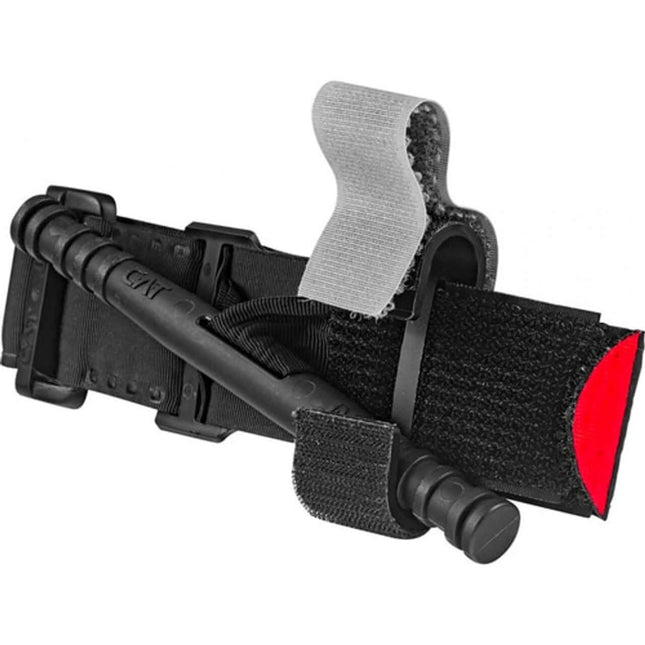
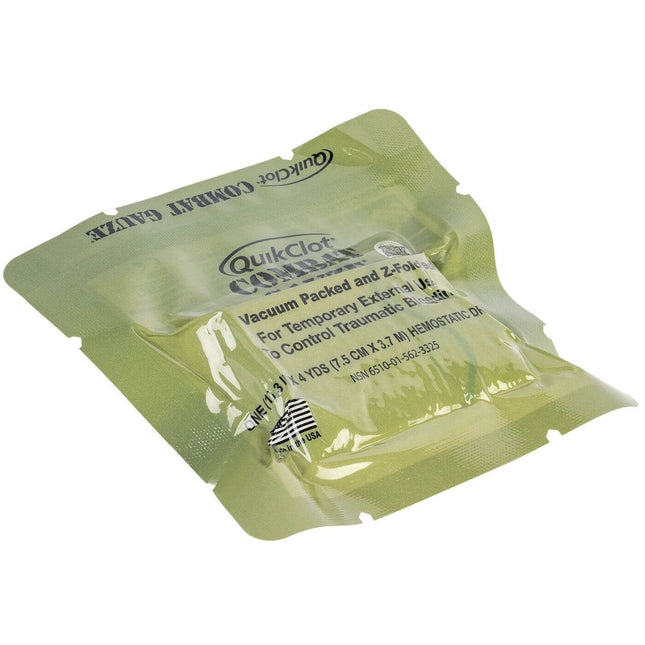
Consider what church trauma response looks like in practice. A shooting, a stabbing, or a serious fall produces an injury. The nearest ambulance is seven minutes out. A team member with hemorrhage control training and a staged trauma kit for churches can apply a tourniquet, pack a wound, and maintain an airway — interventions that, in the context of the Golden Hour, are not supplementary to professional care. They are what makes professional care relevant. They keep the patient alive long enough for it to matter.
Immediate intervention doesn't supplement professional care. It is what makes professional care relevant — by keeping the patient alive long enough for it to arrive.
Church medical readiness is not a single purchase or a one-time training. It is a layered capability that rests on three interdependent elements — each of which fails without the others.
There is nothing alarming about building this capability. It does not change the character of a congregation or signal distrust of the community that gathers there. It is, in the most practical sense, an extension of the same care that motivates every other act of stewardship in a church — the decision that the people who walk through those doors deserve to be looked after, thoroughly and without the gap between intention and readiness.
The Golden Hour does not begin when the ambulance arrives. It begins the moment someone is injured. And the only question that matters in that moment is whether someone in the room was prepared to use it.
If a traumatic injury occurred in your sanctuary this Sunday, would your team have the training, the equipment, and the role clarity to act within the first three minutes?
A readiness assessment is the most direct way to identify where your church medical readiness is genuinely in place and where it exists only in intention.
Assess Your Medical ReadinessThe Burnette Chapel Church of Christ shooting (September 24, 2017) is referenced using publicly available reporting and official court records. The Golden Hour concept and associated trauma response statistics are consistent with published emergency medicine literature and TCCC/Stop the Bleed program guidance. This article is intended for educational and preparedness purposes.

OSHA minimum workplace kits don't include a tourniquet. Here's how to calculate station count, stock each station, and build bleed control coverage in any public...

One kit at the main entrance fails the 90-second coverage rule for most buildings. Here's how to run a coverage audit and calculate the correct...

Arterial hemorrhage kills in 3 minutes. Urban EMS takes 7–10. Every business needs CoTCCC-standard bleed control kits — here's how to select, deploy, and train...

40+ states mandate bleed control kits in schools — but most deployment plans miss classrooms and buses. Here's the placement standard that actually works.

Most of our trauma kits and first aid supplies qualify for HSA and FSA reimbursement. Don't let your benefits expire — invest them in gear that could save a life.


$124.95


$279.99

$37.49 - $139.46


$299.95 $269.95


$139.95 - $169.95

$49.95


$25.99


$164.95

We've been downrange. We know what it costs to be unprepared. ViTAC was built by U.S. Army Special Operations veterans to make sure the people who run toward the threat — and the families who depend on them — have gear that works when everything is on the line.
— ViTAC Solutions Founders | 40+ years combined Special Operations experience