The Outdoor First Aid Kit Checklist: 12 Essentials That Could Save Your Life
9 min reading time
9 min reading time
Most hikers, hunters, and backcountry travelers carry a first aid kit.
Few of them have one that would actually keep them alive when it counts.
There's a critical difference between a kit built for blisters in the backyard and one built to manage a serious injury when the nearest EMS response is an hour away — or more.
In remote environments, you are the first responder.
Search and rescue teams, when accessible at all, often take hours to reach you.
That's not a scare tactic — it's the operating reality of anyone who goes off the beaten path.
The question isn't whether you'll face an emergency in the field. It's whether you'll be ready when you do.
Here are the 12 essentials every serious outdoor first aid kit needs — and why each one earns its weight.
Uncontrolled bleeding is the leading cause of preventable death in trauma.
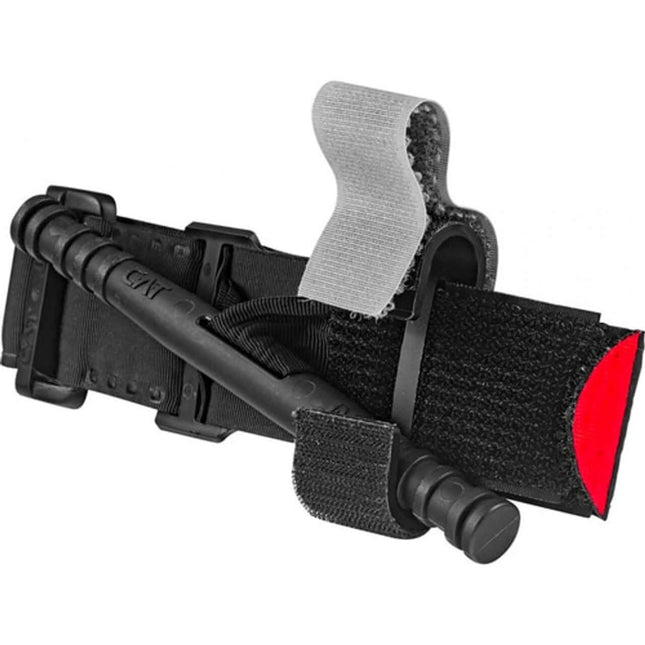
A windlass-style tourniquet — the CAT (Combat Application Tourniquet) or SOFTT-W — applied within the first few minutes of a severe extremity bleed can be the difference between walking out and being carried out.
Improvised tourniquets made from belts or bandanas frequently fail. Carry a real one. Know how to apply it one-handed.

Training Required
A tourniquet applied incorrectly — too loose, too low, or over a joint — can cause permanent nerve damage without stopping the bleed. Stop the Bleed certification is free, takes two hours, and teaches you exactly how to do it right.
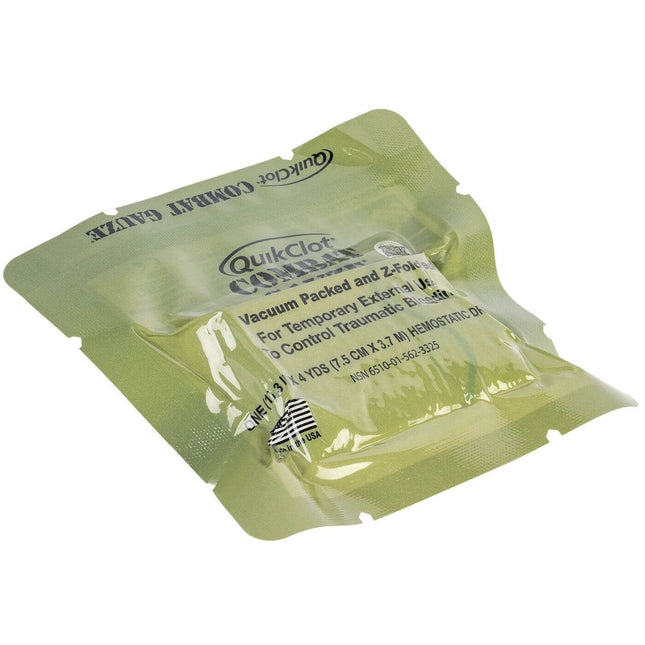
For wounds where a tourniquet can't go — the neck, groin, armpit, or torso — hemostatic gauze is your primary tool for hemorrhage control.
Products like QuikClot Combat Gauze are impregnated with kaolin, a clotting agent that significantly accelerates the body's natural hemostasis.
Pack the wound tight and apply direct pressure for at least three minutes.
This is not optional gear — it's the backup to your tourniquet for every location a limb device can't reach.
After packing a wound with hemostatic gauze, you need to hold that pressure in place — especially if you're moving, evacuating, or treating someone alone.
Israeli Bandages (Emergency Pressure Dressings) are the field standard: they apply consistent pressure, don't require a second set of hands to secure, and stay put during movement.
Pack at least two.
The everyday workhorses of any kit. Carry waterproof adhesive bandages in multiple sizes for cuts, scrapes, and blisters, along with sterile gauze pads and medical tape for larger wounds.
These cover the high-frequency, low-severity injuries that make up the majority of backcountry incidents — and keeping small wounds clean prevents infections that can sideline a trip fast.
In the backcountry, a minor infection can become a serious problem within 24–48 hours.
Pack antiseptic wipes, povidone-iodine solution or alcohol pads, and antibiotic ointment.
Clean every wound before dressing it — dirt, debris, and bacteria in a wound that's closed for days in the field is a recipe for cellulitis or worse.

A penetrating chest wound — from a fall, a hunting accident, or any sharp trauma to the torso — can cause a tension pneumothorax, where air builds up in the chest cavity and collapses a lung.
A vented chest seal (HyFin or SAM Chest Seal) releases trapped air while preventing more from entering.
This is the difference between a survivable injury and a fatal one.
If your kit doesn't have chest seals, it's incomplete for serious outdoor use.
Sprains, fractures, and joint injuries are among the most common serious injuries in backcountry environments.
A SAM Splint is a lightweight, moldable aluminum splint that immobilizes extremities effectively with minimal weight.
Pair it with an ACE bandage to secure it in place.
For suspected fractures, immobilize the joint above and below the injury and keep the person as still as possible until evacuation is possible.
Carry personal medications — inhalers, EpiPens, prescription drugs — in a waterproof bag, clearly labeled.
Add over-the-counter essentials: ibuprofen or acetaminophen for pain and inflammation, antihistamines for allergic reactions, and antidiarrheal medication for gastrointestinal emergencies.
If you carry an EpiPen for anaphylaxis, carry two — the second dose matters if the first doesn't fully resolve a severe reaction.
Know Your Allergies
If anyone in your group has a known severe allergy to insect stings, medications, or food, make sure every person in the group knows where the EpiPen is and how to use it — not just the person who carries it.
Hypothermia is one of the most underestimated threats in the field — it can develop in temperatures well above freezing, especially when a person is wet, injured, or in shock.
A mylar space blanket reflects up to 90% of body heat, packs to the size of a deck of cards, and weighs almost nothing.
Wrap a hypothermic or shock patient immediately. In an extended evacuation scenario, this is a life-saving piece of gear.
Dehydration and electrolyte imbalance compromise physical performance and cognitive function — both of which you need at full capacity when managing an emergency.
Electrolyte packets replenish sodium, potassium, and magnesium lost through sweat and exertion.
They're especially important when treating someone for heat exhaustion or when a prolonged evacuation is underway. Carry more than you think you need.
In low visibility — dense forest, fog, darkness — your voice won't carry far.
A loud signaling whistle carries over a mile in ideal conditions and conserves energy compared to shouting.
The international distress signal is three short blasts. Every person in your group should have one clipped to their pack where they can reach it with one hand.
It weighs less than an ounce.
Disposable nitrile gloves protect both you and the person you're treating from cross-contamination — don't skip them.
Pair them with a laminated field reference card or the Wilderness Medical Society's pocket guide.
Under stress, cognitive performance drops.
A clear, step-by-step reference keeps you from missing critical steps in assessment and treatment.
Gear without knowledge is just weight in your pack.

| Item | What It Addresses | Priority Level |
|---|---|---|
| Tourniquet | Severe limb hemorrhage | Life-threatening |
| Hemostatic Gauze | Junctional and torso bleeding | Life-threatening |
| Pressure Bandage | Wound management, sustained pressure | Life-threatening |
| Chest Seal | Penetrating chest trauma | Life-threatening |
| Mylar Blanket | Hypothermia, shock | Life-threatening |
| SAM Splint + ACE Wrap | Fractures, sprains, immobilization | Serious |
| Emergency Medications | Pain, allergic reaction, personal needs | Serious |
| Adhesive Bandages & Gauze | Cuts, scrapes, abrasions | Common |
| Antiseptics | Wound infection prevention | Common |
| Electrolyte Packets | Dehydration, heat exhaustion | Common |
| Emergency Whistle | Signaling, rescue location | Common |
| Nitrile Gloves + Field Guide | Cross-contamination, treatment reference | Every scenario |
Size it to your scenario, not your comfort level. A day hike close to a trailhead needs less than a week-long backcountry expedition with a group. The minimum for any remote outing: tourniquet, hemostatic gauze, pressure bandage, chest seal, space blanket, and basic wound care. Everything else builds from there.
Yes — especially on trails where cell service is unreliable. A turned ankle, a bad fall, or an allergic reaction doesn't check the length of your hike before it happens. A compact IFAK clips to any pack and adds less than a pound. The cost of not having it in a real emergency is not something you want to calculate after the fact.
At minimum, Stop the Bleed for hemorrhage control. The American Red Cross Wilderness and Remote First Aid course covers 16–20 hours of scenario-based training designed for environments where EMS is more than an hour away — it's the right baseline for anyone who spends serious time outdoors. If you're leading groups or operating in high-risk terrain, Wilderness First Responder (WFR) is the gold standard.
Check your kit before every major trip. Replace anything used, expired, or compromised by heat or moisture. Tourniquets should be inspected for Velcro integrity and windlass function. Medications have expiration dates that matter. A kit you haven't checked since last season is not a kit you should trust your life to.
The gap between a stocked kit and a useful kit is training and intentionality.
Know what's in your kit, know how to use every item in it, and build it around the threats you're most likely to face — not a generic checklist from a box store.
In the backcountry, you are the first responder. Be ready to act like one.
ViTAC's outdoor kits are built by U.S. Army Special Operations veterans who've operated in environments where the nearest hospital was hours away and the gear on hand was the only option.
Browse our field-ready kits at ViTAC outdoor first aid kits — built for the people who don't get to call for backup.

OSHA minimum workplace kits don't include a tourniquet. Here's how to calculate station count, stock each station, and build bleed control coverage in any public...

One kit at the main entrance fails the 90-second coverage rule for most buildings. Here's how to run a coverage audit and calculate the correct...

Arterial hemorrhage kills in 3 minutes. Urban EMS takes 7–10. Every business needs CoTCCC-standard bleed control kits — here's how to select, deploy, and train...

40+ states mandate bleed control kits in schools — but most deployment plans miss classrooms and buses. Here's the placement standard that actually works.

Most of our trauma kits and first aid supplies qualify for HSA and FSA reimbursement. Don't let your benefits expire — invest them in gear that could save a life.


$124.95


$279.99

$37.49 - $139.46


$299.95 $269.95


$139.95 - $169.95

$49.95


$25.99


$164.95

We've been downrange. We know what it costs to be unprepared. ViTAC was built by U.S. Army Special Operations veterans to make sure the people who run toward the threat — and the families who depend on them — have gear that works when everything is on the line.
— ViTAC Solutions Founders | 40+ years combined Special Operations experience