

Patrol & duty belt
Duty / tactical IFAKs
Low-profile MOLLE pouch sized for belt mount, with bleeding-control components organized for rapid access.

One Kit. One Operator. Zero Hesitation.
An IFAK — Individual First Aid Kit — is built for one person to treat one patient: themselves. Compact, fast-deploy, organized for muscle memory. Carry it on a duty belt, in a vehicle, on a plate carrier, or in a daily pack.
Originally a U.S. military standard, the IFAK is now the gold-standard format for law enforcement, tactical professionals, range users, and prepared civilians who want point-of-injury readiness.
Every IFAK in this collection is built around the MARCH protocol: Massive hemorrhage, Airway, Respirations, Circulation, Hypothermia.
This collection covers everything from compact civilian IFAKs to full TCCC-aligned tactical loadouts.


Compact, capable, and combat-proven—the ViTAC Enhanced IFAK equips you to control bleeding, manage airways, and stabilize trauma when every second counts.
$164.95


The Solo IFAK is a professional-grade, personal trauma kit—compact, capable, and ready to save a life when you’re the only responder.
$220.59

Trauma readiness without the bulk. Pro pairs everyday wound, burn, and topical care with a RATS® tourniquet, Celox® hemostatic, and pressure bandage—ready when bleeding turns serious.
$74.95 - $119.95

Color-coded MOD pages and a MOLLE tear-away shell put organized care within reach—wound, burn, and bleeding control built in, with QuikClot® hemostatic gauze and airway tools on the PRO level.
$169.95 - $324.95
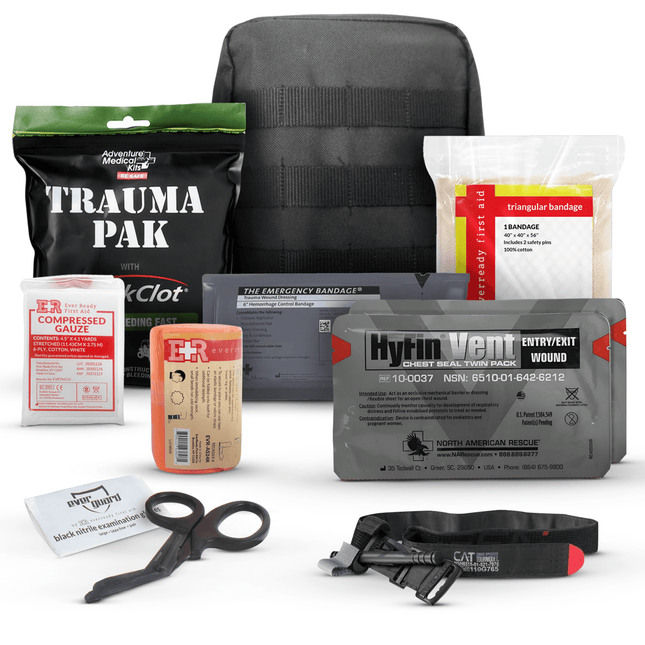
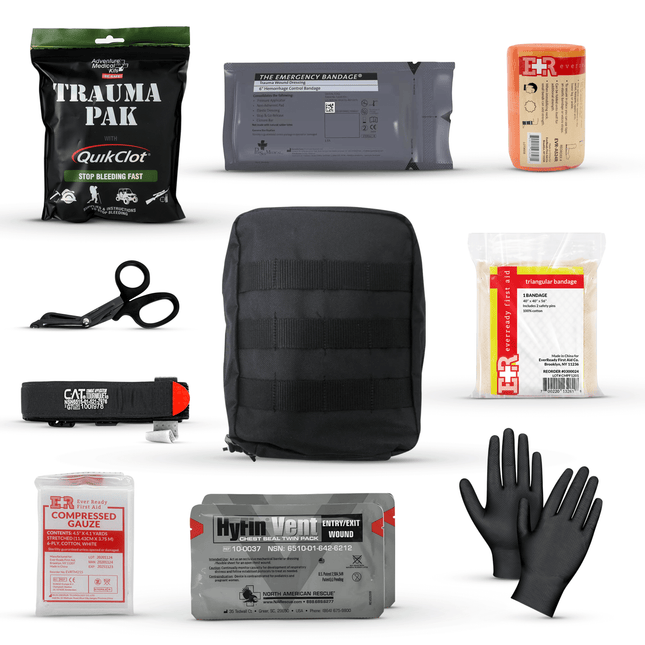
Keep your trauma gear together in your range bag, vehicle or personal loadout. This individual kit pairs a CAT windlass tourniquet, QuikClot and HyFin vent chest seals with dressings, a splint and a MOLLE-compatible pouch. Advanced tools are intended for trained users. A solid fit for your range days, patrol setup or everyday preparedness.
$134.97


Keep your emergency supplies together and ready to find. The Mwraps Oh Sh!t Kit brings 80 medical components into a durable nylon pouch, including a CAT tourniquet, chest seals, hemostatic gauze, burn dressings, and everyday first-aid supplies. Advanced trauma and airway tools require appropriate training. A solid fit for your worksite, outdoor gear, or emergency preparation.
$129.99


A complete Stop the Bleed kit built on a genuine C-A-T® tourniquet and QuikClot® dressing, vacuum-sealed so it stays ready wherever you stage it.
$99.99

Full first-aid coverage in a kit small enough to carry every day. Choose Standard for everyday readiness, or Pro to add tourniquet, hemostatic, and airway tools for point-of-injury care.
$114.95 - $224.95


Five common carry contexts and the IFAK type built for each.
Patrol & duty belt
Low-profile MOLLE pouch sized for belt mount, with bleeding-control components organized for rapid access.

Plate carrier / loadout
Rip-away IFAKs with MOLLE backing. Detach in seconds for casualty transfer or shared team use during treatment.

Range & civilian carry
Compact pouch kits with full bleeding-control capability. Sized for a range bag, daily pack, or vehicle stash.

Vehicle / cabin staging
Headrest or seatback mount keeps the IFAK accessible from the front or back seat. Sized for 2–4 occupants.

Refill & standardization
Restock consumables — tourniquets, gauze, dressings — after training or use. Standardize loadouts across multiple kits.
Swipe to compare →

Most of our trauma kits and first aid supplies qualify for HSA and FSA reimbursement. Don't let your benefits expire — invest them in gear that could save a life.

We've been downrange. We know what it costs to be unprepared. ViTAC was built by U.S. Army Special Operations veterans to make sure the people who run toward the threat — and the families who depend on them — have gear that works when everything is on the line.
— ViTAC Solutions Founders | 40+ years combined Special Operations experience
An Individual First Aid Kit—commonly called an IFAK—is a purpose-built trauma kit focused on treating severe, life-threatening injuries in the critical minutes before advanced medical care arrives. Unlike traditional first aid kits filled with adhesive bandages and antiseptic wipes, IFAKs prioritize hemorrhage control, airway management, and penetrating trauma response.
Originally developed for military and tactical applications, IFAKs have become essential gear for law enforcement officers, armed professionals, outdoor enthusiasts, range shooters, and anyone serious about emergency preparedness. The core philosophy: carry the tools that address the injuries most likely to cause preventable death in the field.
Modern IFAKs are compact, accessible under stress, and built around evidence-based protocols like TCCC (Tactical Combat Casualty Care) and TECC (Tactical Emergency Casualty Care). Whether mounted on a duty belt, stored in a vehicle, or packed for backcountry travel, a well-designed IFAK puts critical interventions within arm's reach.
Not all IFAKs are created equal. Here's how to match the right kit to your situation:
Intended Use Environment
Patrol and duty kits prioritize rapid access and MOLLE compatibility. Vehicle-mounted IFAKs like headrest models offer hands-free storage. Range and outdoor kits balance portability with comprehensive coverage. Consider where you'll carry it and how quickly you need to deploy it.
Skill Level & Training
Basic kits focus on hemorrhage control—tourniquets, pressure dressings, and hemostatic gauze. Advanced kits add chest seals, decompression needles, and airway adjuncts. Choose components you're trained to use confidently under pressure.
Component Quality & Compliance
Look for proven brands: CAT or SOFTT-W tourniquets, QuikClot or Celox hemostatic agents, HyFin or Bolin chest seals. TCCC-compliant kits meet military-grade standards. Avoid kits with unknown or untested components.
Pouch Design & Accessibility
Rip-away pouches allow bystanders to access supplies quickly. Color-coded or labeled compartments reduce fumbling. MOLLE/PALS webbing enables modular mounting. Consider whether you need one-handed access or ambidextrous design.
Single-User vs. Multi-Casualty
Individual kits are sized for one person's immediate needs. If you're responsible for a team, vehicle occupants, or family members, consider kits with redundant supplies or pair an IFAK with a larger trauma bag.
Specialized Scenarios
K-9 handlers need dual-purpose kits with canine-specific supplies. Vehicle kits benefit from headrest or seat-back mounting. Minimalist EDC users may prefer ultra-compact "micro" IFAKs that fit in cargo pockets or glove boxes.
IFAKs are ideal for:
Law enforcement and military personnel, armed security professionals, competitive shooters and range instructors, hunters and backcountry adventurers, first responders and medical professionals, and anyone trained in trauma response who wants immediate access to life-saving tools.
IFAKs may not be the best fit if:
You're looking for general-purpose first aid (minor cuts, burns, sprains)—standard first aid kits are better suited for everyday injuries. You have no training in tourniquet application, wound packing, or chest seal placement—consider pairing your IFAK purchase with a Stop the Bleed or trauma response course. You need a comprehensive family or workplace safety kit—IFAKs are specialized tools, not replacements for broader medical supplies.
The best IFAKs share several key characteristics. They're built around proven, field-tested components from trusted manufacturers. They're organized for rapid access under stress, with intuitive layouts and clear labeling. They're durable enough to withstand harsh environments—water-resistant materials, reinforced stitching, and reliable closures. They're sized appropriately for their intended carry method, whether belt-mounted, vehicle-stored, or pack-integrated.
Quality IFAKs also include clear, concise instructions or reference cards for users who may need guidance under pressure. Many are designed to be restocked and reused, with modular pouches that accept replacement supplies as components are used or expire.
Browse the collection below to compare kits by size, component list, and intended use. Each product page includes detailed specs, component breakdowns, and guidance to help you choose confidently. Whether you're outfitting a duty belt, prepping a vehicle, or building an EDC loadout, you'll find field-tested IFAKs designed for the moments that matter most.
What's the difference between an IFAK and a regular first aid kit?
An IFAK is designed specifically for life-threatening trauma—severe bleeding, penetrating injuries, and airway compromise. Regular first aid kits focus on minor injuries like cuts, burns, and sprains. IFAKs contain tourniquets, hemostatic gauze, and chest seals; traditional kits contain bandages, antiseptics, and pain relievers.
Do I need training to use an IFAK?
Yes. While IFAKs are designed for rapid use, effective application of tourniquets, hemostatic agents, and chest seals requires hands-on training. We strongly recommend completing a Stop the Bleed course, TCCC/TECC training, or wilderness first aid certification before relying on an IFAK in an emergency.
How do I choose between a basic and advanced IFAK?
Start with your training level and use case. Basic IFAKs focus on hemorrhage control (tourniquets, pressure dressings, gauze) and are ideal for most users. Advanced kits add chest seals, decompression needles, and airway tools—choose these only if you're trained in their use and operate in higher-risk environments.
What components should every IFAK include?
At minimum: one CAT or SOFTT-W tourniquet, hemostatic gauze (QuikClot or Celox), a pressure dressing (Israeli or OLAES), trauma shears, and nitrile gloves. Many users also include chest seals, a nasopharyngeal airway, and a permanent marker for documentation.
How often should I inspect or replace IFAK supplies?
Check your IFAK every 6–12 months. Inspect tourniquets for damage, verify hemostatic agents haven't expired, and ensure packaging is intact. Most components have 3–5 year shelf lives. Replace any used, damaged, or expired items immediately.
Can I mount an IFAK on my duty belt or plate carrier?
Yes. Most IFAKs feature MOLLE/PALS webbing compatibility or belt loops for secure mounting. Rip-away designs allow quick detachment for self-aid or buddy-aid. Check product specs for mounting options and dimensions to ensure compatibility with your gear.
Are these kits suitable for vehicle or home storage?
Absolutely. Vehicle-mounted IFAKs (like headrest models) are designed for car, truck, or patrol vehicle storage. Standard IFAKs work well in glove boxes, center consoles, or home safe rooms. Avoid prolonged exposure to extreme heat or moisture, which can degrade components.
Do IFAKs include instructions for use?
Many kits include quick-reference cards or illustrated guides. However, these are supplements—not substitutes—for formal training. Familiarize yourself with every component before an emergency, and practice deployment under realistic conditions.