A trauma kit is not a larger version of a first aid kit. It is a purpose-built response tool for the injuries that kill fastest — arterial bleeding, penetrating chest trauma, airway obstruction. Knowing which kit fits your deployment scenario is the difference between a useful piece of gear and a false sense of security.
Why Trauma Kits Are Different
Standard first aid kits address cuts, burns, sprains, and minor injuries. They are not designed for hemorrhage control, tension pneumothorax, or airway management. A trauma kit is configured around the MARCH protocol — the CoTCCC-derived framework covering Massive hemorrhage, Airway, Respiration, Circulation, and Hypothermia. The leading causes of preventable death in trauma are all addressed by MARCH. They are not addressed by a standard first aid kit.
The components that matter in a trauma kit — a windlass tourniquet, hemostatic gauze, vented chest seals, and an NPA — are each validated through battlefield data. You do not improvise an arterial bleed with bandages. You stop it with the right tool applied correctly within the first three minutes.
The Four Deployment Scenarios
The right kit depends on where it will be used and what threats are realistic in that environment. Four scenarios cover the majority of civilian and professional use cases:
| Scenario | Primary Threat | Kit Type | Key Components |
|---|---|---|---|
| Home / Family | Accidental trauma, lacerations, crush injuries | Comprehensive home first aid kit with trauma capability | Tourniquet, hemostatic gauze, pressure bandage, chest seal |
| Range / Shooting | Gunshot wounds, penetrating trauma | Dedicated range trauma kit, hard case recommended | Tourniquet x2, QuikClot gauze, chest seals, NPA, shears |
| Vehicle / Roadside | MVC trauma, arterial bleeds, crush injuries | Vehicle-staged trauma kit or IFAK in accessible mount | Tourniquet, hemostatic gauze, Israeli bandage, chest seal |
| EDC / Everyday Carry | Stab wounds, arterial bleeds, active threat | Compact IFAK or M-FAK, belt-mounted or pocket-staged | Tourniquet, compressed gauze, pressure bandage |

Core Components Every Kit Needs
Regardless of scenario, a trauma kit built for hemorrhage control should include the following:
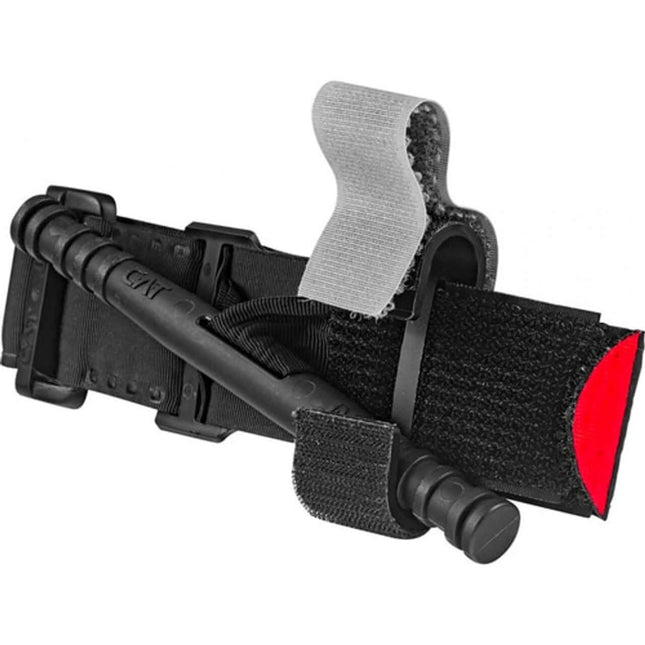
- Windlass tourniquet. The CAT Gen 7 or SOFTT-W — both CoTCCC-approved. Generic tourniquets have documented occlusion failure rates. Carry the standard, not a substitute.
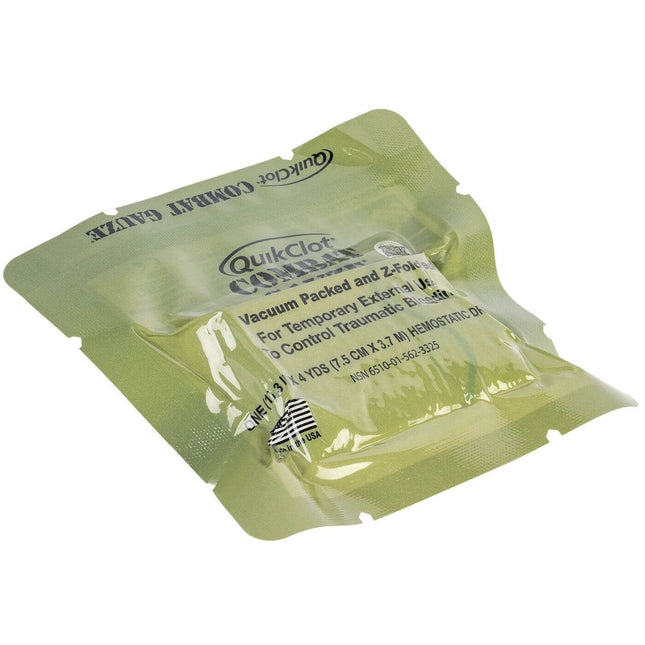
- Hemostatic gauze. Kaolin-impregnated gauze (QuikClot Combat Gauze or QuikClot EMS Dressing) for wound packing on junctional or extremity bleeds where a tourniquet cannot reach. CoTCCC-approved formulations achieve clot formation 5× faster than standard gauze.
- Pressure dressing. Israeli Bandage or equivalent to maintain pressure after wound packing. Frees the hands once hemorrhage is controlled.
- Vented chest seals. HyFin Vent or equivalent for penetrating thoracic trauma. A sucking chest wound can collapse a lung within minutes if left unsealed.
- Nasopharyngeal airway (NPA). For unconscious or semi-conscious patients where tongue occlusion threatens the airway. Packaged with lubricant, requires basic training to deploy correctly.
- Trauma shears. For rapid clothing removal to access wounds. Exposed wound assessment is non-negotiable before treatment.
Matching the Kit to the Threat
The MARCH sequence defines the treatment priority order. Hemorrhage is addressed first — it is the leading cause of preventable death. A kit that does not include a CoTCCC-approved tourniquet and hemostatic gauze cannot address the primary threat. Everything else is secondary.
For range and vehicle scenarios, a full TCCC-configured IFAK is appropriate. For home use, a comprehensive kit that includes both trauma components and basic care supplies covers the wider range of injuries a household faces. For EDC, the constraint is carry weight — a compact IFAK prioritizes tourniquet, gauze, and a pressure bandage at the expense of the airway adjuncts, which are less likely to be needed in a street-level response where EMS arrival is faster.
An arterial bleed runs out faster than the closest ambulance. The kit you have with you is the only kit that matters. — Justin McAllister, Owner · ViTAC Solutions
Training: The Component You Can't Buy
Gear without training is inert. A tourniquet applied incorrectly — too low on the limb, not tightened to arterial occlusion — provides no protection. QuikClot gauze packed without maintaining contact pressure fails to form a clot. The Stop the Bleed initiative offers a standardized civilian training curriculum covering tourniquet application, wound packing, and pressure dressings. Completion takes roughly two hours and provides verified hands-on repetition.
For law enforcement and tactical roles, a formal TCCC course builds on Stop the Bleed with MARCH sequencing, airway management, and patient assessment protocols. Training frequency matters — skills degrade without reinforcement. Annual refreshers are the minimum acceptable standard for anyone who carries a trauma kit professionally.
Counterfeit CAT tourniquets are prevalent on online marketplaces. Knock-off windlass tourniquets have documented occlusion failure rates — they do not stop arterial bleeding. Purchase CoTCCC-approved gear only through verified military resellers. ViTAC sources and vets every component against the CoTCCC approved product list before it enters the catalog.
FAQ
What is the difference between a trauma kit and an IFAK?
An IFAK (Individual First Aid Kit) is a specific format — a compact, personal-carry trauma kit configured for one user's self-treatment or buddy aid. A trauma kit is the broader category, which includes IFAKs, vehicle-staged kits, range kits, and large-format mass-casualty kits. All IFAKs are trauma kits. Not all trauma kits are IFAKs.
Do I need different kits for different locations?
Yes — not because the components change dramatically, but because staging and access requirements differ. A vehicle-staged kit can be larger and more comprehensive. An EDC kit must be carry-weight-constrained. A home kit can prioritize both trauma and general care. The core hemorrhage control components remain consistent across all three; what varies is configuration, size, and what additional capability you can carry in that context.
Is a $30 kit from a big-box store adequate?
Not for trauma. Inexpensive kits marketed as "first aid" typically include bandages, antiseptics, and minor wound supplies. They do not include CoTCCC-approved tourniquets or hemostatic gauze. A CAT Gen 7 tourniquet alone retails at $37. A functional hemorrhage control kit requires verified components — the price reflects validated manufacturing standards, not brand premium.
The Right Kit Is the One You've Trained With
TCCC-compliant, CoTCCC-verified components. Every kit ViTAC ships is built to the same standard that saves lives downrange. Match the kit to your scenario, verify the components, and train before you need it.