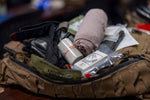
If You Carry a Gun, Carry a Kit
5 min reading time
5 min reading time
Per TCCC analysis of over 4,500 battlefield fatalities, hemorrhage accounts for 90% of potentially survivable deaths — the finding that drove the redesign of every current military trauma protocol. In civilian settings, EMS response averages over 14 minutes nationally. At that response time, a severed femoral artery has already crossed the lethal threshold. The window to intervene runs 2 to 5 minutes, and it belongs to whoever is standing there.
A firearm cannot close that window. Only direct hemorrhage control can.
A concealed carry permit is a decision to take personal safety seriously. Most carriers invest real time and money in that decision — ammunition, training, a quality holster, a reliable platform. They've thought through the threat.
What many haven't thought through is what happens after the threat stops. A defensive shooting leaves wounds. Whether those wounds belong to a threat, a bystander, or the carrier, the challenge shifts immediately from stopping the problem to keeping people alive until EMS arrives. A firearm has nothing to offer at that point.
Carrying a gun without trauma gear is an incomplete system. The tool that stops the threat and the tool that stops the bleed are both required equipment.
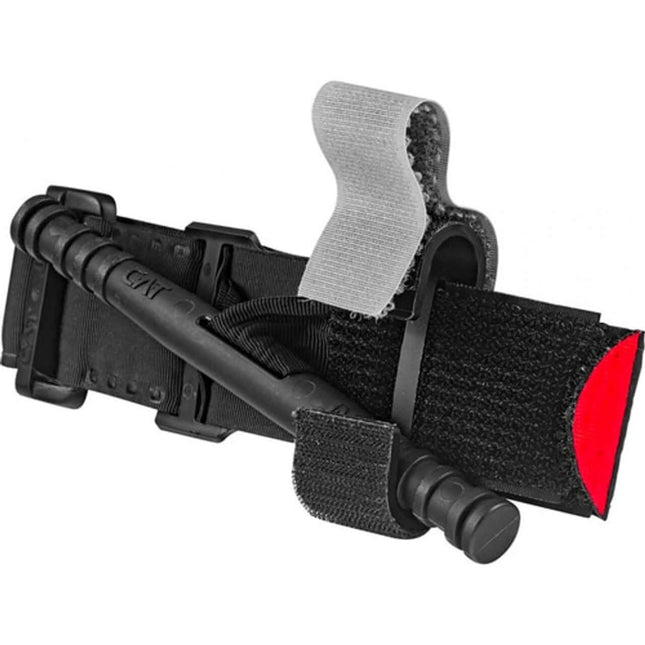
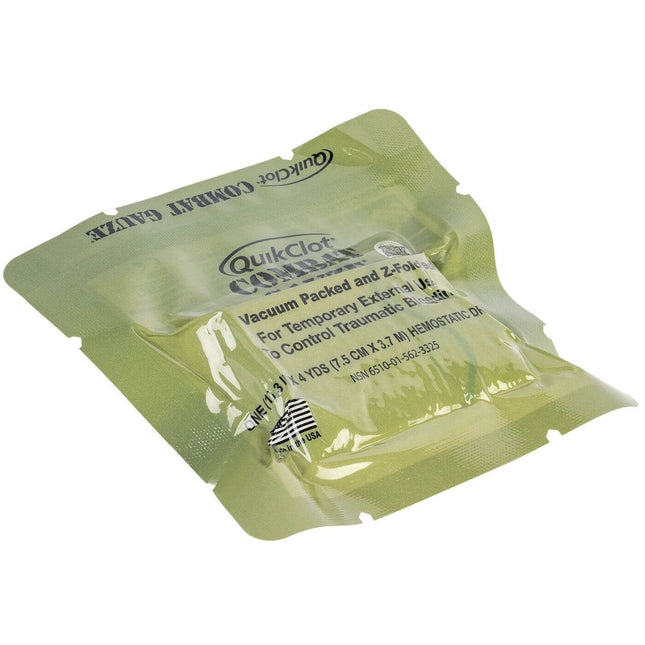
A functional trauma kit doesn't require a medic bag. Three items address the primary mechanisms of preventable death after traumatic injury, mapping directly to the first three steps of the MARCH protocol:
| Item | Wound Type Covered | Why This One |
|---|---|---|
| CAT Gen 7 | Extremity hemorrhage (arms, legs) | 4,000+ documented combat applications, 87%+ hemorrhage control rate, one-handed application under 60 seconds |
| QuikClot Combat Gauze | Junctional wounds (neck, groin, armpit) | CoTCCC-recommended since 2008, kaolin-based clotting 5x faster than plain gauze, Z-fold for controlled deployment |
| HyFin Vented Chest Seal Twin Pack | Penetrating chest wounds | Seals entry and exit wounds, vented design prevents tension pneumothorax, IFAK-sized packaging |
Those three items fit in a cargo pocket. They add no meaningful weight. They cover the wound patterns most likely in a defensive or mass-casualty event.
Field Note: Tourniquet Placement
Placement is 2–3 inches above the wound on a single-bone segment — upper arm or upper thigh. Tighten until no distal pulse is present. Mark the time. Do not remove once applied. A tourniquet in place for under 2 hours carries far less risk than uncontrolled arterial hemorrhage unchecked for 2 minutes.
A trauma kit goes anywhere. Airport security does not flag it. Government buildings do not prohibit it. The environments where firearms are most restricted are often high-density public spaces — and the highest mass-casualty potential. In those locations, a bystander with a tourniquet is the only immediate responder when something goes wrong.
If you carry for preparedness, carrying only when armed is a gap in your coverage. The trauma kit is the tool you can always have.
A tourniquet in a cargo pocket and a tourniquet applied correctly in 45 seconds under stress are not the same thing. The same principle that drives serious shooters to the range applies to trauma care — performance under pressure requires repetition outside of pressure.
Stop the Bleed courses are free, widely available through hospitals and community organizations, and cover tourniquet application and wound packing with hands-on practice. TCCC-based civilian programs add junctional hemorrhage control, chest seal placement, and airway management. A course taken once is a baseline. Reviewed annually, it stays current with CoTCCC protocol updates.
For the practical mechanics of all five skills, see 5 Trauma Skills to Practice Before You Need Them.
Does carrying a trauma kit require any special training or permits?
No permits, no restrictions. A trauma kit is medical equipment and travels without limitation. Stop the Bleed certification covers the essentials in a free 2-hour course available nationwide.
How much does a functional EDC trauma kit actually weigh?
A CAT Gen 7, QuikClot Combat Gauze, and a HyFin chest seal twin pack together weigh under 10 ounces and fit in a single cargo pocket. There is no weight or space argument against carrying one.
What if I'm not near my kit when something happens?
Improvised direct pressure is Skill 1 for a reason — it requires nothing. Two hands, firm pressure, held steady. Keep the kit accessible and staged where you can reach it under stress. If you carry a firearm, the kit belongs in the same ready position.
Hemorrhage is the threat after the threat. A firearm stops one; only a trauma kit addresses the other. Three items — tourniquet, hemostatic gauze, chest seal — cover the most common lethal wound patterns and fit in a cargo pocket. Gear without training is a plan that falls apart under stress. Get the kit, open it, and practice until you don't have to think.

OSHA minimum workplace kits don't include a tourniquet. Here's how to calculate station count, stock each station, and build bleed control coverage in any public...

One kit at the main entrance fails the 90-second coverage rule for most buildings. Here's how to run a coverage audit and calculate the correct...

Arterial hemorrhage kills in 3 minutes. Urban EMS takes 7–10. Every business needs CoTCCC-standard bleed control kits — here's how to select, deploy, and train...

40+ states mandate bleed control kits in schools — but most deployment plans miss classrooms and buses. Here's the placement standard that actually works.

Most of our trauma kits and first aid supplies qualify for HSA and FSA reimbursement. Don't let your benefits expire — invest them in gear that could save a life.


$124.95


$279.99

$37.49 - $139.46


$299.95 $269.95


$139.95 - $169.95

$49.95


$25.99


$164.95

We've been downrange. We know what it costs to be unprepared. ViTAC was built by U.S. Army Special Operations veterans to make sure the people who run toward the threat — and the families who depend on them — have gear that works when everything is on the line.
— ViTAC Solutions Founders | 40+ years combined Special Operations experience