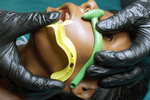
How to Safely Use a Nasopharyngeal Airway (NPA) in Emergencies
3 min reading time
3 min reading time
Airway obstruction is the leading preventable cause of death in penetrating trauma—and in many prehospital settings, a nasopharyngeal airway (NPA) is the fastest tool available to keep a patient breathing until evacuation. In emergencies—whether on the roadside, in a remote location, or during tactical operations—airway management can mean the difference between life and death. One of the simplest and most effective tools for maintaining an open airway is the nasopharyngeal airway (NPA).
Used widely by military medics, EMS, law enforcement, and trained civilians, the NPA is a critical component in any trauma response kit. But knowing how—and when—to use it is just as important as carrying one.
A nasopharyngeal airway is a flexible tube inserted through the nostril to help maintain a clear airway in unconscious or semi-conscious individuals. It's designed to bypass soft tissue obstructions, such as a relaxed tongue, which can block airflow.
Used properly, NPAs allow unobstructed breathing in patients who can't maintain their own airway but still have a gag reflex or cannot tolerate oral airways.
Use an NPA when:
The patient is unresponsive or has a reduced level of consciousness
There is a need for airway support without endotracheal intubation
The patient has intact gag reflex, making oropharyngeal airways inappropriate
The situation requires rapid airway support in prehospital or austere environments
NPAs are often used by tactical medics, wilderness responders, and public safety personnel—particularly in trauma, overdose, or altered mental status scenarios.
Do not insert an NPA if:
The patient has significant facial trauma, especially nasal or skull base fractures
There is a known or suspected basilar skull fracture
The patient is experiencing active nasal bleeding or has an obstructed nostril
Coagulopathy or bleeding disorders may increase risk of injury
If in doubt, always consult with advanced medical direction or defer to BLS protocols.
⚠️ This guide is for educational purposes and not a substitute for hands-on, certified training.
Select the Right Size
Measure from the tip of the nose to the earlobe or jaw angle. Too long can cause trauma; too short may be ineffective.
Lubricate the Device
Use water-based lubricant to reduce friction and discomfort during insertion.
Insert with Proper Technique
Tilt the patient's head slightly back (if spinal injury is not suspected).
Insert into the larger or clearer nostril with the bevel toward the septum.
Follow the natural curve of the nasal floor, gently advancing until the flange rests against the nostril.
Do not force—if resistance is felt, stop and reassess.
After insertion:
Check for effective breathing and unobstructed airflow
Look for signs of gagging, snoring, or displacement
Observe skin color, oxygen saturation (if available), and respiratory effort
Reassess often—especially during movement or transport
If complications arise, remove the NPA and consider alternative airway maneuvers.
From LEOs and military professionals to remote workers, hunters, and disaster responders, the ability to manage airways is foundational. An NPA:
Is lightweight, compact, and fits in most IFAKs
Can buy critical time while awaiting EMS or evacuation
Is suitable for austere environments where higher-level care may be delayed
At ViTAC Solutions, we believe that real preparedness starts with having reliable tools backed by proven training. Our curated selection of airway management gear—including NPAs, trauma kits, and bleeding control supplies—meets the operational needs of those who operate in high-stakes environments.
Equip your kit:
👉 Shop Nasopharyngeal Airways →

OSHA minimum workplace kits don't include a tourniquet. Here's how to calculate station count, stock each station, and build bleed control coverage in any public...

One kit at the main entrance fails the 90-second coverage rule for most buildings. Here's how to run a coverage audit and calculate the correct...

Arterial hemorrhage kills in 3 minutes. Urban EMS takes 7–10. Every business needs CoTCCC-standard bleed control kits — here's how to select, deploy, and train...

40+ states mandate bleed control kits in schools — but most deployment plans miss classrooms and buses. Here's the placement standard that actually works.

Most of our trauma kits and first aid supplies qualify for HSA and FSA reimbursement. Don't let your benefits expire — invest them in gear that could save a life.


$124.95


$279.99

$37.49 - $139.46


$299.95 $269.95


$139.95 - $169.95

$49.95


$25.99


$164.95

We've been downrange. We know what it costs to be unprepared. ViTAC was built by U.S. Army Special Operations veterans to make sure the people who run toward the threat — and the families who depend on them — have gear that works when everything is on the line.
— ViTAC Solutions Founders | 40+ years combined Special Operations experience