The Best HSA-Eligible Family First Aid Kit
7 min reading time
7 min reading time
CDC injury surveillance data puts unintentional injury emergency department visits above 39 million per year. Hemorrhage is the leading cause of preventable trauma death in both combat and civilian settings — a finding consistent across CoTCCC research and civilian trauma registries. A family kit that covers only minor wound care doesn't close that gap.
An HSA-eligible family first aid kit earns that label when it addresses both everyday wound care and serious trauma. This guide covers which components define that standard, why each one matters, and how to spend your pre-tax dollars on gear built for real emergencies.
Minor injuries — cuts, scrapes, blisters, sprains — are frequent. Serious trauma is rare but time-critical. The right family kit integrates both capability tiers without requiring two separate bags. The essential components below define what that means in practice.
Field Note: Family Means More Coverage, Not Less
"Family" in first aid doesn't mean soft. It means you're accountable for more people — including those who can't treat themselves. Trauma capability isn't optional when children, elderly family members, or medically complex individuals are in the household.
The tourniquet, hemostatic gauze, and pressure bandage covered below address the first priority in the MARCH trauma care framework — massive hemorrhage. Correct application of each component is teachable in a focused first aid course.
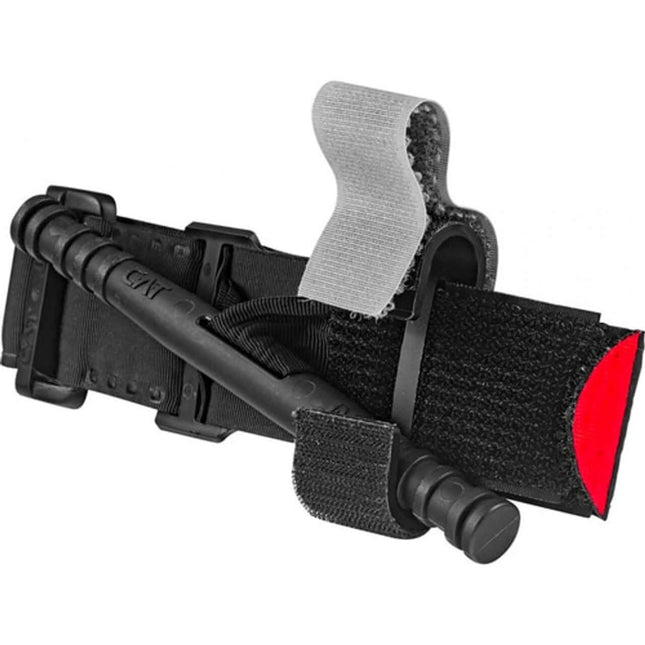
A CAT stops arterial bleeding from an extremity in seconds when applied correctly. High-and-tight placement — several inches above the wound, never over a joint — occludes blood flow with windlass tension. The CoTCCC recommends the CAT Gen 7 as the primary limb tourniquet standard. Once applied, note the time on the windlass clip. Ischemia becomes a clinical factor after approximately two hours.
Any family kit claiming trauma capability needs a dedicated tourniquet. Improvised alternatives using belts or triangular bandages are not equivalent and should not be substituted when a manufactured device is available.
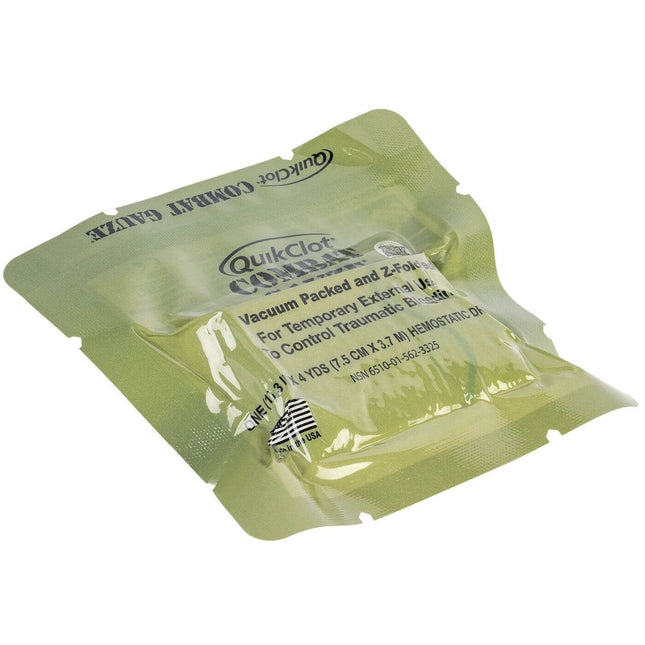
Junctional wounds — groin, axilla, neck — cannot be managed with a tourniquet. Hemostatic gauze packed directly into the wound cavity accelerates clotting through kaolin (QuikClot) or chitosan (HemCon) chemistry. Pack the wound firmly, apply pressure for a minimum of three minutes, and secure with a pressure bandage. Use FDA-cleared options with a documented evidence base from military and civilian trauma registries.
Once a wound is packed, maintain pressure without holding gauze manually for minutes on end. Israeli-style pressure bandages provide secondary closure and wrap to lock the dressing in place. Stock at least two per kit — a 4-inch for extremities and a 6-inch for larger wound areas.
An unconscious casualty's tongue can occlude the airway without any external trauma. A properly sized NPA — measured from the naris to the earlobe, lubricated before insertion — bypasses that obstruction without the risk of laryngospasm associated with oral airways. NPAs are appropriate for both conscious and semi-conscious patients. Sizing and insertion technique take under five minutes to learn in a formal first aid course.
Penetrating chest trauma creates a pathway for air to enter the pleural space. An untreated open pneumothorax can progress to tension pneumothorax — fatal without intervention. A HyFin vented chest seal applies over the wound, allows trapped air to escape through its three-channel vent system, and prevents atmospheric air from re-entering. Buy the twin pack to treat both entry and exit wounds when applicable.
Trauma-capable kits don't exclude everyday supplies. A complete family kit also needs: sterile gauze pads in both 2×2 and 4×4 inch sizes, nitrile gloves in at least two pairs (non-latex for allergy safety), adhesive bandages across multiple sizes and shapes, antiseptic wipes, and triangular bandages for slings and cravat wraps. Nitrile is the clinical standard over latex — equivalent barrier protection, better puncture resistance, and no allergy risk. Size matters: gloves that are too loose compromise dexterity when it counts.
Under IRS Publication 502, medical supplies that diagnose, cure, treat, or prevent disease or injury qualify as HSA/FSA-eligible expenses. That covers tourniquets, hemostatic gauze, chest seals, NPAs, pressure bandages, and the kits that package them together. Basic consumables — gauze pads, adhesive bandages, antiseptic wipes, gloves — qualify under the same standard.
| Component | HSA/FSA Eligible | Notes |
|---|---|---|
| Combat Application Tourniquet | Yes | No prescription required |
| Hemostatic Gauze | Yes | FDA-cleared medical device |
| Chest Seal (vented) | Yes | FDA-cleared medical device |
| Nasopharyngeal Airway | Yes | FDA-cleared medical device |
| Pressure Bandage | Yes | Wound care supply |
| Nitrile Gloves | Yes | Medical-use gloves qualify |
| Adhesive Bandages / Gauze Pads | Yes | Standard wound care supplies |
| Antiseptic Wipes | Yes | Wound care supply |
Field Note: Watch the Non-Medical Add-Ons
Kits bundled with non-medical items — branded storage pouches classified as personal property, apparel, or accessories — may require out-of-pocket purchase for the non-medical portion. Buy purpose-built first aid kits with clear contents manifests to avoid claims denials.
Two kits in the ViTAC catalog address the full family trauma standard out of the box.
The General Purpose First Aid Kit – Med Pro is a 79-piece system that includes a CAT Gen 7, HyFin chest seal, NPA, hemostatic gauze, and pressure dressings — organized for fast access under stress. Available in four colors, it fits patrol bags, vehicle kits, and home emergency stations equally.
For households focused primarily on hemorrhage control, the Rapid Response Trauma Kit w/Advanced Bleeding Control delivers a 76-piece bleeding-focused loadout at $124.95. Both kits are HSA/FSA eligible and ship with a contents manifest for documentation purposes.
Browse the full family and home first aid kit collection for options across price points and capability levels.
A family kit that handles only minor injuries is not a preparedness asset — it's a false sense of security. The components that separate an adequate kit from a capable one are well-defined, HSA/FSA eligible, and available without a prescription. Spend your pre-tax dollars on gear that performs when the stakes are real. Start with the General Purpose First Aid Kit – Med Pro.
Yes. Trauma kits containing FDA-cleared medical devices — tourniquets, hemostatic gauze, chest seals — qualify as HSA/FSA-eligible medical expenses under IRS Publication 502. No prescription is required.
A basic kit handles minor cuts, abrasions, and sprains. A trauma-capable kit adds hemorrhage control (tourniquet, hemostatic gauze, pressure bandage), airway management (NPA), and chest seal capability. Both categories belong in a complete family preparedness kit.
Stop the Bleed certification covers tourniquet application and wound packing in under two hours and is available nationwide. Find a course through your local hospital, fire department, or Red Cross chapter. Trained responders achieve meaningfully better outcomes than untrained bystanders using the same equipment.

OSHA minimum workplace kits don't include a tourniquet. Here's how to calculate station count, stock each station, and build bleed control coverage in any public...

One kit at the main entrance fails the 90-second coverage rule for most buildings. Here's how to run a coverage audit and calculate the correct...

Arterial hemorrhage kills in 3 minutes. Urban EMS takes 7–10. Every business needs CoTCCC-standard bleed control kits — here's how to select, deploy, and train...

40+ states mandate bleed control kits in schools — but most deployment plans miss classrooms and buses. Here's the placement standard that actually works.

Most of our trauma kits and first aid supplies qualify for HSA and FSA reimbursement. Don't let your benefits expire — invest them in gear that could save a life.


$124.95


$279.99

$37.49 - $139.46


$299.95 $269.95


$139.95 - $169.95

$49.95


$25.99


$164.95

We've been downrange. We know what it costs to be unprepared. ViTAC was built by U.S. Army Special Operations veterans to make sure the people who run toward the threat — and the families who depend on them — have gear that works when everything is on the line.
— ViTAC Solutions Founders | 40+ years combined Special Operations experience