The Ultimate Survival Med Kit is a 315-piece, 4-person trauma and first aid system designed for serious emergencies when professional help is delayed.
Built around life-saving hemorrhage control, airway management, fracture stabilization, and burn care, this kit consolidates professional-grade tools into a compact, water-resistant platform that fits in your vehicle, home safe room, or backcountry pack.
Whether you're preparing for natural disasters, remote expeditions, or roadside emergencies, this kit gives you the capability to manage severe trauma and common injuries until evacuation or EMS arrival.
What You Get
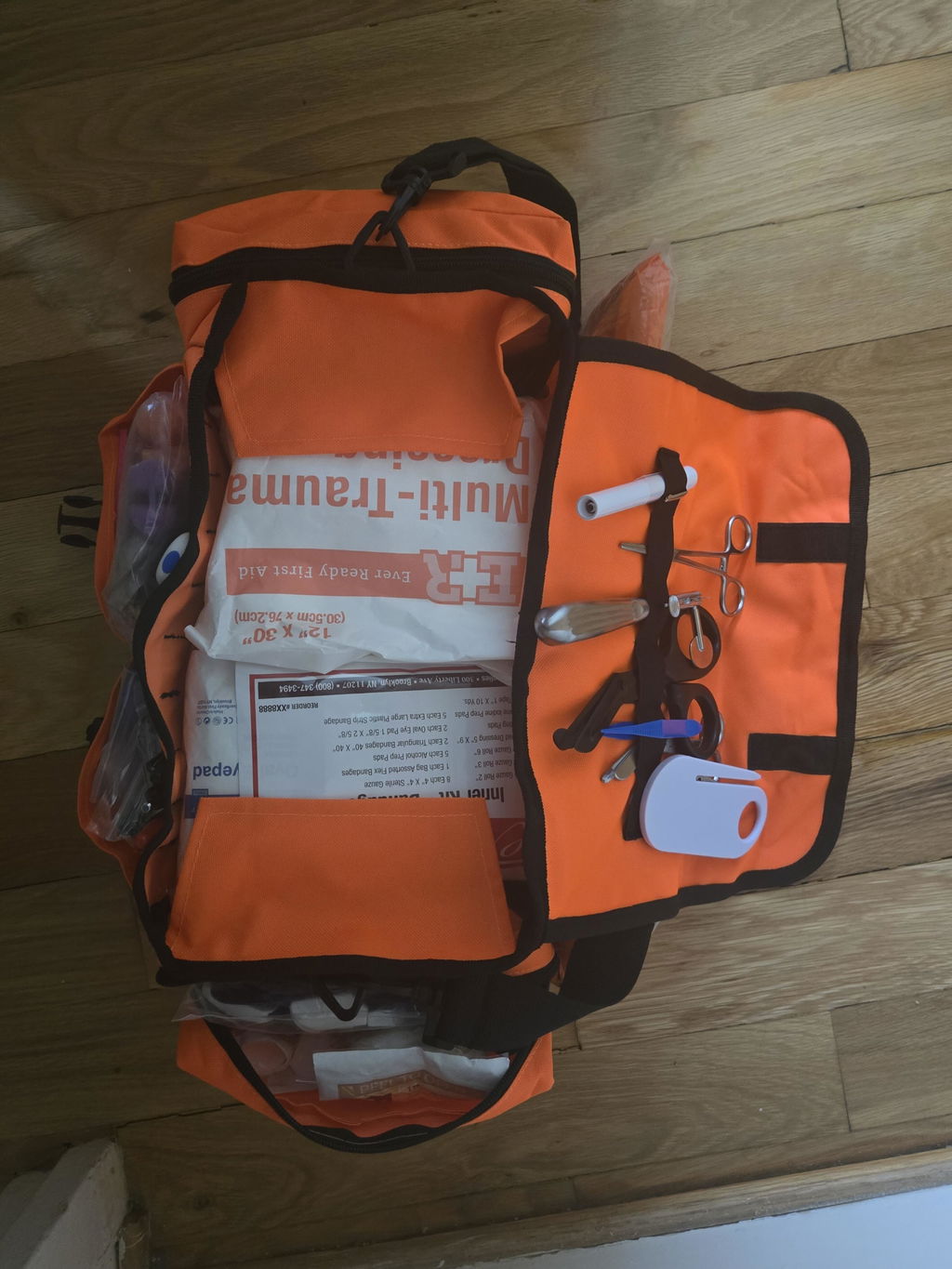
315 essential items organized for rapid access in a heavy-duty 600D polyester bag:
- Hemorrhage control: Windlass tourniquet, hemostatic dressings, pressure bandages, trauma pads
- Airway & breathing: Chest seals (vented), nasopharyngeal airway, rescue breathing barrier
- Fracture & immobilization: SAM splint, triangular bandages, elastic wraps
- Burn care: Burn dressings, cooling gel, sterile gauze
- Wound management: Sterile gauze pads (multiple sizes), adhesive bandages, medical tape, antiseptic wipes, trauma shears
- Medications & tools: Pain relief, antihistamines, nitrile gloves, CPR mask, emergency blanket, permanent marker
- Documentation: Triage tags, instruction cards
Bag specs: Water-resistant 600D polyester | 5 lbs | Multiple compartments with color-coded organization
How to Use It
- Store it accessible: Keep in your vehicle trunk, home emergency closet, or expedition gear—not buried in a garage.
- Familiarize yourself: Open it once, review the layout, read the instruction cards. Know where the tourniquet and chest seals live.
- Pair with training: This kit supports Stop the Bleed, Wilderness First Aid, or EMT protocols—it's not a substitute for knowledge.
- Inspect annually: Check expiration dates on hemostatics and medications; replace as needed.
- Deploy decisively: In a mass-casualty or remote scenario, triage fast and use the right tool for the injury.
What It Is / What It Isn't
It is: A comprehensive trauma and first aid system for 4 people, designed for high-consequence scenarios where EMS is delayed—natural disasters, vehicle accidents, backcountry emergencies, or home defense situations.
It isn't: A basic boo-boo kit for minor scrapes. It's not a replacement for professional medical training, and it makes no guarantees of outcomes. This is preparedness gear for people who understand that capability matters when seconds count.
Why It Works
- Trauma-first design: Tourniquets, hemostatics, and chest seals up front—because massive hemorrhage kills in minutes.
- 4-person capacity: Enough supplies to treat multiple casualties or sustain care over 72+ hours.
- Organized for speed: Color-coded pouches and modular layout mean you're not digging when someone's bleeding.
- Field-tested durability: Water-resistant shell, reinforced zippers, and gear selected by veterans and first responders.
- HSA/FSA eligible: Invest in readiness with pre-tax dollars.
Who It's For
- Families preparing for natural disasters, power grid failures, or civil emergencies
- Overlanders & backcountry travelers operating beyond cell service
- Homesteaders & off-grid operators managing risk without nearby EMS
- Safety managers equipping job sites, ranches, or remote facilities
- Trained responders (EMTs, SAR, security) who need a go-bag that doesn't compromise
"I'm not a medic—will I know how to use this?"
The kit includes instruction cards and is designed to support Stop the Bleed and basic first aid training. Pair it with a weekend course and you'll have the confidence to act. Even untrained bystanders can apply a tourniquet or chest seal if they follow the printed steps.
"$525 seems expensive for a first aid kit."
This isn't a $30 drugstore kit. You're getting professional-grade hemostatic dressings ($20–40 each), a windlass tourniquet ($30+), vented chest seals ($40+), SAM splints, and 300+ additional items. Comparable kits from tactical suppliers run $600–800. You're paying for capability that could save a life.
"Will this fit in my vehicle or pack?"
At 5 lbs and roughly the size of a small duffel, it fits in most truck beds, SUV cargo areas, or large backpacks. It's not pocket-sized, but it's compact given the 315-piece capacity.
"How long do the supplies last?"
Most items (bandages, splints, tools) have indefinite shelf life. Hemostatic dressings and medications typically expire in 3–5 years. We recommend an annual inspection and rotating perishables.
"Is this overkill for my needs?"
If you live in a metro area with 5-minute EMS response and never leave pavement, maybe. But if you've got kids, travel rural roads, camp off-grid, or live in a disaster-prone region, this kit is proportional to the risk. It's not about paranoia—it's about capability.
Ready to Add It?
The Ultimate Survival Med Kit gives you the tools to manage life-threatening trauma and common injuries when help isn't coming fast.
FAQs
Q: Is this kit HSA/FSA eligible?
A: Yes. This kit qualifies for HSA and FSA reimbursement as eligible medical preparedness equipment.
Q: Does it come with training materials or instructions?
A: The kit includes printed instruction cards for key trauma interventions (tourniquet application, chest seal use, etc.). We strongly recommend pairing it with Stop the Bleed or Wilderness First Aid training for best results.
Q: How is the kit organized inside?
A: Color-coded modular pouches separate trauma supplies (red), wound care (blue), medications (green), and tools. You can grab what you need without dumping the entire bag.
Q: What's the shelf life of the hemostatic dressings and medications?
A: Hemostatic gauze typically has a 3–5 year shelf life; over-the-counter medications vary (check packaging). We recommend an annual inspection and replacing expired items as needed.
Q: Can I use this if I have no medical training?
A: You can follow the printed instructions for basic interventions like tourniquet application or wound dressing, but we strongly encourage at least a Stop the Bleed course. This kit is a tool—training makes it effective.
Q: Will this handle a mass-casualty scenario?
A: It's designed for up to 4 people or extended care for 1–2 casualties over 72 hours. For larger-scale events, you'd want multiple kits or a dedicated mass-casualty cache.
Q: What if I need to return it?
A: See our shipping and returns policy for details. Unopened kits are eligible for return; opened kits may have restrictions due to the nature of medical supplies.
Q: Is this the right kit for me, or should I get something smaller?
A: If you're a solo hiker or need a personal carry kit, consider our Premium IFAK. If you're equipping a family, vehicle, or remote property and want comprehensive trauma + first aid for multiple people, this is the right choice.