EDC IFAK: Four Carry Methods and the Components That Matter 19 min reading time
<style>
*, *::before, *::after { box-sizing: border-box; margin: 0; padding: 0; }
body { font-family: -apple-system, BlinkMacSystemFont, 'Segoe UI', Roboto, sans-serif; background: #f5f4f2; color: #1a1a1a; line-height: 1.7; }
a { color: #b22222; text-decoration: none; }
a:hover { text-decoration: underline; }
#progress-bar { position: fixed; top: 0; left: 0; height: 3px; background: #b22222; width: 0%; z-index: 9999; transition: width 0.1s linear; }
.site-nav { background: #1a1a1a; padding: 12px 40px; display: flex; align-items: center; justify-content: space-between; position: sticky; top: 0; z-index: 100; }
.site-nav .logo { font-size: 20px; font-weight: 800; color: #fff; letter-spacing: 2px; text-transform: uppercase; }
.site-nav .logo span { color: #b22222; }
.site-nav nav a { color: #aaa; font-size: 13px; text-transform: uppercase; letter-spacing: 1px; margin-left: 24px; }
.site-nav nav a:hover { color: #fff; text-decoration: none; }
.breadcrumb { max-width: 1200px; margin: 0 auto; padding: 14px 40px 0; font-size: 12px; color: #888; text-transform: uppercase; letter-spacing: 0.8px; }
.breadcrumb a { color: #888; }
.hero { background: linear-gradient(135deg, #0f0f0f 0%, #1e0a0a 50%, #2a0a0a 100%); padding: 60px 40px 50px; text-align: center; position: relative; overflow: hidden; }
.hero::before { content: ''; position: absolute; top: 0; left: 0; right: 0; bottom: 0; background: url('https://cdn.shopify.com/s/files/1/0810/8317/1100/files/file_7ebc6ca6-c9d0-4546-809a-278dbd1b8917.jpg?v=1785607843') center/cover no-repeat; opacity: 0.12; }
.hero-inner { position: relative; max-width: 800px; margin: 0 auto; }
.hero-tag { display: inline-block; background: #b22222; color: #fff; font-size: 11px; font-weight: 700; letter-spacing: 2px; text-transform: uppercase; padding: 4px 14px; border-radius: 2px; margin-bottom: 20px; }
.hero h1 { font-size: clamp(28px, 4vw, 48px); font-weight: 900; color: #fff; line-height: 1.15; margin-bottom: 20px; }
.hero-sub { font-size: 18px; color: #ccc; max-width: 620px; margin: 0 auto 30px; line-height: 1.6; }
.hero-meta { display: flex; align-items: center; justify-content: center; gap: 24px; flex-wrap: wrap; font-size: 13px; color: #999; border-top: 1px solid rgba(255,255,255,0.1); padding-top: 20px; }
.hero-meta strong { color: #fff; }
.hero-meta .reading-time { background: rgba(255,255,255,0.08); padding: 3px 10px; border-radius: 20px; font-size: 12px; }
.content-wrapper { width: 75vw; max-width: 1200px; margin: 40px auto; padding: 0 40px; display: grid; grid-template-columns: 1fr 320px; gap: 48px; align-items: start; }
.article-body { background: #fff; border-radius: 4px; padding: 48px 52px; box-shadow: 0 1px 8px rgba(0,0,0,0.06); }
.article-body > p:first-of-type::first-letter { font-size: 64px; font-weight: 900; float: left; line-height: 0.8; margin: 8px 12px 0 0; color: #b22222; font-family: Georgia, serif; }
.article-body p { margin-bottom: 20px; font-size: 17px; color: #2c2c2c; }
.article-body h2 { font-size: 26px; font-weight: 800; color: #1a1a1a; margin: 40px 0 16px; padding-top: 8px; border-top: 3px solid #b22222; line-height: 1.3; }
.article-body h3 { font-size: 18px; font-weight: 700; color: #1a1a1a; margin: 28px 0 10px; }
.article-body ul, .article-body ol { margin: 0 0 20px 24px; }
.article-body li { font-size: 17px; color: #2c2c2c; margin-bottom: 10px; }
.article-body hr { border: none; border-top: 1px solid #e8e8e8; margin: 40px 0; }
.article-body table { width: 100%; border-collapse: collapse; margin: 24px 0; font-size: 15px; box-shadow: 0 1px 4px rgba(0,0,0,0.08); border-radius: 4px; overflow: hidden; }
.article-body thead th { background: #1a1a1a; color: #fff; padding: 12px 16px; text-align: left; font-size: 13px; text-transform: uppercase; letter-spacing: 0.8px; font-weight: 700; }
.article-body thead th:first-child { border-left: 4px solid #b22222; }
.article-body tbody tr:nth-child(even) { background: #f8f8f8; }
.article-body tbody tr:hover { background: #fef8f8; }
.article-body td { padding: 12px 16px; border-bottom: 1px solid #eee; vertical-align: top; }
.field-note { border-left: 4px solid #b22222; background: #fef8f8; padding: 20px 24px; margin: 32px 0; border-radius: 0 4px 4px 0; }
.field-note .label { font-size: 11px; font-weight: 800; text-transform: uppercase; letter-spacing: 1.5px; color: #b22222; margin-bottom: 8px; }
.field-note p { margin: 0; font-size: 16px; color: #333; }
.pull-quote { margin: 40px -20px; padding: 28px 32px; background: #1a1a1a; color: #fff; text-align: center; }
.pull-quote blockquote { font-size: 22px; font-weight: 700; line-height: 1.4; color: #fff; font-style: italic; margin: 0; border: none; padding: 0; }
.pull-quote blockquote::before { content: open-quote; font-size: 80px; line-height: 0.1; color: #b22222; opacity: 0.5; vertical-align: -0.4em; margin-right: 8px; font-family: Georgia, serif; }
.pull-quote cite { display: block; margin-top: 14px; font-size: 13px; color: #999; text-transform: uppercase; letter-spacing: 1px; font-style: normal; }
.article-image { margin: 36px -20px; }
.article-image img { width: 100%; display: block; border-radius: 4px 4px 0 0; object-fit: cover; max-height: 420px; }
.article-image figcaption { background: rgba(0,0,0,0.8); color: #ccc; font-size: 12px; padding: 8px 16px; text-align: center; border-radius: 0 0 4px 4px; }
.product-spotlight { display: grid; grid-template-columns: 120px 1fr; margin: 36px 0; border: 2px solid #e8e8e8; border-radius: 6px; overflow: hidden; background: #fff; transition: box-shadow 0.2s; }
.product-spotlight:hover { box-shadow: 0 4px 20px rgba(178,34,34,0.15); border-color: #b22222; }
.product-spotlight-img { background: #f5f5f5; overflow: hidden; }
.product-spotlight-img img { width: 100%; height: 100%; object-fit: cover; }
.product-spotlight-body { padding: 18px 20px; display: flex; flex-direction: column; justify-content: center; }
.product-spotlight-tag { font-size: 10px; font-weight: 700; text-transform: uppercase; letter-spacing: 1.5px; color: #b22222; margin-bottom: 4px; }
.product-spotlight-title { font-size: 16px; font-weight: 700; color: #1a1a1a; margin-bottom: 6px; line-height: 1.3; }
.product-spotlight-price { font-size: 14px; color: #555; margin-bottom: 12px; }
.product-spotlight-price strong { color: #b22222; font-size: 18px; }
.product-spotlight-cta { display: inline-block; background: #b22222; color: #fff; font-size: 12px; font-weight: 700; text-transform: uppercase; letter-spacing: 1px; padding: 8px 18px; border-radius: 3px; align-self: flex-start; }
.product-spotlight-cta:hover { background: #8b1a1a; text-decoration: none; }
.faq-item { border-bottom: 1px solid #eee; padding: 20px 0; }
.faq-item:last-of-type { border-bottom: none; }
.faq-item h3 { font-size: 17px; color: #1a1a1a; margin-bottom: 10px; }
.faq-item h3::before { content: 'Q: '; color: #b22222; font-weight: 700; }
.faq-item p { margin: 0; font-size: 16px; }
.author-box { display: flex; align-items: center; gap: 20px; padding: 24px; margin-top: 40px; background: #f5f4f2; border-radius: 6px; }
.author-avatar { width: 64px; height: 64px; border-radius: 50%; background: #1a1a1a; flex-shrink: 0; display: flex; align-items: center; justify-content: center; font-size: 24px; font-weight: 900; color: #b22222; }
.author-name { font-weight: 700; font-size: 16px; }
.author-title { font-size: 13px; color: #777; margin-top: 2px; }
.author-bio { font-size: 14px; color: #555; margin-top: 8px; line-height: 1.5; }
.tags-row { margin-top: 36px; display: flex; flex-wrap: wrap; gap: 8px; }
.tag { background: #f0f0f0; color: #444; font-size: 12px; padding: 5px 12px; border-radius: 3px; text-transform: uppercase; letter-spacing: 0.5px; font-weight: 600; }
.tag:hover { background: #b22222; color: #fff; text-decoration: none; }
.sidebar { position: sticky; top: 72px; }
.toc { background: #fff; border-radius: 4px; padding: 24px; box-shadow: 0 1px 8px rgba(0,0,0,0.06); margin-bottom: 28px; }
.toc h4 { font-size: 11px; font-weight: 800; text-transform: uppercase; letter-spacing: 2px; color: #b22222; margin-bottom: 16px; padding-bottom: 10px; border-bottom: 2px solid #b22222; }
.toc ol { margin: 0; padding-left: 18px; }
.toc li { font-size: 14px; margin-bottom: 10px; line-height: 1.4; }
.toc a { color: #444; }
.toc a:hover { color: #b22222; text-decoration: none; }
.ad-card { background: #fff; border-radius: 4px; overflow: hidden; box-shadow: 0 1px 8px rgba(0,0,0,0.06); margin-bottom: 24px; transition: transform 0.2s, box-shadow 0.2s; }
.ad-card:hover { transform: translateY(-2px); box-shadow: 0 4px 20px rgba(0,0,0,0.12); }
.ad-card-label { background: #1a1a1a; color: #777; font-size: 10px; text-transform: uppercase; letter-spacing: 1.5px; padding: 5px 12px; text-align: right; }
.ad-card-img { width: 100%; height: 180px; object-fit: cover; display: block; background: #f0f0f0; }
.ad-card-body { padding: 16px; }
.ad-card-tag { font-size: 10px; font-weight: 700; text-transform: uppercase; letter-spacing: 1px; color: #b22222; margin-bottom: 6px; }
.ad-card-title { font-size: 15px; font-weight: 700; color: #1a1a1a; line-height: 1.3; margin-bottom: 8px; }
.ad-card-price { font-size: 13px; color: #666; margin-bottom: 14px; }
.ad-card-price strong { color: #b22222; font-size: 20px; }
.ad-card-btn { display: block; width: 100%; background: #b22222; color: #fff; text-align: center; font-size: 13px; font-weight: 700; text-transform: uppercase; letter-spacing: 1px; padding: 11px; border-radius: 3px; }
.ad-card-btn:hover { background: #8b1a1a; text-decoration: none; }
.stat-box { background: #1a1a1a; border-radius: 4px; padding: 24px; margin-bottom: 24px; text-align: center; color: #fff; }
.stat-box .big-stat { font-size: 52px; font-weight: 900; color: #b22222; line-height: 1; margin-bottom: 4px; }
.stat-box .stat-label { font-size: 13px; color: #aaa; line-height: 1.5; }
.sidebar-cta { background: linear-gradient(135deg, #b22222, #8b1a1a); border-radius: 4px; padding: 24px; color: #fff; text-align: center; margin-bottom: 24px; }
.sidebar-cta h4 { font-size: 16px; font-weight: 800; margin-bottom: 10px; line-height: 1.3; }
.sidebar-cta p { font-size: 13px; color: rgba(255,255,255,0.8); margin-bottom: 16px; }
.sidebar-cta .cta-btn { display: block; background: #fff; color: #b22222; font-size: 13px; font-weight: 800; text-transform: uppercase; letter-spacing: 1px; padding: 10px 20px; border-radius: 3px; }
.sidebar-cta .cta-btn:hover { background: #f0f0f0; text-decoration: none; }
.bottom-cta { background: #1a1a1a; padding: 60px 40px; text-align: center; margin-top: 60px; }
.bottom-cta h2 { font-size: 32px; font-weight: 900; color: #fff; margin-bottom: 12px; }
.bottom-cta p { font-size: 17px; color: #999; margin-bottom: 28px; max-width: 500px; margin-left: auto; margin-right: auto; }
.bottom-cta .btn-row { display: flex; gap: 16px; justify-content: center; flex-wrap: wrap; }
.btn-primary { display: inline-block; background: #b22222; color: #fff; font-size: 15px; font-weight: 700; text-transform: uppercase; letter-spacing: 1px; padding: 14px 32px; border-radius: 3px; }
.btn-primary:hover { background: #8b1a1a; text-decoration: none; }
.btn-secondary { display: inline-block; background: transparent; color: #fff; border: 2px solid rgba(255,255,255,0.3); font-size: 15px; font-weight: 700; text-transform: uppercase; letter-spacing: 1px; padding: 14px 32px; border-radius: 3px; }
.btn-secondary:hover { border-color: #fff; text-decoration: none; }
.product-grid-section { max-width: 1200px; margin: 0 auto; padding: 0 40px 60px; }
.product-grid-section h3 { font-size: 20px; font-weight: 800; text-transform: uppercase; letter-spacing: 1px; color: #1a1a1a; margin-bottom: 24px; padding-bottom: 12px; border-bottom: 3px solid #b22222; }
.product-grid { display: grid; grid-template-columns: repeat(auto-fill, minmax(220px, 1fr)); gap: 20px; }
.product-tile { background: #fff; border-radius: 4px; overflow: hidden; box-shadow: 0 1px 6px rgba(0,0,0,0.07); transition: transform 0.2s, box-shadow 0.2s; }
.product-tile:hover { transform: translateY(-3px); box-shadow: 0 6px 24px rgba(0,0,0,0.12); }
.product-tile img { width: 100%; height: 200px; object-fit: cover; display: block; background: #f0f0f0; }
.product-tile-body { padding: 16px; }
.product-tile-title { font-size: 14px; font-weight: 700; color: #1a1a1a; line-height: 1.3; margin-bottom: 8px; }
.product-tile-price { font-size: 13px; color: #b22222; font-weight: 700; margin-bottom: 12px; }
.product-tile-btn { display: block; text-align: center; background: #1a1a1a; color: #fff; font-size: 12px; font-weight: 700; text-transform: uppercase; letter-spacing: 1px; padding: 8px; border-radius: 3px; }
.product-tile-btn:hover { background: #b22222; text-decoration: none; }
.site-footer { background: #111; color: #555; text-align: center; padding: 24px; font-size: 13px; }
@media (max-width: 900px) {
.content-wrapper { grid-template-columns: 1fr; padding: 0 20px; }
.sidebar { position: static; }
.article-body { padding: 32px 24px; }
.site-nav { padding: 12px 20px; }
.site-nav nav { display: none; }
.hero { padding: 40px 20px; }
.product-grid-section { padding: 0 20px 40px; }
.bottom-cta { padding: 40px 20px; }
.article-image, .pull-quote { margin: 28px 0; }
}
</style>
<div id="progress-bar"></div>
<div class="breadcrumb">
<a href="/">Home</a> › <a href="/blogs/common-questions-and-answers">FAQ</a> › EDC IFAK: Four Carry Methods and the Components That Matter
</div>
<section class="hero">
<div class="hero-inner">
<div class="hero-tag">Everyday Carry · IFAK</div>
<h1>EDC IFAK: Four Carry Methods and the Components That Matter</h1>
<p class="hero-sub">EMS averages 14+ minutes in rural areas. Arterial bleeding kills in 3–5. The kit on your body is the only guarantee.</p>
<div class="hero-meta">
<div><strong>Justin McAllister</strong></div>
<div class="reading-time">⏱ 6 min read</div>
<div>FAQ · Everyday Carry</div>
</div>
</div>
</section>
<div class="content-wrapper">
<main class="article-body">
<div style="display:grid;grid-template-columns:1fr 1fr 1fr;gap:16px;margin:32px 0;">
<div style="background:#1a1a1a;border-radius:4px;padding:20px;text-align:center;color:#fff;">
<div style="font-size:44px;font-weight:900;color:#b22222;line-height:1;">3–5</div>
<div style="font-size:13px;color:#aaa;margin-top:6px;line-height:1.4;">Minutes for untreated arterial hemorrhage to become fatal</div>
</div>
<div style="background:#1a1a1a;border-radius:4px;padding:20px;text-align:center;color:#fff;">
<div style="font-size:44px;font-weight:900;color:#b22222;line-height:1;">14+</div>
<div style="font-size:13px;color:#aaa;margin-top:6px;line-height:1.4;">Median EMS response in rural U.S. counties, in minutes</div>
</div>
<div style="background:#1a1a1a;border-radius:4px;padding:20px;text-align:center;color:#fff;">
<div style="font-size:44px;font-weight:900;color:#b22222;line-height:1;">90%</div>
<div style="font-size:13px;color:#aaa;margin-top:6px;line-height:1.4;">Of preventable traumatic deaths involve hemorrhage as primary or contributing cause</div>
</div>
</div>
<figure class="article-image">
<img src="https://cdn.shopify.com/s/files/1/0810/8317/1100/files/file_7ebc6ca6-c9d0-4546-809a-278dbd1b8917.jpg?v=1785607843" alt="CAT Gen 7 tourniquet mounted on EDC tactical belt for field-ready carry configuration.">
<figcaption>CAT Gen 7 tourniquet — TCCC standard for limb hemorrhage control, shown field-mounted on an EDC tactical belt.</figcaption>
</figure>
<p>National EMS response averages more than 14 minutes in rural counties. Arterial bleeding kills in 3–5. On-person trauma gear closes that gap regardless of how fast help is coming. If you carry a firearm and don't have a medical answer for what happens after the threat is down, your loadout is incomplete. An EDC IFAK isn't a bag you reach for after dialing 911 — it's the kit on your body at the moment it's needed.</p>
<p>If you're new to the concept, <a href="/blogs/common-questions-and-answers/what-is-an-ifak-individual-first-aid-kit-explained-and-who-needs-one" style="color:#b22222;">What Is an IFAK?</a> covers the baseline definitions. Components are driven by <a href="/blogs/preparedness-blog/m-a-r-c-h-trauma-care" style="color:#b22222;">MARCH</a>. Build it backward: start with the standard, then fit the carry method to your mission profile.</p>
<h2 id="carry-methods">Four EDC Carry Methods</h2>
<h3>1. Pocket Carry</h3>
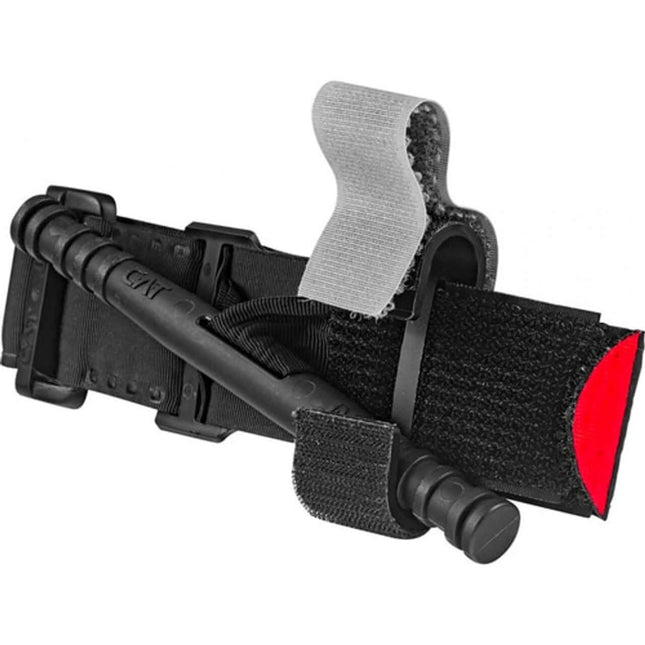
<p>A pocket IFAK keeps essentials accessible without printing or adding visible kit. Useful in environments where a med pouch on the belt isn't practical — dress environments, plain-clothes roles, or situations where medical readiness isn't part of the visual. The constraint: strip the kit to essentials. Minimum effective pocket kit is a CAT Gen 7 tourniquet and hemostatic gauze. Cargo pockets accommodate this. Standard dress pockets usually do not. If it doesn't fit flat and zip closed, it stays on the belt.</p>
<h3>2. Belt Carry</h3>
<p>A belt-mounted med pouch provides enough room for a full component set: tourniquet, gauze, chest seal, pressure dressing. Trade-off is waistline footprint. Position the pouch so it does not interrupt your draw stroke. This is the correct option for anyone already running a duty belt, dedicated EDC belt, or a setup where the kit needs to be accessible to both hands. Belt carry is the most deployable method when speed is the priority.</p>
<h3>3. Ankle Carry</h3>
<p>Ankle carry is discreet and does not affect draw. Works well in plain-clothes roles where printing is a concern and belt space is allocated to other equipment. Restriction: you're limited to a compact kit — a SWAT-T or CAT tourniquet, one or two chest seals, and basic gauze. Any ankle-mounted kit should be rechecked after sustained movement; ankle rigs shift under stress. Ankle carry supplements a primary kit — it does not replace one.</p>
<h3>4. Off-Body (Bag, Pack, Vehicle)</h3>
<p>Bag and vehicle kits allow a full IFAK build without any on-body compromise. Limitation: retrieval. If the bag is in the trunk, you can't use the kit from the driver's seat. Off-body carry supplements on-person carry — it does not replace it. Keep a minimum kit on your person and a fully stocked backup in the vehicle or range bag. For vehicle-specific configuration, see <a href="/blogs/common-questions-and-answers/vehicle-trauma-kit-components-placement-access-operational-guide" style="color:#b22222;">Vehicle Trauma Kit: Components, Placement, and Access</a>.</p>
<figure class="article-image">
<img src="https://cdn.shopify.com/s/files/1/0810/8317/1100/files/file_8d16b4e6-ae37-4873-8fff-54e1fdd0111b.jpg?v=1785607843" alt="Four EDC IFAK carry configurations shown side by side: pocket carry, belt-mounted pouch, ankle rig, and off-body bag kit.">
<figcaption>Left to right: pocket carry (cargo), belt-mounted pouch, ankle rig, off-body bag. Select the method that fits your mission profile.</figcaption>
</figure>
<div class="product-spotlight">
<div class="product-spotlight-img"><img src="https://cdn.shopify.com/s/files/1/0810/8317/1100/files/5856__97245.1655406728.jpg?v=1756930408" alt="CAT GEN 7 Combat Application Tourniquet"></div>
<div class="product-spotlight-body">
<div class="product-spotlight-tag">TCCC-Approved · Most-Fielded Tourniquet</div>
<div class="product-spotlight-title">CAT GEN 7 | Combat Application Tourniquet</div>
<div class="product-spotlight-price">From <strong>$37.49</strong>
</div>
<a href="/products/cat-gen-7-windlass-tourniquet" class="product-spotlight-cta">Shop Now →</a>
</div>
</div>
<h2 id="component-set">Minimum Viable Component Set</h2>
<p>Whatever the carry method, the following components are non-negotiable. Mapped to <a href="/blogs/preparedness-blog/m-a-r-c-h-trauma-care" style="color:#b22222;">MARCH</a>:</p>
<ul>
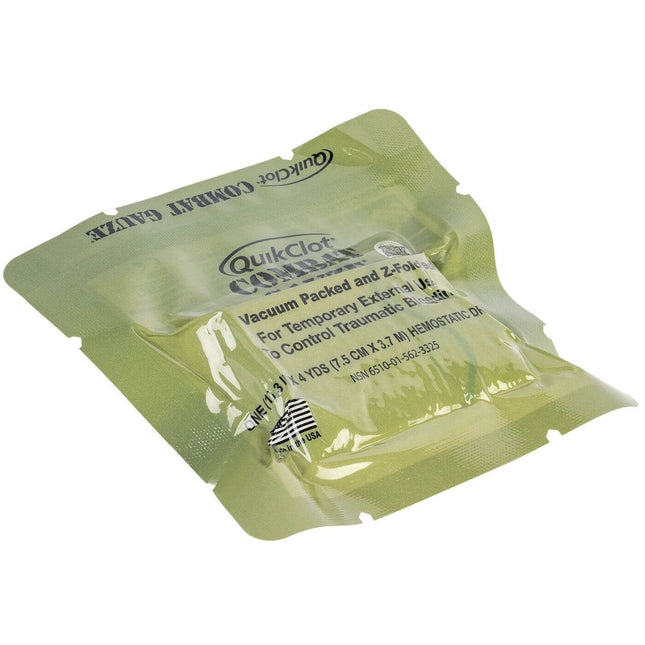
<li><strong>Massive Hemorrhage:</strong> TCCC-approved tourniquet — <a href="/products/cat-gen-7-windlass-tourniquet" style="color:#b22222;">CAT Gen 7</a> for adult limb wounds, <a href="/products/swat-t-tourniquet" style="color:#b22222;">SWAT-T</a> for K9 or pediatric applications — plus <a href="/products/quikclot-combat-gauze-z-fold-hemostatic" style="color:#b22222;">QuikClot Combat Gauze</a> for junctional wounds the tourniquet can't reach.</li>
<li><strong>Airway:</strong> Nasopharyngeal airway (NPA) if trained and certified. Omit if untrained — a misplaced NPA creates a secondary injury.</li>
<li><strong>Respiration:</strong> <a href="/products/hyfin-vented-chest-seal-compact-twin-pack" style="color:#b22222;">HyFin Compact Vented Chest Seal Twin Pack</a> for penetrating chest wounds. Cover entry and exit.</li>
<li><strong>Circulation:</strong> <a href="/products/israeli-bandage-6-pack-of-2" style="color:#b22222;">Israeli Bandage 6"</a> for wound management after tourniquet application or packing.</li>
<li><strong>Hypothermia:</strong> Mylar blanket if space permits. Standard in a full IFAK build. Optional in a pocket kit.</li>
</ul>
<p>Nitrile gloves (minimum 2 pairs) and a permanent marker for tourniquet time notation complete the set. For a full component breakdown, see <a href="/blogs/common-questions-and-answers/civilian-ifak-what-belongs-inside-if-you-want-it-to-actually-save-a-life" style="color:#b22222;">The Civilian IFAK: What Belongs Inside</a>.</p>
<figure class="article-image">
<img src="https://cdn.shopify.com/s/files/1/0810/8317/1100/files/file_87ea5f4b-f1df-4415-bc05-cccc6b2e0d49.jpg?v=1785608218" alt="EDC IFAK minimum viable components laid out on a dark surface: tourniquet, hemostatic gauze, chest seals, and emergency bandage.">
<figcaption>The MARCH-aligned minimum viable set: CAT Gen 7, QuikClot Combat Gauze, HyFin Vented Chest Seal (Twin Pack), and Israeli Bandage 6".</figcaption>
</figure>
<div class="field-note">
<div class="label">Field Note: Tourniquet First</div>
<p>Whatever carry method you choose, the tourniquet is not optional. If you're reducing components to fit a pocket or ankle pouch, cut elsewhere first. Hemorrhage is the leading cause of preventable death after traumatic injury. Every build starts at M.</p>
</div>
<h2 id="buy-vs-build">Buy vs. Build</h2>
<p>Pre-configured kits eliminate sourcing errors and ship ready to carry. The risk is source verification. Counterfeit tourniquets and cloned hemostatic gauze products are visually identical to TCCC-approved equipment until the moment they fail. A CAT Gen 7 purchased through an unauthorized marketplace listing may be a Gen 6 replica with no windlass testing documentation. Buy from authorized distributors only. The cost difference between approved and unapproved gear is minor. The performance difference under stress is not.</p>
<p>For a full breakdown of counterfeit risk and what to look for before buying, see <a href="/blogs/preparedness-blog/your-25-ifak-might-get-you-killed-buying-ifak-trauma-kits" style="color:#b22222;">Why Your $25 IFAK Might Get You Killed</a>.</p>
<div class="product-spotlight">
<div class="product-spotlight-img"><img src="https://cdn.shopify.com/s/files/1/0810/8317/1100/files/30-0039_a_8.jpg?v=1778374968" alt="QuikClot Combat Gauze Z-Fold Hemostatic"></div>
<div class="product-spotlight-body">
<div class="product-spotlight-tag">CoTCCC-Listed · Kaolin-Based Hemostatic</div>
<div class="product-spotlight-title">QuikClot Combat Gauze Z-Fold Hemostatic</div>
<div class="product-spotlight-price">From <strong>$49.95</strong>
</div>
<a href="/products/quikclot-combat-gauze-z-fold-hemostatic" class="product-spotlight-cta">Shop Now →</a>
</div>
</div>
<div class="pull-quote">
<blockquote>EMS response time defines the gap between injury and intervention. On-person trauma gear closes that gap regardless of location or how fast help is coming.</blockquote>
<cite>— Justin McAllister, ViTAC Solutions</cite>
</div>
<h2 id="comparison-table">Carry Method Comparison</h2>
<table>
<thead>
<tr>
<th>Method</th>
<th>Component Capacity</th>
<th>Concealability</th>
<th>Best For</th>
</tr>
</thead>
<tbody>
<tr>
<td>Pocket</td>
<td>Tourniquet + gauze</td>
<td>High</td>
<td>Dress environments, plain-clothes roles</td>
</tr>
<tr>
<td>Belt</td>
<td>Full component set</td>
<td>Moderate</td>
<td>Duty belt and dedicated EDC belt setups</td>
</tr>
<tr>
<td>Ankle</td>
<td>Tourniquet + 1–2 seals + gauze</td>
<td>High</td>
<td>Plain-clothes supplement carry</td>
</tr>
<tr>
<td>Off-Body</td>
<td>Full + extended set</td>
<td>N/A</td>
<td>Vehicle or range bag backup</td>
</tr>
</tbody>
</table>
<h2 id="faq">Frequently Asked Questions</h2>
<div class="faq-item">
<h3>Do I need a tourniquet if I already carry a firearm?</h3>
<p>Yes. A firearm addresses threat response. A tourniquet addresses injury response — for you, a bystander, or anyone else involved. They serve different functions and neither substitutes for the other. Carry both.</p>
</div>
<div class="faq-item">
<h3>Can I build a compliant EDC IFAK from individual components?</h3>
<p>Yes, provided every component comes from a verified manufacturer. Buy the CAT Gen 7 from a North American Rescue-authorized distributor. Buy QuikClot from Z-Medica or Teleflex-authorized suppliers. Avoid third-party marketplace listings — counterfeit rates in those channels are high enough to matter. A kit is only as reliable as its weakest component.</p>
</div>
<div class="faq-item">
<h3>Is ankle carry reliable as a primary EDC IFAK method?</h3>
<p>Not as a standalone. Ankle carry works as a supplemental position when belt and pocket space is allocated to other equipment. The kit shifts under sustained movement and access is slower than belt or pocket. Build your primary carry first, then add ankle carry as a backup if your mission profile supports it.</p>
</div>
<h2 id="bottom-line">Bottom Line</h2>
<p>EMS response time defines the gap. On-person trauma gear closes it. Carry method is a logistics problem — solve it for your mission profile. The components are defined by MARCH: a standard with more than 20 years of validated combat application. Build the kit. Mount it where you can reach it with either hand. Train the deployment before you need to execute it. That's the whole decision.</p>
<div class="tags-row">
<a class="tag" href="#">EDC IFAK</a>
<a class="tag" href="#">Everyday Carry</a>
<a class="tag" href="#">Tourniquet Carry</a>
<a class="tag" href="#">CAT Gen 7</a>
<a class="tag" href="#">SWAT-T Tourniquet</a>
<a class="tag" href="#">QuikClot</a>
<a class="tag" href="#">Hemostatic Gauze</a>
<a class="tag" href="#">Chest Seal</a>
<a class="tag" href="#">MARCH Protocol</a>
<a class="tag" href="#">TCCC</a>
<a class="tag" href="#">Bleeding Control</a>
<a class="tag" href="#">Pocket IFAK</a>
<a class="tag" href="#">Belt Carry</a>
<a class="tag" href="#">Individual First Aid Kit</a>
</div>
<div class="author-box">
<div class="author-avatar">JM</div>
<div>
<div class="author-name">Justin McAllister</div>
<div class="author-title">Owner, ViTAC Solutions · Veteran</div>
<div class="author-bio">Veteran-owned. TCCC-aligned. ViTAC sources and vets every component to ensure what you carry is what actually works when it matters.</div>
</div>
</div>
</main>
<aside class="sidebar">
<div class="toc">
<h4>In This Article</h4>
<ol>
<li><a href="#carry-methods">Four EDC Carry Methods</a></li>
<li><a href="#component-set">Minimum Viable Component Set</a></li>
<li><a href="#buy-vs-build">Buy vs. Build</a></li>
<li><a href="#comparison-table">Carry Method Comparison</a></li>
<li><a href="#faq">Frequently Asked Questions</a></li>
<li><a href="#bottom-line">Bottom Line</a></li>
</ol>
</div>
<div class="stat-box">
<div class="big-stat">4</div>
<div class="stat-label">EDC carry methods — one fits your mission profile</div>
</div>
<div class="ad-card">
<div class="ad-card-label">ViTAC Gear</div>
<img class="ad-card-img" src="https://cdn.shopify.com/s/files/1/0810/8317/1100/files/5856__97245.1655406728.jpg?v=1756930408" alt="CAT GEN 7 Combat Application Tourniquet">
<div class="ad-card-body">
<div class="ad-card-tag">Best Seller · TCCC-Approved</div>
<div class="ad-card-title">CAT GEN 7 | Combat Application Tourniquet</div>
<div class="ad-card-price">From <strong>$37.49</strong>
</div>
<a href="/products/cat-gen-7-windlass-tourniquet" class="ad-card-btn">Shop Now</a>
</div>
</div>
<div class="ad-card">
<div class="ad-card-label">ViTAC Gear</div>
<img class="ad-card-img" src="https://cdn.shopify.com/s/files/1/0810/8317/1100/files/10-0042_t.jpg?v=1776547373" alt="HyFin Vented Chest Seal Compact Twin Pack">
<div class="ad-card-body">
<div class="ad-card-tag">Penetrating Wounds · Vented · Twin Pack</div>
<div class="ad-card-title">HyFin Vented Chest Seal – Compact Twin Pack</div>
<div class="ad-card-price">From <strong>$20.95</strong>
</div>
<a href="/products/hyfin-vented-chest-seal-compact-twin-pack" class="ad-card-btn">Shop Now</a>
</div>
</div>
<div class="sidebar-cta">
<h4>Build Your EDC IFAK Right</h4>
<p>TCCC-verified components. Every kit sourced from authorized manufacturers.</p>
<a href="/collections/everyday-carry-edc-kits" class="cta-btn">Shop EDC IFAKs</a>
</div>
<div class="ad-card">
<div class="ad-card-label">ViTAC Gear</div>
<img class="ad-card-img" src="https://cdn.shopify.com/s/files/1/0810/8317/1100/files/swat-t-multipurpose-latex-free-tourniquet-stretch-wrap-tuck-military-civilian-use.jpg?v=1776546142" alt="SWAT T Multipurpose Latex-Free Tourniquet">
<div class="ad-card-body">
<div class="ad-card-tag">K9 & Pediatric · Multipurpose</div>
<div class="ad-card-title">SWAT T | Multipurpose Latex-Free Tourniquet</div>
<div class="ad-card-price">From <strong>$23.99</strong>
</div>
<a href="/products/swat-t-tourniquet" class="ad-card-btn">Shop Now</a>
</div>
</div>
</aside>
</div>
<div class="bottom-cta">
<h2>Every EDC Build Starts at M</h2>
<p>Stop sourcing from unverified listings. ViTAC carries TCCC-approved tourniquets, CoTCCC-listed gauze, and mission-ready kits built for on-body carry.</p>
<div class="btn-row">
<a href="/collections/everyday-carry-edc-kits" class="btn-primary">Shop EDC IFAKs</a>
<a href="/collections/trauma-kits" class="btn-secondary">Browse Trauma Kits</a>
</div>
</div>
<div class="product-grid-section">
<h3>Related Products</h3>
<div class="product-grid">
<a class="product-tile" href="/products/cat-gen-7-windlass-tourniquet">
<img src="https://cdn.shopify.com/s/files/1/0810/8317/1100/files/5856__97245.1655406728.jpg?v=1756930408" alt="CAT GEN 7 Combat Application Tourniquet">
<div class="product-tile-body">
<div class="product-tile-title">CAT GEN 7 | Combat Application Tourniquet</div>
<div class="product-tile-price">$37.49</div>
<div class="product-tile-btn">Shop Now</div>
</div>
</a>
<a class="product-tile" href="/products/swat-t-tourniquet">
<img src="https://cdn.shopify.com/s/files/1/0810/8317/1100/files/swat-t-multipurpose-latex-free-tourniquet-stretch-wrap-tuck-military-civilian-use.jpg?v=1776546142" alt="SWAT T Multipurpose Tourniquet">
<div class="product-tile-body">
<div class="product-tile-title">SWAT T | Multipurpose Latex-Free Tourniquet</div>
<div class="product-tile-price">$23.99</div>
<div class="product-tile-btn">Shop Now</div>
</div>
</a>
<a class="product-tile" href="/products/quikclot-combat-gauze-z-fold-hemostatic">
<img src="https://cdn.shopify.com/s/files/1/0810/8317/1100/files/30-0039_a_8.jpg?v=1778374968" alt="QuikClot Combat Gauze Z-Fold Hemostatic">
<div class="product-tile-body">
<div class="product-tile-title">QuikClot Combat Gauze Z-Fold Hemostatic</div>
<div class="product-tile-price">$49.95</div>
<div class="product-tile-btn">Shop Now</div>
</div>
</a>
<a class="product-tile" href="/products/hyfin-vented-chest-seal-compact-twin-pack">
<img src="https://cdn.shopify.com/s/files/1/0810/8317/1100/files/10-0042_t.jpg?v=1776547373" alt="HyFin Vented Chest Seal Compact Twin Pack">
<div class="product-tile-body">
<div class="product-tile-title">HyFin Vented Chest Seal – Compact Twin Pack</div>
<div class="product-tile-price">$20.95</div>
<div class="product-tile-btn">Shop Now</div>
</div>
</a>
</div>
</div>
<footer class="site-footer">
© 2026 ViTAC Solutions. Veteran-owned. TCCC-aligned.
</footer>
<script>
window.addEventListener('scroll', () => {
const docHeight = document.documentElement.scrollHeight - window.innerHeight;
const scrolled = (window.scrollY / docHeight) * 100;
document.getElementById('progress-bar').style.width = scrolled + '%';
});
</script>
Tags
bleeding control
CAT tourniquet
chest seal
concealed carry
EDC
EDC IFAK
hemorrhage control
hemostatic gauze
IFAK
MARCH
pocket IFAK
QuikClot
TCCC
tourniquet