Uncontrolled hemorrhage accounts for approximately 40% of trauma deaths and is the leading cause of preventable death in both military and civilian settings. A standard first aid kit cannot address this threat. The adhesive bandages, antiseptic wipes, and over-the-counter analgesics in a home or office kit are built for minor wounds. They have no mechanism to stop arterial bleeding, no tool to pack a junctional wound, no device to occlude blood flow in a compromised limb. A bleed control kit is a distinct category of emergency equipment — same pouch, different mission, different contents entirely.
What a Bleed Control Kit Is
A bleed control kit — also called a trauma kit or IFAK (Individual First Aid Kit) — is a purpose-built set of tools for hemorrhage control. Its clinical purpose is to stop life-threatening blood loss in the interval between injury and definitive medical care. The components are selected against one criterion: does this item slow or stop bleeding from a wound that would otherwise be fatal in minutes?
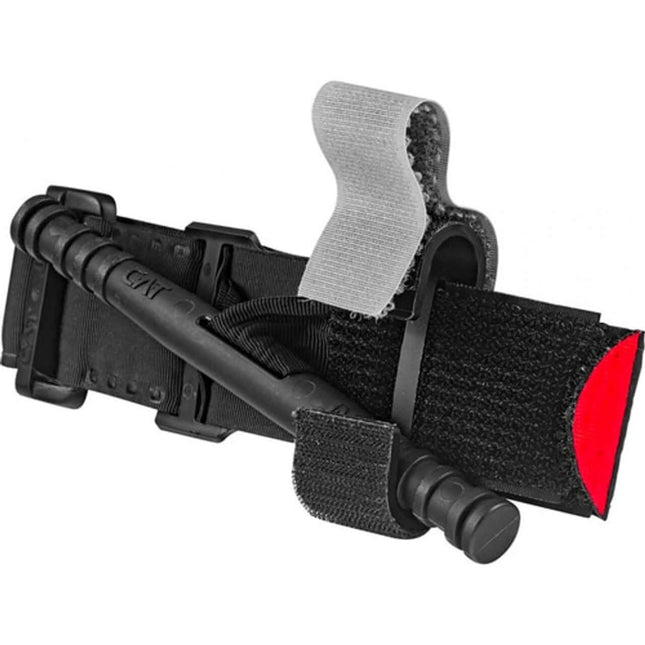
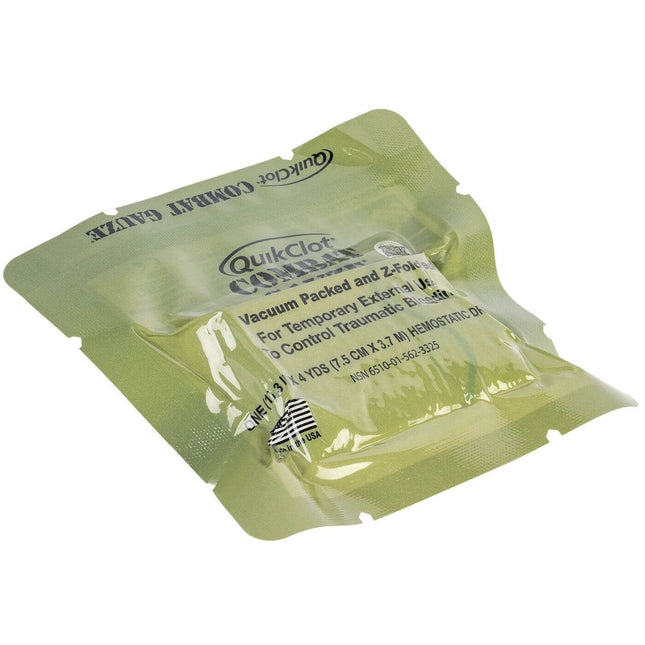
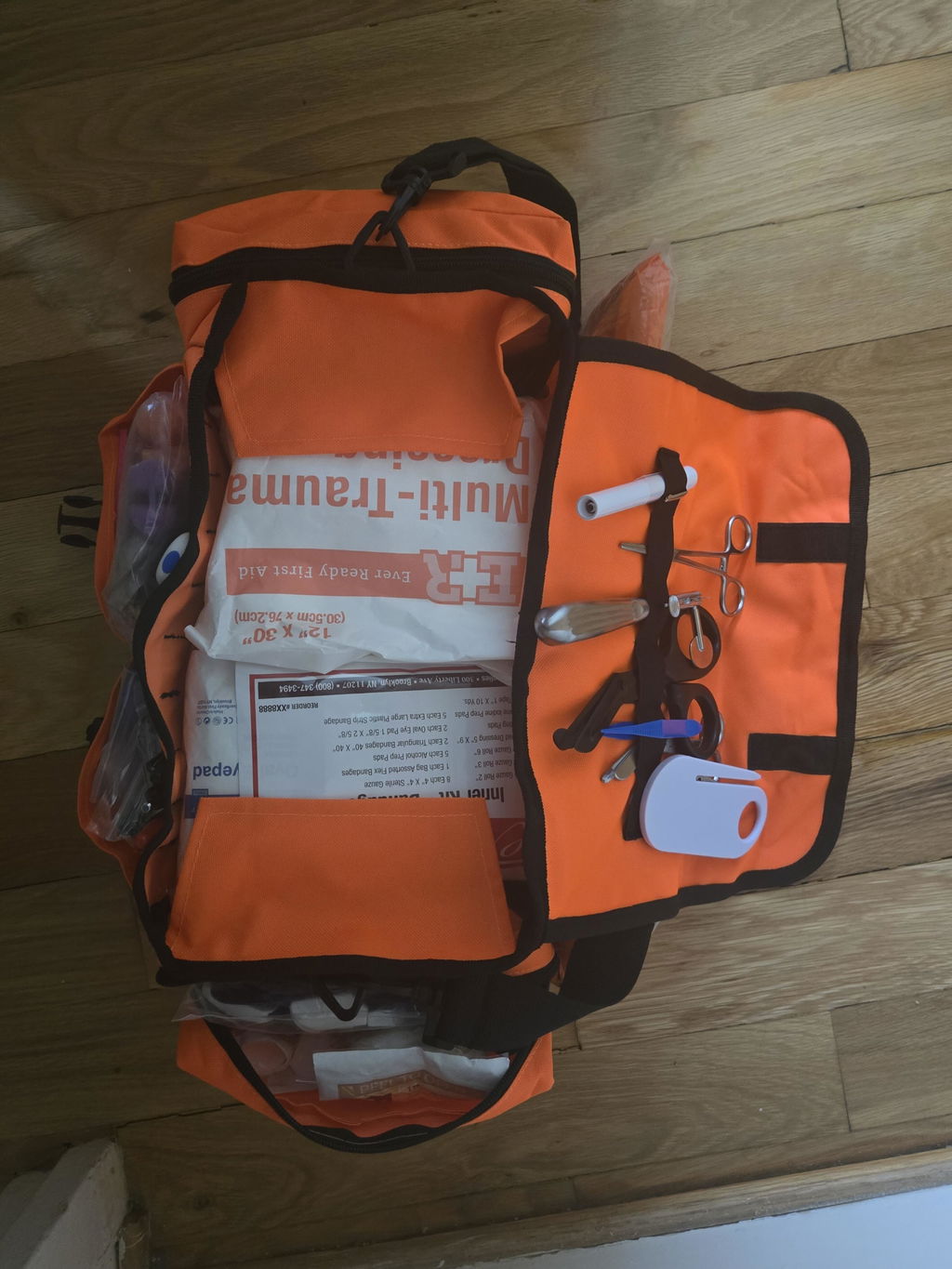
The standard contents of a bleed control kit include a tourniquet, hemostatic gauze, a pressure dressing, trauma shears, nitrile gloves, and a permanent marker for documenting tourniquet time. More complete kits add a chest seal for penetrating thoracic wounds. The ViTAC Intermediate Bleeding Control Pack packages these components in a compact IFAK-ready configuration that meets TCCC supply standards.
A bleed control kit is not an upgraded first aid kit. It does not contain antiseptic wipes, adhesive bandages, or burn treatment. Those are first aid items. A bleed control kit and a standard first aid kit should both be present and staged separately — they are not interchangeable.
How Bleed Control Differs from Standard First Aid
The distinction comes down to injury type and intervention mechanism. Standard first aid manages minor wounds — lacerations that require cleaning and bandaging, burns that require cooling and dressing, sprains that require compression and elevation. These are low-volume bleeding events where the body's clotting cascade will manage the hemorrhage without mechanical assistance.
Bleed control intervenes in high-volume hemorrhage events where the body's clotting cascade will not respond fast enough to prevent death. Gunshot wounds, deep lacerations from industrial or vehicle accidents, amputations, and stab wounds to junctional zones generate blood loss rates that standard gauze and bandaging cannot match.
| Category |
Standard First Aid Kit |
Bleed Control Kit |
| Wound type |
Minor cuts, scrapes, burns, sprains |
Arterial bleeding, deep cavity wounds, amputations |
| Hemorrhage control |
Basic gauze and bandages |
Tourniquet, hemostatic gauze, pressure dressing |
| Access tools |
Small scissors (sometimes) |
Trauma shears, gloves |
| Thoracic wounds |
Not addressed |
Chest seal (in complete kits) |
| Intervention window |
Minutes to hours |
Seconds to minutes |
Field Note: MARCH Priority
The MARCH protocol (Massive hemorrhage, Airway, Respiration, Circulation, Hypothermia) places hemorrhage control first because uncontrolled bleeding kills faster than airway compromise in most trauma scenarios. A standard first aid kit addresses none of the M in MARCH. If your kit cannot stop a femoral bleed, it cannot address the primary cause of preventable trauma death.
Who Needs a Bleed Control Kit
The correct answer is anyone who may be first on scene at a traumatic injury — which includes most adults in most environments. More specifically, bleed control kits are a baseline requirement in the following contexts:
-
Workplaces with cutting, heavy, or pressurized equipment: Industrial sites, construction sites, woodshops, agricultural operations, and any workspace where machinery can generate penetrating injuries require bleed control capability beyond what OSHA minimum first aid kits provide.
-
Vehicles: Vehicle accidents are the most common civilian source of life-threatening extremity hemorrhage. A tourniquet staged in a center console or on a visor clip addresses the specific injury mechanism most likely to affect a civilian driver or passenger.
-
Schools, stadiums, and public spaces: Active threat and mass casualty events have produced a strong public health consensus that bleed control kits should be co-located with AEDs in public-access buildings. The intervention window for hemorrhage control is comparable to the intervention window for cardiac arrest.
-
Individuals who operate in remote or austere environments: Hunters, backcountry hikers, off-road operators, and recreational shooters are all beyond rapid EMS response times for portions of their activities. On-body bleed control capability is not optional in these contexts.
-
Law enforcement and security personnel: Both personal carry and vehicle-staged kits are standard. Off-duty carry is increasingly common.
Training Is Required
A bleed control kit without trained users is not emergency preparedness. Tourniquet application, wound packing technique, and pressure dressing application are learned skills. Each has specific mechanical requirements that are not self-evident under stress. A carrier who has never applied a tourniquet to a training mannequin will fumble the application under duress — and will likely apply it too loosely, producing a venous tourniquet that increases bleeding rather than stopping it.
Stop the Bleed and TECC-B (Tactical Emergency Casualty Care — Bystander) are the two primary civilian training frameworks for bleed control. Both are widely available and take two to four hours for the core curriculum. Hands-on repetitions on a training mannequin are the only way to build the muscle memory required for one-handed tourniquet application under stress.
Choosing Your Kit
An assembled kit from a verified supplier is the fastest path to a complete, compatible set of components. Custom builds make sense for carriers with specific agency protocols, team configurations requiring multiple tourniquets, or roles requiring chest seals not included in standard consumer kits. Either approach requires the same minimum component set: tourniquet, hemostatic gauze, pressure dressing, chest seal, trauma shears, gloves, and marker.
The CAT Gen 7 is the current U.S. military standard tourniquet and the default choice for civilian bleed control kits. The SOF-T Wide is the alternative for extended-wear applications or larger limb circumferences. Both are TCCC-approved and carried by ViTAC.
FAQ
Is a bleed control kit the same as an IFAK?
Functionally, yes. An IFAK (Individual First Aid Kit) is a military-origin term for a personal bleed control kit. The civilian version uses the same component set — tourniquet, hemostatic gauze, pressure dressing, chest seal — in a compact carrier. The terms are interchangeable in most civilian contexts.
Does a bleed control kit replace a standard first aid kit?
No. They address different injury types. A bleed control kit stops arterial hemorrhage. A standard first aid kit manages minor wounds, burns, and sprains. Both should be staged in any environment where they may be needed. Replacing one with the other leaves a gap.
How long does a bleed control kit stay usable?
Hemostatic gauze and chest seals carry manufacturer shelf lives of approximately five years from production. Tourniquets last indefinitely if stored out of direct UV and heat. Check expiration dates on hemostatic components annually and replace any item that has been opened or used in training.
Bottom Line
A bleed control kit is not an accessory to a standard first aid kit — it is a separate category of emergency equipment built for a different threat. Every environment where penetrating trauma is a plausible risk needs one. Every kit needs trained users.
For the complete component breakdown, see What Belongs in a Bleed Control Kit. For the decision guide on which kit to reach for at a trauma scene, see When to Use a Bleed Control Kit vs. a First Aid Kit.
View the ViTAC Bleeding Control Pack
Tags
bleed control kit
bleeding control
emergency preparedness
hemorrhage control
hemostatic gauze
IFAK
MARCH
pressure dressing
Stop the Bleed
TCCC
tourniquet
trauma kit
what is a bleed control kit