CAT Tourniquet vs. Everything Else: Why the Standard Matters
8 min reading time
CAT tourniquet comparison highlights its effectiveness and application methods. Learn the features and considerations for selecting a tourniquet.
The Combat Application Tourniquet has more confirmed combat saves than any other commercial tourniquet device. The U.S. Army Institute of Surgical Research validated it at 100% arterial occlusion efficacy, and the Committee on Tactical Combat Casualty Care has maintained it as the primary recommended tourniquet since 2005. That track record is why comparing other options to the CAT is the correct frame — it is the established standard everything else is measured against.
The Gen 7 CAT: What Makes It Work
The CAT Gen 7 is not a simplified device. Each component serves a specific mechanical function in achieving arterial occlusion under field conditions:
Single routing buckle: Allows the strap to be routed and tensioned in a single pass, reducing application time and eliminating the threading errors that slowed older designs.
Reinforced windlass rod and stabilization plate: The polymer rod is engineered to withstand the torque required for arterial occlusion without deformation. The stabilization plate prevents lateral rod movement during tightening.
Red Tip Technology: The red-tipped strap end improves identification and threading under low-light conditions and with gloved hands.
Windlass locking clip: The triangular clip locks the rod in position after occlusion is achieved, preventing release during movement or transport.
The Gen 7 design specifically addresses failure modes documented in earlier tourniquet generations — windlass breakage, clip failure, and multi-pass routing errors under stress.
CAT vs. SOF-T: What the Comparison Actually Shows
The SOF-T Wide is the other CoTCCC-approved tourniquet and a legitimate clinical tool. The comparison between them is a mechanical and ergonomics question, not a validation question — both have been proven effective in controlled testing and field use.
Feature
CAT Gen 7
SOF-T Wide
Windlass material
Reinforced polymer
Aluminum alloy
Strap routing
Single routing buckle
Dual-buckle routing
One-handed application
Optimized for single-hand self-application
Effective; steeper learning curve for self-application
Profile
Slightly larger footprint
Compact, lower profile
Weight
Lighter
Heavier (metal components)
CoTCCC approved
Yes
Yes
For first-time users and self-application scenarios, the CAT Gen 7's single routing buckle reduces application time and errors under stress. The SOF-T Wide is preferred by experienced users who prioritize a lower profile for EDC. Both are field-proven. The choice comes down to your training history and carry requirements.
Applying the CAT: Step-by-Step
The CAT Gen 7 is designed for one-handed self-application. The following sequence applies to arm self-application; the same steps apply to assisting another person, with both hands available for initial strap tensioning.
Step
Action
1. Route
Insert the limb through the loop. Position 2–3 inches proximal to the wound, above any joint.
2. Pull tension
Pull the free end of the strap through the single routing buckle and pull all slack out. The strap should be snug against the limb before windlass engagement.
3. Twist windlass
Rotate the windlass rod continuously until bright red bleeding stops. Do not stop at the point of pain — stop when the bleed is controlled.
4. Lock and document
Seat the windlass rod into the triangular clip. Secure the remaining strap. Write application time on the patient's forehead: T = [time].
High and tight protocol: When wound location is unclear, lighting is poor, or speed is the overriding factor, apply the tourniquet as far proximal on the limb as possible — near the axilla for an arm, near the groin for a leg. For clearly visible wounds in a controlled environment, 2–3 inches proximal to the wound is the targeted standard.
Field Note: Under-Tightening Kills
A correctly tightened tourniquet is painful. If the patient reports no discomfort and the bleed has slowed but not stopped, the tourniquet is not tight enough. Tighten further. There is no clinical risk from over-tightening — there is a lethal risk from under-tightening.
CAT Selection by Scenario
Tactical and Law Enforcement
The CAT Gen 7's larger windlass rod and single-buckle routing make it the preferred option for application under stress, with gloved hands, or in low light. Its documented application time advantage over multi-pass designs matters in high-pressure environments.
Everyday Carry
For EDC, the SOF-T Wide's more compact folded profile is a practical advantage for pocket or flat-fold carry. Users who have trained extensively on the SOF-T should carry the SOF-T — familiarity with your device under stress outweighs nominal design differences.
Hunting and Remote Activity
Both devices are built to ASTM F3143 and function in wet, muddy, and cold conditions. The CAT's polymer windlass performs reliably across temperature ranges. The SOF-T's aluminum windlass offers additional resistance to UV degradation over extended storage. Either is appropriate for field carry.
Pediatric Casualties
Standard adult tourniquets can achieve occlusion on older children and adolescents with limbs large enough to accept the routing loop. For younger children, pediatric-specific tourniquets designed for smaller extremity circumferences are more reliable. If applying a standard CAT to a child, go high and tight on the limb and confirm arterial occlusion by checking for cessation of bright red bleeding.
Counterfeits: Why Authenticity Is a Clinical Matter
Counterfeit CAT tourniquets have been tested and documented to produce less than one quarter of the occlusion force of a genuine Gen 7, with higher windlass breakage rates under the torque required for arterial compression. A counterfeit tourniquet that fails during application is not a failed first-aid attempt — it is active harm in a life-threatening situation.
Identification markers on a genuine CAT Gen 7:
"CAT" embossed on the stabilization plate; NAR logo molded into the buckle
Reinforced polymer windlass rod that does not flex under tightening load
Clean, heavy-duty stitching on all strap junctions
Lot number on the packaging as part of the regulated medical device supply chain
Price point consistent with a Class I medical device (not $10–15)
The CAT Gen 7 Tourniquet available from ViTAC is sourced from the authorized distribution chain. Do not purchase from third-party marketplaces with no accountability to the medical device supply standard.
Integrating the CAT Into Your Emergency System
Accessibility and Staging
A tourniquet stored at the bottom of a pack is not an emergency resource — it is a piece of inert equipment. Stage it for access in two seconds or less: belt-mounted IFAK pouch, outer pocket, vehicle mount, or flat-fold in a cargo pocket. Remove it from the packaging and stage it in a deployment-ready configuration before you need it.
MARCH Protocol Integration
In the MARCH framework (Massive hemorrhage, Airway, Respiration, Circulation, Hypothermia), tourniquet application falls under the first priority: Massive Hemorrhage. Life-threatening limb bleeding is addressed before airway management. A CAT applied correctly in the first minutes of a hemorrhagic emergency is the single highest-impact intervention available to a non-medical responder.
Building a Complete Bleeding Control Kit
A tourniquet addresses limb hemorrhage. A complete kit also requires tools for wounds that cannot accept a tourniquet:
Hemostatic gauze: For junctional wounds (groin, axilla, neck) and wounds where tourniquet placement is anatomically impossible
Pressure bandage: For sustained compression during transport after packing
Trauma shears: To clear clothing from the application zone
Gloves: Barrier protection for the responder
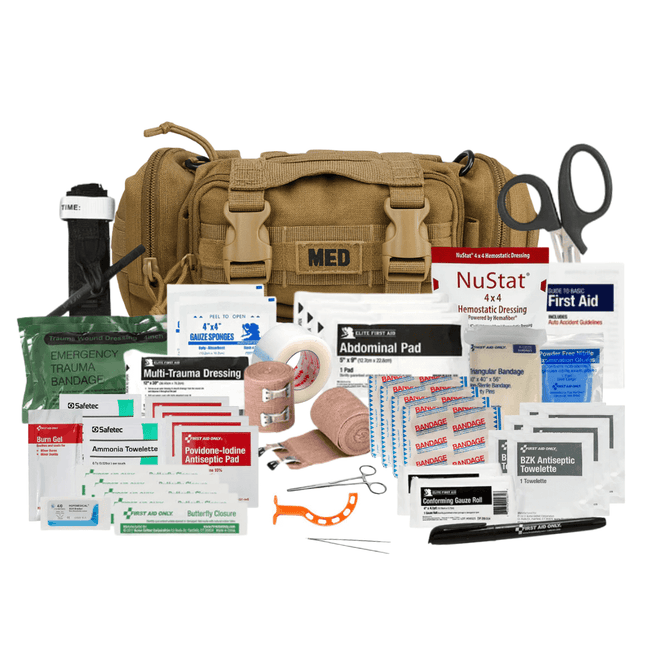
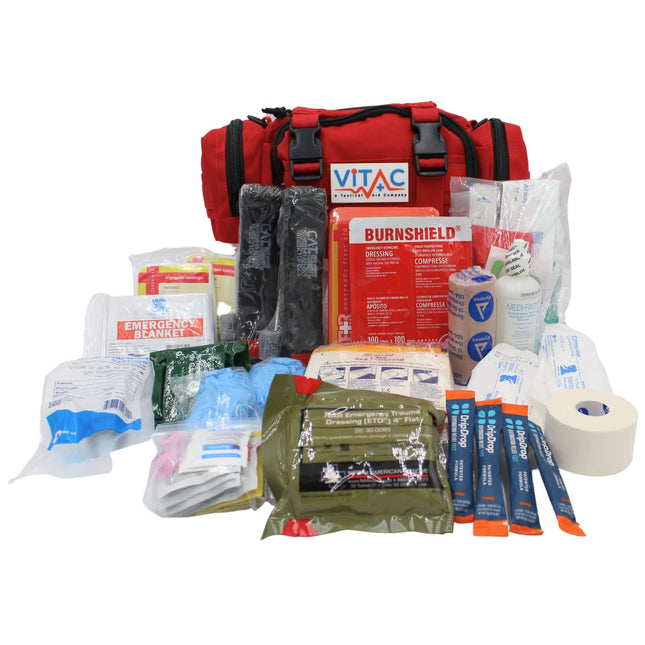
The Intermediate Bleeding Control Pack is configured with these components alongside a CAT Gen 7 for a complete hemorrhage control capability.
Yes, for children with limbs large enough to accept the routing loop and achieve occlusion. Apply high and tight on the limb and confirm bleeding control. For smaller children, a pediatric-specific tourniquet is the more reliable option.
How long can a tourniquet stay on?
TCCC guidelines target conversion within two hours to reduce ischemic injury risk. That conversion is performed by trained medical personnel. In the field, do not remove or loosen the tourniquet. Document the time and transfer the patient as quickly as possible.
Can I over-tighten a CAT tourniquet?
No. Tighten until arterial bleeding stops and there is no palpable distal pulse. There is no clinical harm from over-tightening in the field. Under-tightening is the documented failure mode — it creates venous occlusion without arterial occlusion, which increases bleeding.
Bottom Line
The CAT is the standard because it has been proven in more real hemorrhage events than any competing device, with an independently validated 100% arterial occlusion rate. Alternatives exist and have their place, but if you are building a hemorrhage control capability from scratch, the CAT Gen 7 Tourniquet is the correct starting point. Source it from an authorized supplier, stage it where you can reach it in two seconds, and train with it until application is automatic.
In Stock
Domestic Shipping (USA - Lower 48 Only) Orders are processed within 24 hours and typically ship within 1–2 business days. Once shipped, delivery takes an estimated 3–7 days, with most orders arriving in just 5 days. Please Note: We currently do not ship to Alaska, Hawaii, or international destinations. Questions? Contact us anytime at support@vitacsolutions.com or call 307-202-8426.
In Stock
Domestic Shipping (USA - Lower 48 Only) Orders are processed within 24 hours and typically ship within 1–2 business days. Once shipped, delivery takes an estimated 3–7 days, with most orders arriving in just 5 days. Please Note: We currently do not ship to Alaska, Hawaii, or international destinations. Questions? Contact us anytime at support@vitacsolutions.com or call 307-202-8426.
In Stock
Domestic Shipping (USA - Lower 48 Only) Orders are processed within 24 hours and typically ship within 1–2 business days. Once shipped, delivery takes an estimated 3–7 days, with most orders arriving in just 5 days. Please Note: We currently do not ship to Alaska, Hawaii, or international destinations. Questions? Contact us anytime at support@vitacsolutions.com or call 307-202-8426.
In Stock
Domestic Shipping (USA - Lower 48 Only) Orders are processed within 24 hours and typically ship within 1–2 business days. Once shipped, delivery takes an estimated 3–7 days, with most orders arriving in just 5 days. Please Note: We currently do not ship to Alaska, Hawaii, or international destinations. Questions? Contact us anytime at support@vitacsolutions.com or call 307-202-8426.
What are you preparing for? On-duty response, family preparedness, outdoor adventure... Answer 5 quick questions and we'll match you with the right gear.
We've been downrange. We know what it costs to be unprepared. ViTAC was built by U.S. Army Special Operations veterans to make sure the people who run toward the threat — and the families who depend on them — have gear that works when everything is on the line.
— ViTAC Solutions Founders | 40+ years combined Special Operations experience
Most of our trauma kits and first aid supplies qualify for HSA and FSA reimbursement. Don't let your benefits expire — invest them in gear that could save a life.
Good quality products. The free items were also nice. Great med kit for alot of travel situations
Thank you for the 5-star review. We’re glad the med kit and added items delivered value and that it’s serving you well for travel. Stay prepared and safe out there.
The item was as promised. Everything in the kit was high-quality and I’m pleased with that. The only problem I have is I’m not sure it’s worth the cost. I found all of the contents individually for significantly less money. The only thing I didn’t find on my own was the pouch everything came in and that was a perfect fit so I would give it an A plus on quality, but a C on value.
Thank you for the honest feedback. We’re glad the kit quality and pouch met the mark. We understand your point on value, our pricing reflects not only the components, but careful sourcing, organization, and readiness in one dependable setup. We appreciate your support.