Camping First Aid Kit vs. Trauma Kit: Which Do You Need?
6 min reading time
Camping first aid kit vs trauma kit is essential knowledge for outdoor safety. Read about their differences and which to choose for your trip.
Uncontrolled bleeding is the leading cause of preventable death after traumatic injury. A standard camping first aid kit is not designed to address it. That gap — between what a comfort-care kit can manage and what a life-threatening injury demands — is the boundary this article defines.
If you carry gear into the backcountry, you need to understand the difference before you need it.
What Each Kit Is Actually For
A camping first aid kit handles predictable, low-severity injuries: blisters, minor lacerations, insect bites, small burns, mild sprains. It is a comfort-care and wound-hygiene tool. The contents are designed to manage pain, reduce infection risk, and keep you in the field on day hikes and established campground trips.
An adventure trauma kit is built for a different mission. It contains the equipment to intervene when hemorrhage, penetrating wounds, or airway compromise threatens life. The contents are driven by TCCC and Wilderness EMS standards — sequenced using the MARCH framework, not consumer comfort metrics.
Field Note: The Distinction Is a Treatment Boundary
Reaching for a camping kit during a severe bleed costs time you do not have. The distinction between these two kits is not a marketing category — it is a treatment-capability boundary.
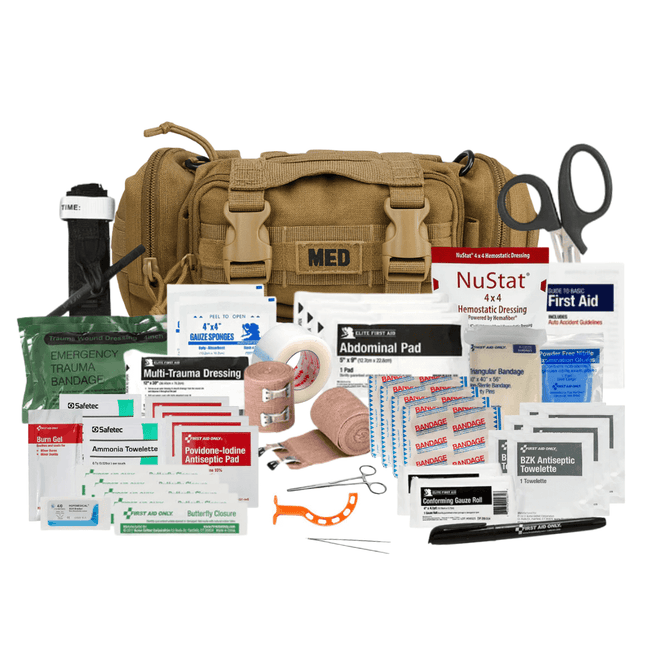
Hemostatic gauze (QuikClot), trauma dressings, wound-packing material
Bleeding Control
Basic adhesive bandages, standard gauze
CAT tourniquet, pressure bandage, chest seals
Airway
Not included
Nasopharyngeal airway (NPA)
Hypothermia Prevention
Not included
Emergency Mylar blanket
Tools
Small scissors, tweezers, disposable gloves
Trauma shears, permanent marker for tourniquet time, nitrile gloves
Pain / Allergy
Ibuprofen, antihistamines, OTC medications
Not the primary focus — managed per medical protocol
Skill Requirements
A camping first aid kit requires basic familiarity. Most people can correctly apply a bandage or clean a wound without formal instruction.
A trauma kit requires training. Tourniquet application, wound packing with hemostatic gauze, and chest seal placement all have specific techniques that must be practiced before an emergency. An improperly applied tourniquet may fail to stop arterial bleeding. Wound packing done incorrectly leaves dead space that does not control hemorrhage.
The American College of Surgeons' Stop the Bleed program covers the fundamentals in under two hours. If you carry a trauma kit, completing that course is not optional — it is the baseline. For a field-ready guide to managing injuries until evacuation, see Preparing for Field Injuries When Help Is 30 Minutes Away.
Choosing the Right Kit for Your Trip
Trip Profile
Recommended Minimum
Rationale
Day hike, established trail, <5 miles from trailhead
Camping first aid kit
EMS accessible within 30–60 minutes; injuries typically minor
Multi-day backpacking, moderate terrain
Camping kit + bleeding control components
Extended exposure time increases injury severity risk
What is the main difference between a camping first aid kit and a trauma kit?
A camping first aid kit manages minor injuries: cuts, blisters, sprains, burns. A trauma kit is built for severe, life-threatening conditions — particularly hemorrhage control. It contains tourniquets, hemostatic gauze, and pressure dressings that a standard first aid kit does not include.
Do I need both types of kit?
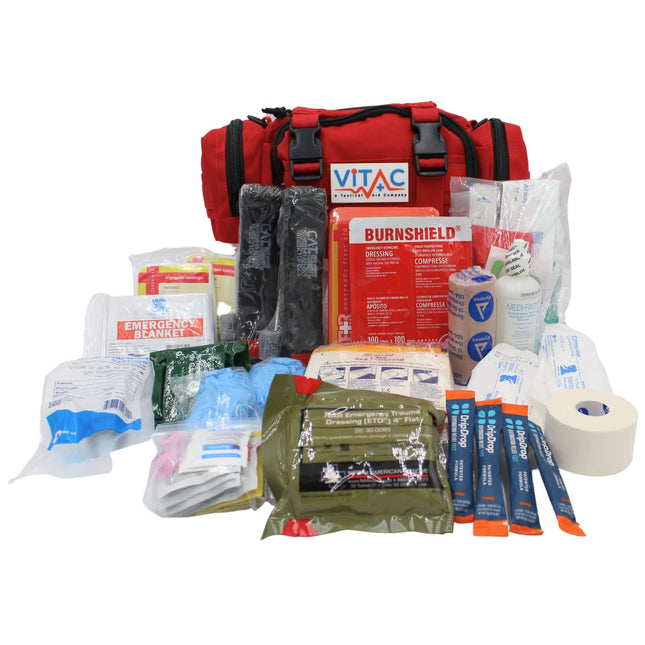
For most backcountry trips, yes. A trauma kit alone does not replace the general-purpose supplies you need for everyday injuries. A camping kit alone cannot address catastrophic bleeding. Carry both, or use a hybrid solution like the ViTAC Waterproof Medical Kit with Trauma Supplies.
What trauma-specific items are not found in a standard camping kit?
Tourniquets, hemostatic gauze (QuikClot, HemCon), chest seals for penetrating thoracic wounds, and pressure bandages designed for major wound packing. These are purpose-built for hemorrhage control and are not present in consumer first aid kits.
Bottom Line
A camping first aid kit and an adventure trauma kit are not interchangeable. One manages minor injuries; the other controls life-threatening hemorrhage. If your trips take you more than 30 minutes from emergency medical services, you need both — and you need training to use the trauma components effectively.
In Stock
Domestic Shipping (USA - Lower 48 Only) Orders are processed within 24 hours and typically ship within 1–2 business days. Once shipped, delivery takes an estimated 3–7 days, with most orders arriving in just 5 days. Please Note: We currently do not ship to Alaska, Hawaii, or international destinations. Questions? Contact us anytime at support@vitacsolutions.com or call 307-202-8426.
In Stock
Domestic Shipping (USA - Lower 48 Only) Orders are processed within 24 hours and typically ship within 1–2 business days. Once shipped, delivery takes an estimated 3–7 days, with most orders arriving in just 5 days. Please Note: We currently do not ship to Alaska, Hawaii, or international destinations. Questions? Contact us anytime at support@vitacsolutions.com or call 307-202-8426.
In Stock
Domestic Shipping (USA - Lower 48 Only) Orders are processed within 24 hours and typically ship within 1–2 business days. Once shipped, delivery takes an estimated 3–7 days, with most orders arriving in just 5 days. Please Note: We currently do not ship to Alaska, Hawaii, or international destinations. Questions? Contact us anytime at support@vitacsolutions.com or call 307-202-8426.
In Stock
Domestic Shipping (USA - Lower 48 Only) Orders are processed within 24 hours and typically ship within 1–2 business days. Once shipped, delivery takes an estimated 3–7 days, with most orders arriving in just 5 days. Please Note: We currently do not ship to Alaska, Hawaii, or international destinations. Questions? Contact us anytime at support@vitacsolutions.com or call 307-202-8426.
What are you preparing for? On-duty response, family preparedness, outdoor adventure... Answer 5 quick questions and we'll match you with the right gear.
We've been downrange. We know what it costs to be unprepared. ViTAC was built by U.S. Army Special Operations veterans to make sure the people who run toward the threat — and the families who depend on them — have gear that works when everything is on the line.
— ViTAC Solutions Founders | 40+ years combined Special Operations experience
Most of our trauma kits and first aid supplies qualify for HSA and FSA reimbursement. Don't let your benefits expire — invest them in gear that could save a life.
Good quality products. The free items were also nice. Great med kit for alot of travel situations
Thank you for the 5-star review. We’re glad the med kit and added items delivered value and that it’s serving you well for travel. Stay prepared and safe out there.
The item was as promised. Everything in the kit was high-quality and I’m pleased with that. The only problem I have is I’m not sure it’s worth the cost. I found all of the contents individually for significantly less money. The only thing I didn’t find on my own was the pouch everything came in and that was a perfect fit so I would give it an A plus on quality, but a C on value.
Thank you for the honest feedback. We’re glad the kit quality and pouch met the mark. We understand your point on value, our pricing reflects not only the components, but careful sourcing, organization, and readiness in one dependable setup. We appreciate your support.