Trusted by Law Enforcement & Tactical Professionals
Camping First Aid Kit - What to Pack for Each Season
6 min reading time
A well-built camping first aid kit shifts with the seasons. This guide covers the essential trauma and general-care supplies for spring, summer, fall, and winter outdoor trips.
When help may be hours away, your first aid kit becomes the first line of care. Use this field-tested guide to build a kit that’s fast to find, easy to use, and tailored to your route and season.
A great camping first aid kit isn’t “everything.” It’s the right things, staged for speed, covering the injuries you’ll actually see: bleeding, wounds/burns, sprains, blisters—plus basic meds and tools.
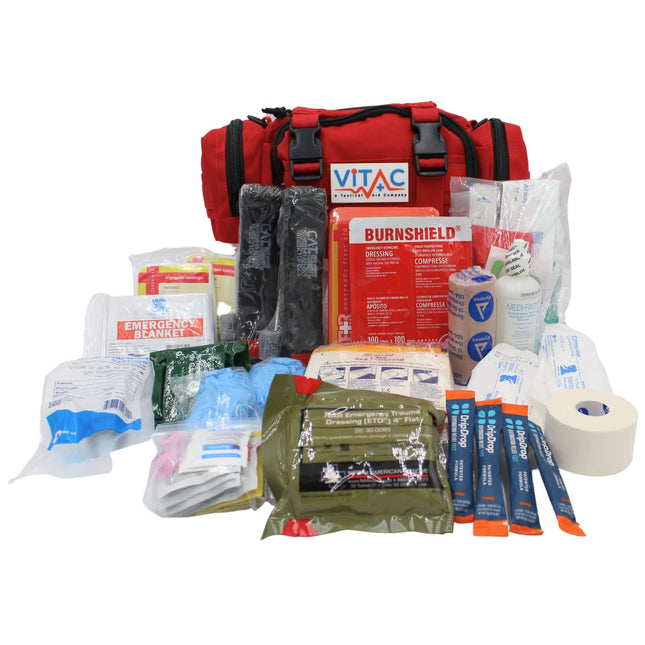
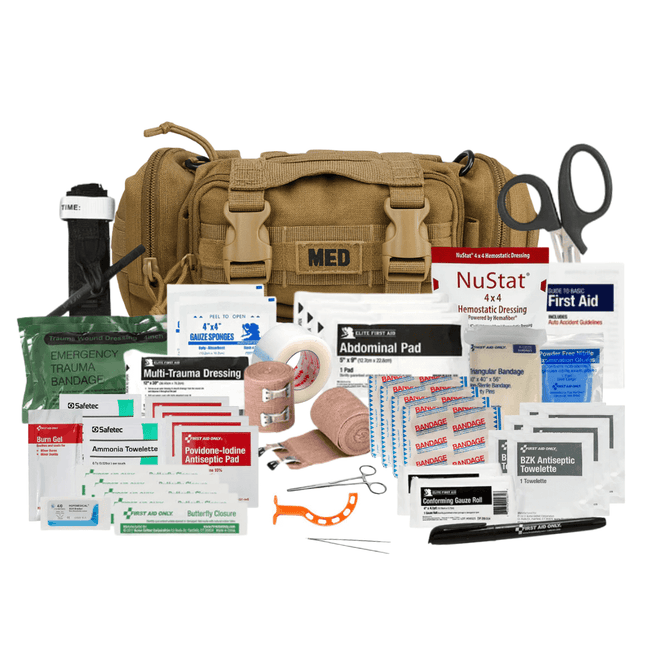
Core loadout
Bleeding & trauma: windlass
tourniquet (TCCC-recommended style), pressure dressing, rolled or
hemostatic gauze, nitrile gloves, medical tape, trauma shears.
Wound & burn care: Irrigation (saline pods or syringe), antiseptic, non-adherent pads, hydrogel/burn gel, a few
closure strips, blister care (moleskin or hydrocolloids).
Meds & relief (clearly labeled): Pain reliever, antihistamine, anti-diarrheal, anti-nausea, antacid, oral rehydration salts/electrolytes; add personal prescriptions and an EpiPen if prescribed.
Tools & essentials: Tweezers, mini marker (for TQ time), thermometer strips, space blanket, small light, tick remover, water purification tabs.
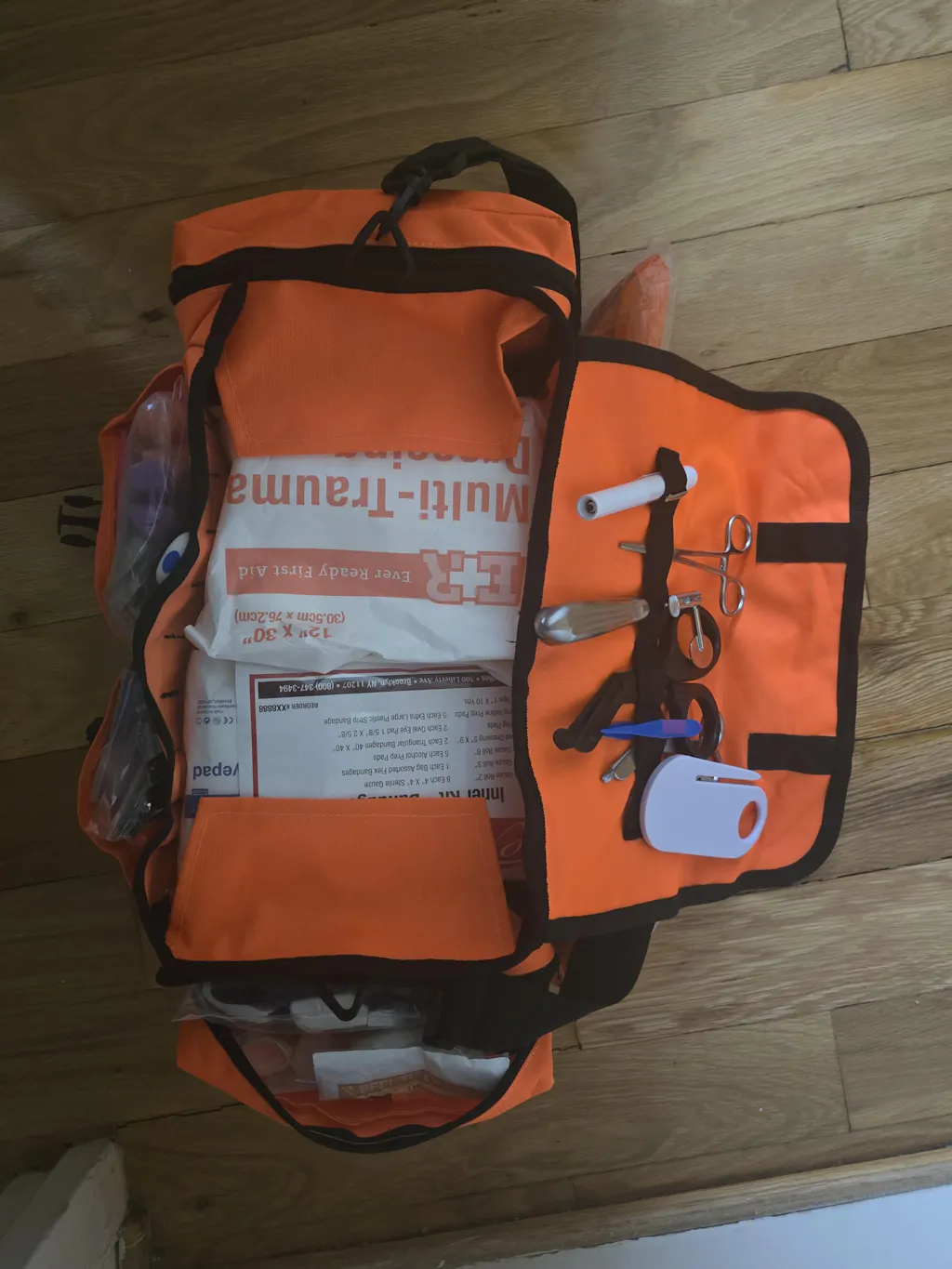
Prefer a ready-built solution? The Advanced Adventurer First Aid Kit organizes bleed control and wound care on top—roomy enough for personal meds without excess bulk.
Waterproofing & organization that actually works
A soaked kit is slow—and sometimes unusable. Build in layers:
Outer protection: Water-resistant pouch or roll-top dry bag.
Stage for speed: The moment the kit opens, you should see tourniquet,
pressure dressing, gloves, shears.
Moisture control: Double-bag meds and hemostatic gauze; add desiccant in humid climates.
Post-trip reset: Refill and reseal anything you opened.
Camping kit vs. IFAK (and when to blend them)
An IFAK is built for immediate life threats: tourniquet + pressure dressing + gauze, staged for one-hand access.
A
camping first aid kit adds what you’ll use more often outdoors: irrigation, non-adherent pads, blister/burn care, elastic wrap, compact splint, core meds.
For most backcountry routes, blend both: trauma-forward top layer + organized outdoor care underneath.
Seasonal & environment add-ons (keep it lean, keep it relevant)
Summer (heat, sun, insects). Add extra electrolytes/ORS, high-SPF sunscreen and lip balm, after-sun lotion, insect repellent and bite/sting relief, tick key, and a little extra blister care.
Winter (cold, snow, ice). Pack a second space blanket or a bivy, chemical hand warmers, lip/skin barrier ointment, and windburn protection. Slips mean more sprains—carry an extra elastic wrap and ensure tape stays warm so it adheres. Desert (heat, dust, thorns). Bring more irrigation, eyewash, and layered dressings for abrasion. Fine-tip tweezers (and even a bit of duct tape) help with cactus spines; plan on extra electrolytes. Alpine & high elevation. UV spikes: add high-UV sunscreen and wrap-around sunglasses. Steep terrain = more blister prevention and a compact splint. Keep everything compact, waterproof, and glove-accessible. Family camping. Add a pediatric dosing card and child-appropriate meds, more adhesive bandages, a thermometer, and extra gloves/wipes for frequent minor care.
How big should my camping first aid kit be?
Use three questions to size your loadout:
1.How far from help? If evacuation is hours away, keep trauma + wound care robust.
2.How many people? Add redundancy for groups—extra gloves, gauze, tape, and ORS.
3.What environment? Heat, cold, altitude, water, and animals dictate which add-ons earn their place.
Sizing examples
Solo day hike: core list, tight quantities, emphasize blister care.
Weekend camp (2–4 people): core + seasonal adds, more dressings/gloves, extra ORS.
Vehicle/overland: core + expanded trauma and irrigation; keep a compact kit on your person for quick side hikes.
What medicines belong in a camping first aid kit?
Stick to clearly labeled basics you’ll actually use: a pain reliever, antihistamine, anti-diarrheal, anti-nausea, antacid, and ORS/electrolytes.
Add your personal prescriptions and any condition-specific needs (e.g., inhaler).
Keep original labels in a small sleeve; decant working quantities into mini vials or pouches to save space and weight.
Is a tourniquet really necessary in a first aid kit built for the outdoors?
If you travel off-grid, yes—a well-staged tourniquet with a pressure dressing and gauze gives you a real plan for knife slips, tool mishaps, or falls with serious bleeding.
Practice application with gloves until it’s smooth. Note the time of application with your mini marker.
How do I organize my first aid kit for speed?
Think “open → grab → act.” Put trauma items on top. Keep modules simple and labeled, not rainbow-coded chaos.
Use a high-contrast interior so you can see items at dusk.
Repack the same way every time—muscle memory beats stress.
Packing tips from the field
Train your workflow. A 2-minute drill at the trailhead—“Where’s the TQ? Who carries the splint?”—pays off.
Mind the meds. Label everything clearly; carry a printed dosing card (pediatric if needed).
Duplicate wisely. Extra gloves, gauze, tape, and a few universal bandage sizes get used the most.
Personalize. Add allergy meds, prescriptions, or glucose as appropriate.
Final check. Date-stamp your kit review and replace anything expired or wet.
In Stock
Domestic Shipping (USA - Lower 48 Only) Orders are processed within 24 hours and typically ship within 1–2 business days. Once shipped, delivery takes an estimated 3–7 days, with most orders arriving in just 5 days. Please Note: We currently do not ship to Alaska, Hawaii, or international destinations. Questions? Contact us anytime at support@vitacsolutions.com or call 307-202-8426.
In Stock
Domestic Shipping (USA - Lower 48 Only) Orders are processed within 24 hours and typically ship within 1–2 business days. Once shipped, delivery takes an estimated 3–7 days, with most orders arriving in just 5 days. Please Note: We currently do not ship to Alaska, Hawaii, or international destinations. Questions? Contact us anytime at support@vitacsolutions.com or call 307-202-8426.
In Stock
Domestic Shipping (USA - Lower 48 Only) Orders are processed within 24 hours and typically ship within 1–2 business days. Once shipped, delivery takes an estimated 3–7 days, with most orders arriving in just 5 days. Please Note: We currently do not ship to Alaska, Hawaii, or international destinations. Questions? Contact us anytime at support@vitacsolutions.com or call 307-202-8426.
In Stock
Domestic Shipping (USA - Lower 48 Only) Orders are processed within 24 hours and typically ship within 1–2 business days. Once shipped, delivery takes an estimated 3–7 days, with most orders arriving in just 5 days. Please Note: We currently do not ship to Alaska, Hawaii, or international destinations. Questions? Contact us anytime at support@vitacsolutions.com or call 307-202-8426.
What are you preparing for? On-duty response, family preparedness, outdoor adventure... Answer 5 quick questions and we'll match you with the right gear.
Uncontrolled bleeding is the leading cause of preventable trauma death. EMS averages 14 minutes nationally. A firearm stops the threat — only a trauma kit...
Gunshot Wound Kit: 6 TCCC Components and How to Build Your Own
Uncontrolled bleeding kills in 3–5 minutes. Here are the 6 TCCC-standard components every gunshot wound kit requires, what each one does, and how to build...
We've been downrange. We know what it costs to be unprepared. ViTAC was built by U.S. Army Special Operations veterans to make sure the people who run toward the threat — and the families who depend on them — have gear that works when everything is on the line.
— ViTAC Solutions Founders | 40+ years combined Special Operations experience
Most of our trauma kits and first aid supplies qualify for HSA and FSA reimbursement. Don't let your benefits expire — invest them in gear that could save a life.
The item was as promised. Everything in the kit was high-quality and I’m pleased with that. The only problem I have is I’m not sure it’s worth the cost. I found all of the contents individually for significantly less money. The only thing I didn’t find on my own was the pouch everything came in and that was a perfect fit so I would give it an A plus on quality, but a C on value.
Excellent choice for a one-stop, well-stocked trauma bag
This is a great kit if you're looking for a higher-level bag. The individual pieces are good quality and it packs tightly--that's good but it doesn't leave a ton of room if you want to add anything.