Camping First Aid Kits: How to Choose and What to Include
9 min reading time
9 min reading time
Rural EMS response times average 14 minutes according to National EMS Information System data. In backcountry environments, that figure extends to one to three hours or longer depending on terrain and weather. Camping first aid kits must be sized to that reality. An injury that is manageable with EMS five minutes out becomes a survival problem when the nearest help is a multi-hour evacuation away. This guide covers what to put in a camping kit, how to configure it for the trip, and which ViTAC options match each use case.
Most campers recognize the need for first aid supplies: bandages, antiseptic, blister treatment. These handle the injuries that occur most frequently in outdoor environments and are rarely life-threatening. The second category — trauma coverage — handles the injuries that kill: arterial hemorrhage from a fall or laceration, penetrating wounds, and airway compromise. In remote environments with extended evacuation times, the absence of trauma capability in a first aid kit is a planning failure.
A complete camping medical kit carries both. Minor injury supplies handle the high-frequency, low-severity events. Trauma supplies handle the low-frequency, high-severity events that determine whether an evacuation is necessary or whether an evacuation is the event being evacuated from.
Kit configuration should match trip parameters: group size, duration, distance from definitive care, and terrain type. A day hike within two miles of a trailhead requires different capability than a five-day backcountry trip at 10,000 feet.
| Trip Profile | Key Considerations | Recommended Configuration |
|---|---|---|
| Day hike, easy terrain | Minor injury high probability; EMS within 30 min | Compact kit with tourniquet and hemostatic gauze baseline |
| Multi-day, moderate terrain | Extended time without EMS access; blister, sprain, laceration risk | Full first aid plus IFAK-level trauma capability |
| Remote/backcountry | Evacuation 1–3+ hours; full trauma spectrum possible | Complete trauma kit plus wound closure and splinting |
| Group/family camping | Multiple patients possible; pediatric consideration | Higher-capacity kit with duplicate bleeding control supplies |
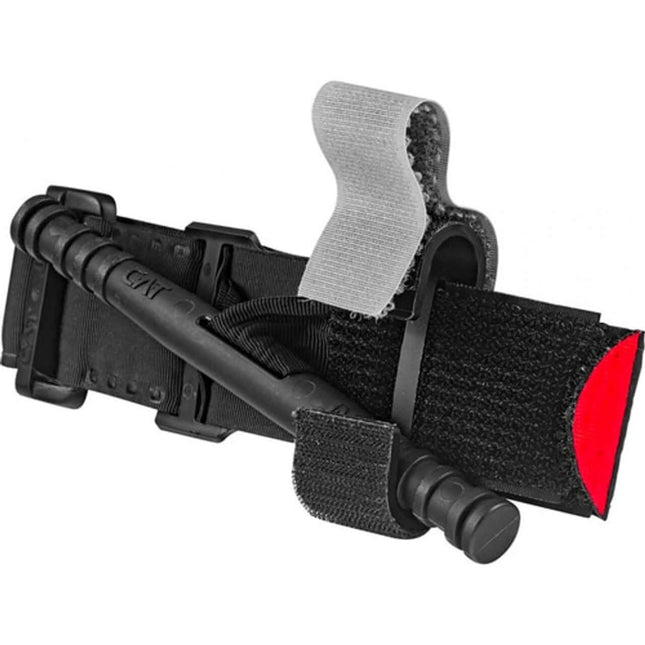
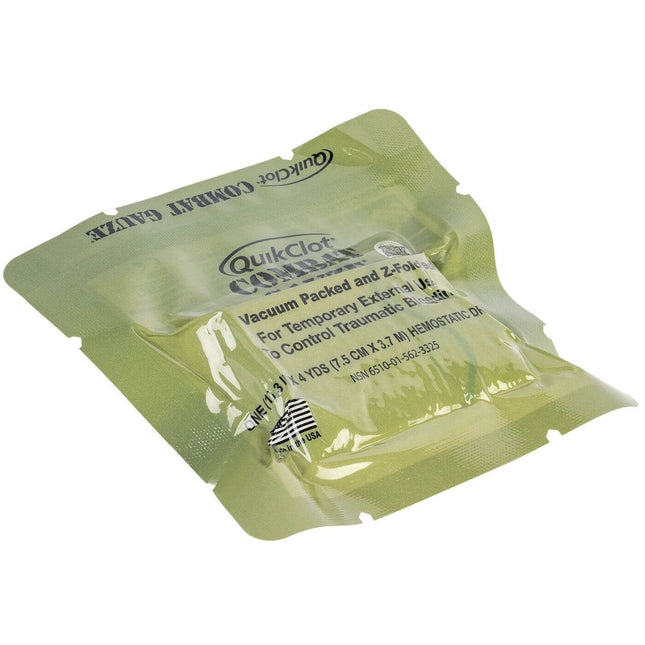
Hemorrhage is the leading cause of preventable death in outdoor trauma. Every camping kit, regardless of size, must carry at minimum: a windlass tourniquet, hemostatic gauze, and a pressure dressing. The CAT GEN 7 | Combat Application Tourniquet is the TCCC standard and designed for one-handed application under stress. QuikClot Combat Gauze Z-Fold addresses junctional wounds where a tourniquet cannot be applied. These two items are non-negotiable — add them to any kit that does not already include them. Outdoor trauma protocols follow the MARCH framework: Massive hemorrhage control is step one, followed by Airway, Respiration, Circulation, and Hypothermia prevention.
Outdoor environments introduce contamination risk that indoor settings do not. Wound irrigation (saline or clean water under pressure) removes debris before bandaging. Sterile gauze pads in multiple sizes address coverage needs from small cuts to larger lacerations. Wound closure strips extend the range of lacerations that can be managed in field conditions. Antiseptic wipes and antibiotic ointment reduce infection risk over extended trips where wound monitoring is limited.
Moleskin and blister-specific bandages are high-use items on multi-day trips — include more than you expect to need. SAM splints address suspected fractures during evacuation and reduce pain and secondary injury during transport. Elastic wraps secure splints and provide compression for soft tissue injuries. These are appropriate additions once the bleeding control baseline is covered.
Burns (stove, fire, sun exposure), insect reactions, and hypothermia are common in camping environments. Include burn gel or non-adherent burn dressings, antihistamine tablets for allergic reactions, and an emergency blanket for heat loss management in any patient showing signs of shock or exposure. Nitrile gloves must be staged at the top of the kit — no intervention begins without them.
Field Note: Water Resistance Is a Trip Requirement
Water resistance is not a preference for camping kits — it is a requirement. River crossings, unexpected rain, and condensation inside a pack will compromise supplies in a non-waterproof container. Verify waterproof construction before the trip, not after the first stream crossing.
The Small Rip Away Tactical Trauma Kit provides the bleeding control baseline in a compact, rip-away format suitable for clipping to a pack, belt, or hydration vest. At this size, the emphasis is on the items most likely to produce a survivable injury in a short-duration scenario. Supplement with personal medications and blister supplies for a complete short-trip configuration.
Multi-day trips in terrain with limited evacuation access require a complete trauma and first aid configuration. The Waterproof Medical Kit w/Tourniquet & Trauma Dressings provides weather-resistant construction and includes tourniquet and trauma dressings alongside first aid supplies — the combined capability required for remote environments. The waterproof rating protects contents across all weather conditions encountered on extended trips.
Group kits must scale for multiple potential casualties. The General Purpose First Aid Kit – Med Pro provides a 79-piece configuration that includes a CAT tourniquet and HyFin chest seal alongside comprehensive first aid coverage — the appropriate baseline for a camp group where any member may need trauma-level intervention. Supplement with duplicate tourniquets and additional hemostatic gauze for groups of four or more.
Field Note: Scale Bleeding Control to Group Size
One trauma kit for a group of four or more is not sufficient. If two members of the group are injured simultaneously, a single tourniquet and single hemostatic gauze pack provides care for one of them. Scale bleeding control supplies to the group size, not to the kit count.
Remote environments where evacuation is measured in hours, not minutes, justify a full IFAK-level trauma kit as the primary medical resource. The Premium IFAK Trauma Kit w/Tourniquet & Chest Seals provides the complete hemorrhage control, thoracic injury, and airway management capability required for backcountry scenarios where definitive care is not an option for hours. Pair with a conventional first aid kit for minor injury coverage.
Wilderness first aid extends beyond the trauma and first aid baseline for multi-day trips far from evacuation routes. Additional items that add meaningful capability without significant weight penalty: a SAM splint for fracture management, wound irrigation syringe (20 mL with 18-gauge angiocath or irrigation tip), blister-specific supplies beyond basic moleskin, tweezers and magnification for tick and splinter removal, a CPR mask for any trip where trained operators are present, and a wilderness first aid reference card for scenarios requiring extended care protocols.
Medications appropriate for extended camping include ibuprofen and acetaminophen for pain management, diphenhydramine for allergic reaction, loperamide for gastrointestinal illness, and any personal prescription medications in adequate supply for trip duration plus a two-day buffer.
Inspect every kit before each trip. Verify expiration dates on hemostatic gauze, chest seals, and medications. Confirm all sterile packaging is intact. Replace anything used since the last inspection. Check tourniquet strap and windlass function. Verify waterproof seals on weather-resistant kits are intact. A pre-trip inspection takes five minutes and eliminates the category of failure where you discover a missing component at the point of need.
After the trip, restock any items used and return the kit to full configuration before storing. Do not store a depleted kit and plan to restock later — later does not happen on a consistent schedule.
Field Note: Configure for Where You Are Going
The best kit for camping is the one that matches the trip's actual risk profile. A bandage kit on a five-day backcountry trip and a full trauma kit on a front-country car camping weekend are both mismatches. Configure for where you are going, not for the average of all trips you might take.
A windlass tourniquet, hemostatic gauze, and pressure dressing are the non-negotiable baseline. These address the injuries most likely to kill before evacuation is complete. Bandages, antiseptic wipes, blister supplies, and pain relievers handle the high-frequency minor injuries. Both categories are required in a complete camping kit.
Yes, for any trip involving water crossings, potential rain, or multi-day exposure. Non-waterproof kits fail in exactly the conditions where they are most needed. Verify waterproof construction before the trip. An IP or waterproof rating on the container, plus sealed inner bags for sensitive components, provides the necessary protection.
Yes. Backcountry and remote camping involves EMS response times of 1 to 3 hours or more. Hemorrhage is the leading cause of preventable death in outdoor trauma. A camping kit that covers only minor injuries leaves the most lethal injury category unaddressed. Tourniquet and hemostatic gauze belong in every kit regardless of trip difficulty.
Every camping kit needs both first aid and trauma capability. Scale the configuration to group size, trip duration, and distance from evacuation. The bleeding control baseline — tourniquet, hemostatic gauze, pressure dressing — is non-negotiable regardless of trip type. For a complete outdoor kit that addresses the full injury spectrum from blister to arterial hemorrhage, the Waterproof Medical Kit w/Tourniquet & Trauma Dressings provides weather-resistant construction and the trauma capability required for remote environments. For kit selection by backcountry scenario, see Backcountry First Aid: Building Your Kit by Trip Type.

OSHA minimum workplace kits don't include a tourniquet. Here's how to calculate station count, stock each station, and build bleed control coverage in any public...

One kit at the main entrance fails the 90-second coverage rule for most buildings. Here's how to run a coverage audit and calculate the correct...

Arterial hemorrhage kills in 3 minutes. Urban EMS takes 7–10. Every business needs CoTCCC-standard bleed control kits — here's how to select, deploy, and train...

40+ states mandate bleed control kits in schools — but most deployment plans miss classrooms and buses. Here's the placement standard that actually works.

Most of our trauma kits and first aid supplies qualify for HSA and FSA reimbursement. Don't let your benefits expire — invest them in gear that could save a life.


$124.95


$279.99

$37.49 - $139.46


$299.95 $269.95


$139.95 - $169.95

$49.95


$25.99


$164.95

We've been downrange. We know what it costs to be unprepared. ViTAC was built by U.S. Army Special Operations veterans to make sure the people who run toward the threat — and the families who depend on them — have gear that works when everything is on the line.
— ViTAC Solutions Founders | 40+ years combined Special Operations experience