The gap between an injury and professional help in the backcountry is not 8 minutes. It is hours. In true wilderness terrain — 20 miles from a trailhead, on a remote hunting lease without cell service, in a canyon with no helicopter landing zone — EMS response is not a plan. You are the plan.
Backcountry first aid is not about packing more. It is about packing the right things for the specific injuries your trip type creates, at a weight your body can sustain for the distance you're covering.
Your On-Body Baseline
Every trip — day hike, overnight, multi-week expedition — shares a non-negotiable baseline. These items address the highest-consequence scenarios across all terrain and all trip lengths. They go in the kit every time, no exceptions.
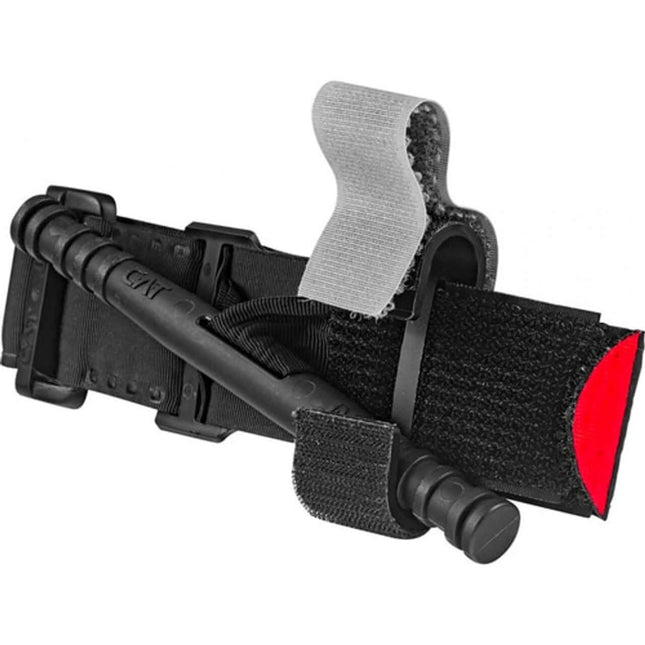
- CoTCCC-approved tourniquet: CAT Gen 7. Staged for single-handed self-application. No substitute.
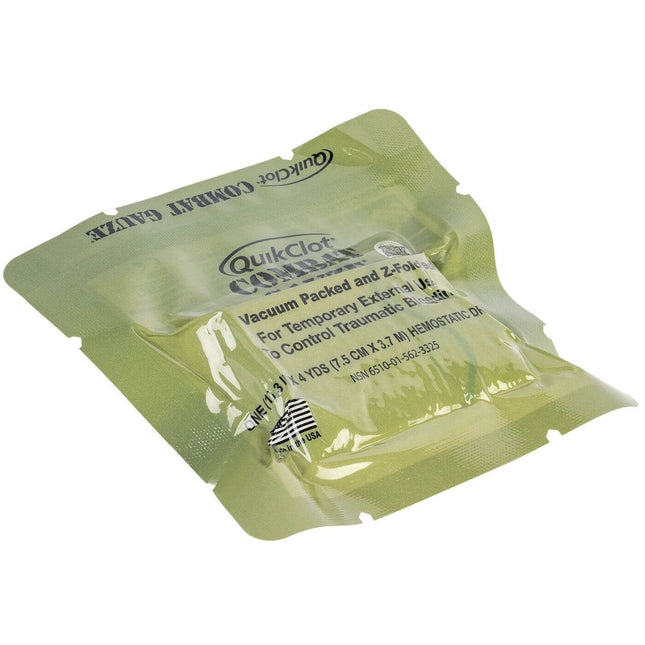
- Hemostatic gauze: QuikClot Combat Gauze, z-fold. For wounds where a tourniquet can't be applied: neck, groin, armpit.
- Compression bandage: Israeli-style pressure dressing. Applied after wound packing.
- Medical tape + sterile gauze pads: General wound management and dressing changes.
- Wound closure strips: Laceration closure without suture kit.
- Nitrile gloves: Two pairs minimum. First item on before anything else.
- Emergency space blanket: Hypothermia prevention. Blood loss drops core temperature fast, even in warm weather.
- Blister care: Moleskin and a lancet. Blisters are the most common trip-ender.
- OTC medications: Ibuprofen, diphenhydramine, antacid, loperamide.
- Tick removal tool: For areas with Lyme or Rocky Mountain Spotted Fever exposure.
In the backcountry, you are the first responder. Build accordingly.— ViTAC Solutions
Kit by Trip Type
The baseline covers your fundamentals. What you add beyond it depends on how far you're going, how long you'll be there, and what the specific injury profile of your trip looks like. The table below is a starting framework — adjust based on your terrain, group size, and training level.
| Category | Day Hike | Overnight | Multi-Day / Remote |
|---|---|---|---|
| Weight target | ≤8 oz total kit | 12–18 oz | 24–32 oz |
| Trauma additions | Baseline only | + Pressure dressing, chest seal twin pack | + Chest seal, SAM splint, wound irrigation syringe |
| Wound closure | Closure strips | Closure strips + stapler (trained users) | Full closure kit (trained users only) |
| Fracture management | Buddy tape | SAM splint | SAM splint + improvised traction option |
| Airway | None additional | NPA with lube (trained) | NPA + suction bulb |
| Medications | OTC basics | + Prescription if applicable | + EpiPen if any allergy risk; antibiotics if WFR-trained |
| Hypothermia | Space blanket | Space blanket + bivouac sack | Full insulation backup layer |

Hunting and Firearms: Penetrating Trauma Additions
Hunters operate in terrain and conditions where penetrating trauma from firearms — accidental or otherwise — is a real-world risk. The baseline kit handles most backcountry injuries. These additions are specific to firearm environments and should be added any time you're hunting or in a party that is.

- Vented chest seals (twin pack): HyFin Vented, both entry and exit. A gunshot wound to the chest requires sealing both holes. A non-vented seal on a penetrating chest wound can cause tension pneumothorax.
- Second tourniquet: If you're hunting with others, one TQ per person is the minimum. High-velocity rounds create wound channels that may require two simultaneous applications.
- Additional hemostatic gauze: Junctional wounds (groin, armpit, shoulder) cannot be tourniqueted. QuikClot Combat Gauze packed directly into the wound channel is the CoTCCC-approved response.
- NPA (nasopharyngeal airway): A head or neck gunshot wound may compromise the airway without causing immediate loss of consciousness. An NPA requires training — but if you're hunting in remote terrain, the training is worth the investment.

What to Skip
Weight matters in the backcountry. A kit that's too heavy gets left in the car — which means it's not there when you need it. These are the items most often over-packed by people who pulled their gear list from a standard first aid reference:
- Alcohol swabs for wound cleaning: Alcohol damages tissue and delays healing. Sterile saline is lighter and more effective for wound irrigation.
- Bulky elastic bandages: A proper pressure dressing does the same job with less weight and better results. Elastic bandages belong in a home kit, not a pack.
- Large scissors: Trauma shears cut through denim, boot leather, and webbing faster at a fraction of the weight.
- Expired medications: Check your kit at the start of every season. Expired medications are dead weight and potential liability.
- Items you don't know how to use: A chest decompression needle in the hands of someone who hasn't trained on it is dangerous. If it's not in your skill set, it's not in your kit.
For multi-day backcountry travel, consider Wilderness First Aid (WFA) or Wilderness First Responder (WFR) certification. WFA is a 16-hour course covering the gap between standard first aid and backcountry medicine — including improvised splinting, patient assessment, and evacuation decisions. WFR is the industry standard for guides, rangers, and serious backcountry users. NOLS Wilderness Medicine and Wilderness Medical Associates run courses nationwide. A good kit without training is a prop. Training with a minimal kit is real capability.
Frequently Asked Questions
Can I build my own backcountry kit instead of buying a pre-built one?
Yes, and for experienced users a custom kit often produces a better weight-to-capability ratio. The risk is omitting items you didn't know to include. Starting with a quality pre-built kit, then adding or removing based on your specific trip type and training level, is the most reliable approach. At minimum, every backcountry kit needs a CoTCCC-approved tourniquet and hemostatic gauze before anything else goes in.
How do I size my kit for a group versus solo travel?
For group travel, scale hemorrhage control supplies per person — one tourniquet and one hemostatic dressing minimum per individual. Medications, wound closure, and blister care can be shared from a central kit. Designate one person as the kit carrier for each major category and brief everyone on where items are staged before the trip starts. A kit buried in one person's pack is not accessible when that person is the casualty.
What is the shelf life of hemostatic gauze and chest seals in a backcountry kit?
QuikClot Combat Gauze has a manufacturer shelf life of 3–5 years from production date. HyFin Vented Chest Seals have similar windows. Check packaging for expiration dates and inspect for any damage to packaging integrity before each trip. UV exposure and extreme heat cycles (common in packs stored in vehicles between trips) can degrade adhesives and packaging faster than the shelf life suggests. Inspect before every season, not just annually.
The Bottom Line
A backcountry kit is not a scaled-down version of a home first aid kit. It is a purpose-built system calibrated to trip length, terrain, and the specific injuries that environment creates. The baseline covers everyone. Trip type determines what you add. Training determines whether any of it works.
Build the right kit for where you're going. Learn how to use it before you leave.