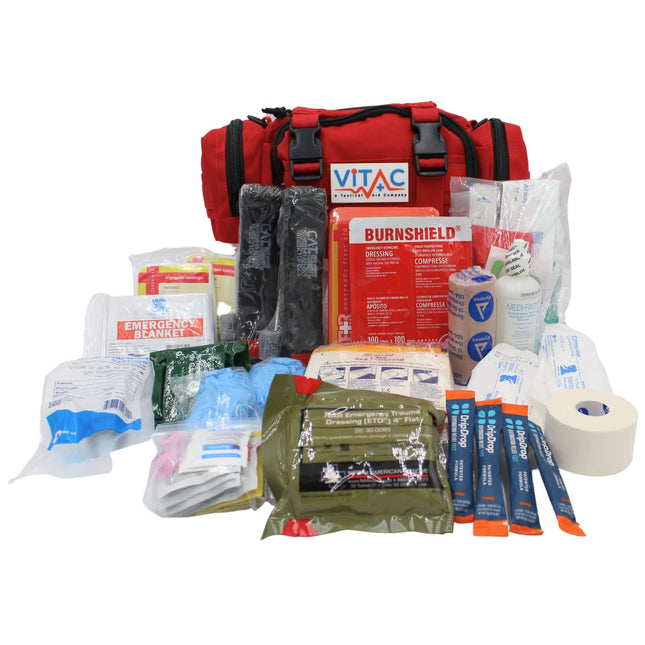
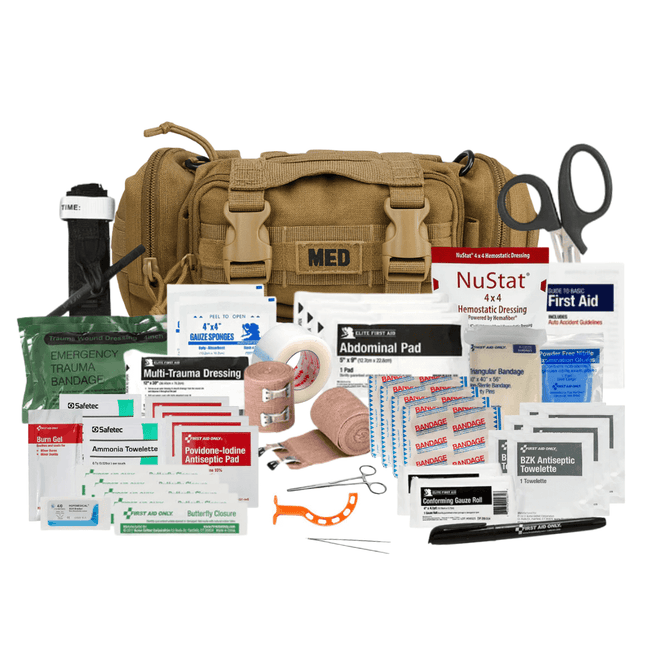
What's the difference between a vehicle first aid kit and a vehicle trauma kit?
+
A basic vehicle first aid kit is designed for minor injuries — cuts, scrapes, blisters, and small burns. A vehicle trauma kit is designed for life-threatening emergencies: major bleeding, puncture wounds, gunshot wounds, and chest injuries. The core difference is bleeding control capability. A trauma kit includes a tourniquet, hemostatic gauze, and a pressure dressing. A basic first aid kit does not. For vehicle staging, we recommend having both — or a full-spectrum kit that covers the entire injury range.
Do I need to be trained to use a vehicle trauma kit?
+
Basic bleeding control — tourniquet application and wound packing — can be learned in 30–60 minutes. ViTAC recommends completing a Stop the Bleed course or attending our
Life Saver Seminar to be confident with your kit. That said, having the right gear is always better than not having it. In an active bleed, the instruction card included with most kits is enough to guide a first-time user through the critical steps.
Where is the best place to keep a first aid kit in a car?
+
The best location is behind the driver's seat, in the center console, or mounted to the headrest via a headrest IFAK. Avoid the trunk — it's inaccessible from inside the vehicle and may be blocked in a rear-end collision. The goal is one-motion access from the driver or passenger seat. If you can't reach it without unbuckling and moving to the back of the vehicle, consider repositioning it.
Are trauma kits HSA or FSA eligible?
+
Yes — most ViTAC trauma kits, IFAKs, and bleeding control supplies are HSA and FSA eligible as medical expense items. You can pay at checkout using your HSA or FSA card. Some plans may require a Letter of Medical Necessity for certain items. ViTAC provides itemized receipts and product contents lists on request to support reimbursement claims. See our
HSA/FSA guide for full details.
Will heat damage the supplies in my vehicle kit?
+
High temperatures can degrade certain components over time. Adhesives on chest seals may lose effectiveness in sustained extreme heat (140°F+ interior temps). Medications and ointments can lose potency. We recommend storing your kit away from direct sunlight where possible, and inspecting all components every 6 months. Replace anything with compromised packaging or expired components. Tourniquets and hemostatic gauze are generally more heat-stable but should still be inspected regularly.
Is a CAT tourniquet really necessary, or is a generic one fine?
+
The CAT® (Combat Application Tourniquet) Gen 7 and SOFTT-W are the two military-standard windlass tourniquets tested and proven in combat environments. Generic or off-brand tourniquets have failed under stress — the windlass rod snaps, the band doesn't lock, or the velcro slips. When the stakes are a life, this is not where you cut costs. ViTAC only stocks verified CAT® Gen 7 and SOFTT-W tourniquets, and uses them as the default in all ViTAC-branded kits.
What size kit should I keep in my car?
+
For most personal vehicles (family car, commuter, daily driver), a compact IFAK or the ViTAC Vehicle Trauma Kit is the right size — substantial enough to handle serious trauma, compact enough to stage without taking over your vehicle. For trucks, SUVs, or overlanding rigs with more storage, consider a full trauma backpack or headrest-mounted IFAK. For work fleets and patrol vehicles, a larger dual-compartment kit staged in the cab gives both trauma and general first aid coverage.
How often should I replace items in my vehicle trauma kit?
+
Check and inspect your kit every 6 months. Replace any items with expired or compromised packaging immediately. Hemostatic gauze typically has a 3–5 year shelf life. Chest seals and other adhesive components may have shorter shelf lives depending on storage conditions. Tourniquets don't expire but should be inspected for webbing wear, windlass integrity, and velcro adhesion. ViTAC offers
trauma refill packs to make restocking quick and affordable.
Can I use my vehicle trauma kit on someone else, not just myself?
+
Absolutely — and that's the point. A vehicle trauma kit isn't just for the driver. It's for your passengers, bystanders at an accident you witness, or any injured person in the first minutes before EMS arrives. Good Samaritan laws in most states protect bystanders acting in good faith in medical emergencies. Your ability to intervene with proper gear can save a life that would otherwise be lost waiting for professional responders.
What's the difference between QuikClot and a regular gauze pad?
+
QuikClot® Combat Gauze contains kaolin, a naturally occurring mineral that accelerates the body's natural clotting process when packed directly into a wound. Regular gauze does nothing to promote clotting — it simply absorbs blood. On a serious wound where pressure alone won't stop the bleeding, hemostatic gauze is the difference between clotting and continuing to lose blood. It's the second most important component in a trauma kit, after the tourniquet.
Do I need chest seals in a car kit?
+
For most civilian vehicle kits, chest seals are a worthwhile addition — especially if you're armed, hunt, travel in areas with high accident risk, or stage your vehicle for more than commuting. Chest wounds from car crashes (seatbelt and steering wheel impact) or penetrating trauma can become tension pneumothorax, which is rapidly fatal without intervention. A vented chest seal takes up almost no space and adds critical capability. ViTAC recommends including a pair in any vehicle kit beyond a basic first aid setup.
Can I get a custom vehicle kit for my entire work fleet?
+
Yes. ViTAC builds custom vehicle kits for fleets, construction companies, agricultural operations, and other high-risk workplace environments. Minimum order is 15 units with a 2-week lead time from approval. We'll spec the kit based on your use case, risk profile, and vehicle type. Contact us at orders@vitacsolutions.com or (307) 202-8426 to start the conversation. No commitment required until you approve the quote.