The Golden Hour isn't a guarantee. It's a concept, and the concept is this: the faster you address life-threatening injuries in a trauma patient, the better the outcome. In practice, many of the injuries that kill in trauma — uncontrolled hemorrhage, airway obstruction, tension pneumothorax — kill in well under an hour. The window where your actions actually matter is shorter than most people expect.
The Hartford Consensus and the TECC (Threat and Error Consequence Control) framework have refined this further: identifying "uncontrolled external hemorrhage" as the single most significant preventable cause of pre-hospital death, and establishing a clear priority stack for the first responder on scene. This guide walks through what that stack looks like, minute by minute, and what you need to execute it.
The actual timeline
Before getting to the protocol, understand the physics. An arterial laceration in the femoral or brachial artery can cause lethal blood loss in 3–5 minutes. A 70kg adult has approximately 5 liters of blood; loss of 30% (1.5 liters) produces Class III hemorrhagic shock with hemodynamic instability. That volume can leave the body through an unchecked extremity wound in under four minutes.
This is why the Golden Hour concept has largely been replaced in trauma medicine by the "Platinum 10 Minutes" framework — the idea that the actions taken in the first 10 minutes on scene matter more than anything that happens during transport. And of those 10 minutes, the first 60–90 seconds determine whether the patient survives to reach transport.
Identify and locate life-threatening bleeds. Do not move a patient with potential spinal injury without cause. Control scene if necessary.
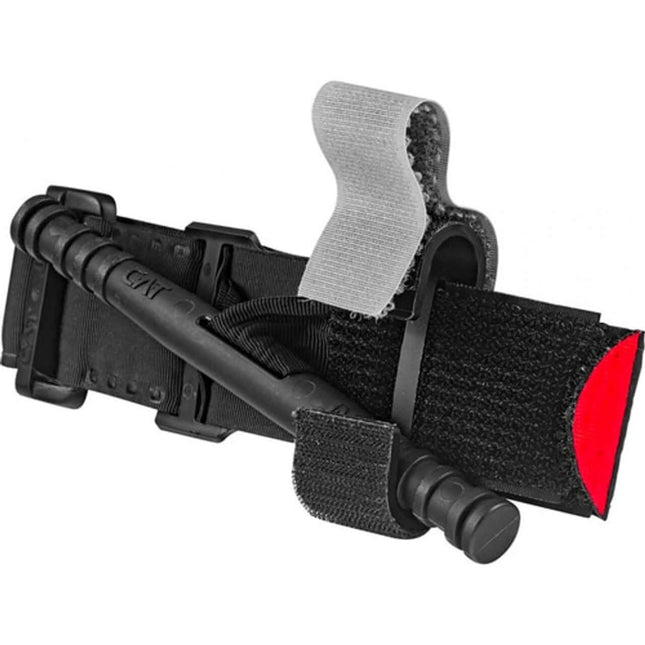
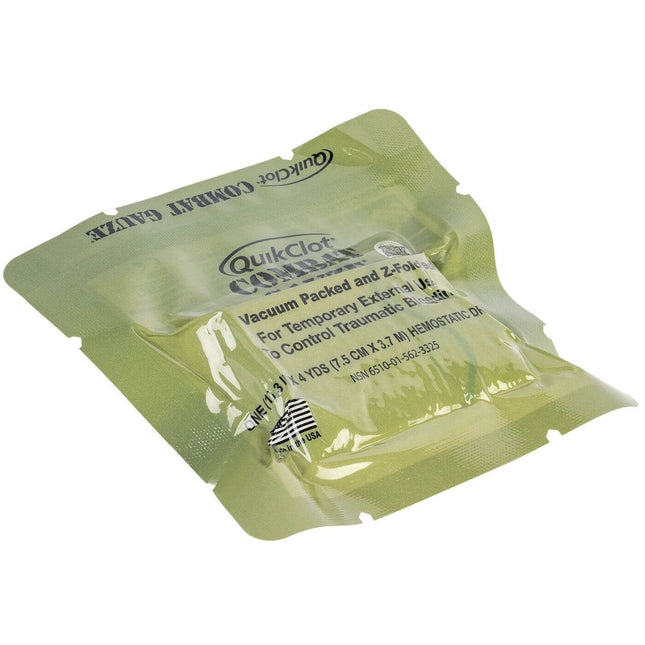
Tourniquet on extremity arterial bleeds, 2–3 inches above the wound. Pack non-tourniquet-applicable wounds with hemostatic gauze. Apply direct pressure.
Hemorrhage controlled — now assess airway patency. Position unconscious patient in recovery position if no spinal concern. Treat penetrating chest wounds with vented chest seals.
Keep patient warm (hypothermia accelerates coagulopathy). Position for shock if unconscious: supine, elevate feet if no torso/head injury. Monitor tourniquet time — mark with permanent marker on skin.
Maintain all interventions. Reassess every 5 minutes. Update incoming EMS on all treatments applied and times. Do not remove tourniquet in the field.
The MARCH protocol
MARCH is the field triage priority framework used across TCCC and TECC: Massive hemorrhage, Airway, Respiration, Circulation, Hypothermia/Hyperthermia. The sequence is deliberate. Hemorrhage control comes first because it's the fastest killer. Airway comes second because without a patent airway, everything else is academic.
Bystander response almost always breaks on Massive Hemorrhage. The instinct is to help with breathing, position the patient comfortably, or wait for EMS. All of that while the arterial bleed that will kill the patient in three minutes continues unaddressed. MARCH corrects this ordering bias explicitly.
For a complete breakdown of each phase, see the MARCH Trauma Care guide.
Your first-minute priorities
- Call 911 or send someone to call. Don't do it yourself if it means stopping work on the patient. Point at a specific person and say "You — call 911 and tell them [location, traumatic injury, number of patients]." This prevents bystander diffusion of responsibility.
- Identify and control massive hemorrhage immediately. Check the most likely arterial bleed sites: groin, neck, axilla, extremities. Tourniquet for extremity arterial bleeds, 2–3 inches above the wound. Pack junctional and non-tourniquet-applicable wounds with hemostatic gauze and sustained direct pressure.
- Check the airway and breathing. Is the patient breathing? Is the airway clear of blood, vomit, or foreign material? Is there a penetrating chest wound that needs a vented chest seal? Assess this only after hemorrhage is addressed.
- Treat for shock. Lay the patient flat, elevate feet if no head or thoracic injury is suspected, maintain warmth. Hypothermia begins at 36°C (96.8°F) and accelerates coagulopathy — the last thing you want when hemorrhage is already a problem.
- Stay and monitor until EMS arrives. Reassess tourniquet tightness and note time of application. Monitor breathing and level of consciousness. Do not give food, water, or oral medications to a patient who may need surgery. Relay everything you did to EMS on arrival.
Every tourniquet needs a time stamp. Write the time of application on the patient's skin near the tourniquet — permanent marker works, blood-smeared fingers do not. EMS and surgical teams need this information. A tourniquet applied more than 2 hours ago changes the clinical picture significantly. Don't rely on memory or verbal handoff alone.
The delays that cost lives
Panic is the most common delay and the most addressable. Freezing, waiting for someone more confident to step forward, or cycling through a decision loop wastes the same seconds that a tourniquet would be buying. The solution isn't courage — it's rehearsal. Mental run-throughs of trauma scenarios at rest create automatic response patterns that activate under stress. This is why training matters more than gear alone.
The second delay is unstaged equipment. A trauma kit buried in a closet, locked in a vehicle compartment, or at the bottom of a range bag is not accessible when it's needed. Pre-stage kits at the locations where injuries are most likely: vehicle, workplace, range, home. The Rip-Away Tactical Trauma Kit is designed specifically for vehicle and MOLLE attachment — accessible in a single pull motion.
The third delay is the wrong contents. A kit with hydrogen peroxide, cotton balls, and no tourniquet does not address arterial hemorrhage. See First Aid Kit Mistakes for a full audit list.

Training closes the execution gap
A trauma kit without training is an expensive bag of potential. The application sequence for hemostatic gauze wound packing is not intuitive under stress — pack tight, maintain pressure for 3–5 minutes, and don't pull out to check. The tourniquet goes 2–3 inches above the wound, not on or adjacent to it. Chest seals have a vented and non-vented version for a reason. These distinctions matter, and they require hands-on repetition to execute correctly under duress.
Stop the Bleed is the civilian baseline — a 2-hour course covering tourniquet application, wound packing, and direct pressure. It's free, widely available, and sufficient to handle the majority of life-threatening hemorrhage scenarios a bystander is likely to encounter. For a more comprehensive curriculum, wilderness first aid and TCCC-oriented courses build the full framework. See Stop the Bleed: Training, Gear, and How to Get Certified for course options.
FAQ
What is the Golden Hour in trauma care?
The Golden Hour is the period following a traumatic injury where early intervention has the greatest impact on survival. It's not always exactly 60 minutes — severe hemorrhage can kill in 3–5 minutes. The concept emphasizes urgency. Modern trauma medicine refines this to the "Platinum 10 Minutes" framework, identifying the first 10 minutes on scene as the window with the highest leverage for bystander action.
What should I do first at a trauma scene?
Control massive hemorrhage. This is the first priority of the MARCH protocol and the intervention with the highest impact on survivability. Airway and breathing are addressed after hemorrhage is controlled, because an arterial bleed kills faster than an airway obstruction in most scenarios. Direct pressure or tourniquet for extremity bleeds; hemostatic gauze packing for non-tourniquet-applicable wounds.
Do I need training to use a trauma kit?
Yes. Gear without training has a failure mode: you have the tools but apply them incorrectly under stress. A tourniquet applied too loosely doesn't stop arterial hemorrhage. Wound packing that isn't maintained for the full 3–5 minutes doesn't achieve hemostasis. Stop the Bleed is the two-hour minimum. TCCC-based courses build on that for higher-risk environments. Certification doesn't expire; the skills do if you don't rehearse them.
Can a civilian realistically save someone's life in trauma?
Yes — with documented frequency. The Stop the Bleed program was designed specifically around this outcome after analysis showed that bystander hemorrhage control prevents a significant percentage of pre-hospital trauma deaths. The intervention is simple: get a tourniquet on an extremity arterial bleed within the first minutes. That single action, done correctly, changes the outcome of the most lethal common trauma scenario.
What's the most important item in a trauma kit?
For extremity hemorrhage — which is the most common lethal trauma scenario — a commercial windlass tourniquet. The CAT Gen 7 is the TCCC standard. Pair it with hemostatic gauze for non-tourniquet-applicable bleeds and vented chest seals for penetrating chest wounds. That combination addresses the majority of life-threatening prehospital trauma scenarios.
Bottom line
The Golden Hour is not 60 minutes for a femoral artery lac. It's not 60 minutes for a tension pneumothorax. The framework is correct in its core message — act fast, act in the right order, and have the tools staged to act with — but the actual window is shorter than the name implies. Know the MARCH priority stack. Know how to apply a tourniquet. Stage the kit where it's accessible, not where it's stored. Those three things, done in advance, cover the majority of what determines whether someone survives the first minutes after a traumatic injury.
For the full priority framework: MARCH Trauma Care. For kit contents: First Aid Kit Mistakes. For training: Stop the Bleed certification. For the kit that covers all of it in one package: Premium IFAK Trauma Kit with Tourniquet & Chest Seals.