

Invest Your Pre-Tax Dollars in Life-Saving Preparedness
Professional-grade trauma gear — funded by benefits you've already earned.
Professional-grade trauma gear — funded by benefits you've already earned.




Browse and add any HSA/FSA eligible item from this collection. Every product is pre-verified.

Use your HSA or FSA debit card as your payment method — it works like a regular card.

No reimbursement requests. No paperwork. The transaction is processed automatically as an eligible expense.

Because you're spending pre-tax income, you save the equivalent of your tax rate on every purchase.
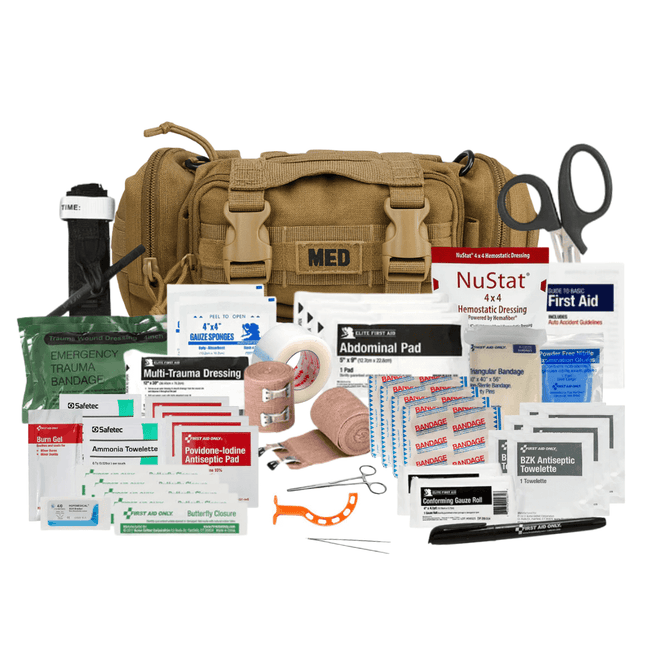

Keep essential trauma tools organized and ready so you can respond faster, stay calmer, and act with more confidence when serious injuries happen.
$124.95 - $224.73


A trauma backpack built to keep advanced bleeding-control and airway tools organized so you can respond faster and with more confidence in high-stress emergencies.
$269.97 - $319.97


Keep your core first aid and bleeding-control tools organized in one compact kit so you can respond faster and with more confidence at the range, in the vehicle, outdoors, or at home.
$139.95 - $169.95


Everything you need to handle burns, bleeding, fractures, and airway emergencies — organized, professional-grade, and ready to grab.
$224.95


Real trauma capability in a pocket-sized wallet. NAR® HyFin® chest seals, hemostatic gauze, and gloves — organized for instant access wherever you carry.
$67.99 - $120.99


$94.45


The On-Hand First Aid Kit (OHFAK) is a compact, professional-grade trauma kit engineered for rapid response and real-world deployment—combining a tourniquet, hemostatic gauze, and chest seals in a rugged, quick-access pouch
$65.00


$84.95


The TORK® – Advanced delivers elite-level trauma response in a compact, field-ready design—trusted by operators who refuse to compromise on readiness.
$219.19 - $227.99


The M-FAK Mini First Aid Kit delivers maximum trauma capability in minimum space—proven tools, rapid access, and zero compromise when lives are on the line.
$101.99 - $173.99

$89.95


$49.95 - $49.99


The Patrol Trauma Kit delivers rapid, one-motion access to essential bleeding control tools—compact, tactical, and trusted when seconds count.
$84.95


The Recon IFAK combines rapid rip-away access with professional-grade trauma tools—built for operators who demand speed, precision, and reliability under pressure.
$99.95


$114.95 - $179.95


$499.95 $399.95


C-A-T® tourniquet, Hemostatic Gauze, ETD™ & HyFin® Vent Chest Seal — 34-item first-line IFAK in a 2 lb MOLLE pouch. On your belt, one-hand deployment.
$144.97 - $164.99


Compact, capable, and combat-tested—ViTAC’s Compact IFAK delivers mission-ready trauma care for those who operate beyond the ordinary.
$64.99


NAR®-built dual-purpose IFAK carrying tools for both the handler and K9. C-A-T® tourniquet, HyFin® vent chest seals, NAR® gauze & digital vet thermometer — one kit, two patients.
$147.99 - $228.99


The Headrest IFAK transforms any vehicle into a rapid-response trauma station—compact, secure, and ready when every second counts.
$346.69


$174.95


The Patrol Pro Trauma Kit delivers rapid-access, field-tested medical capability in a compact, mission-ready design—built for those who respond first when every second counts.
$181.95


The Outdoor Adventure Kit (O.A.K.) delivers essential first aid and survival readiness in a lightweight, waterproof package—built to protect you when you’re far from help.
$61.19


The SRO Crisis Response Kit empowers School Resource Officers to save lives when seconds count—bridging the gap between crisis and care.
$467.99


We've been downrange. We know what it costs to be unprepared. ViTAC was built by U.S. Army Special Operations veterans to make sure the people who run toward the threat — and the families who depend on them — have gear that works when everything is on the line.
— ViTAC Solutions Founders | 40+ years combined Special Operations experience
Yes—most general first aid supplies (bandages, antiseptics, gloves, cold packs, CPR barriers, etc.) are typically HSA/FSA-eligible. Specific plan rules vary, so always verify with your benefits administrator.
Usually, yes. If a benefits card is declined or not supported, confirm with your benefits administrator as you may be able to purchase with a regular card and submit the itemized receipt for reimbursement through your plan portal.
You will likely need an itemized receipt showing product names and prices. Some plans may ask for additional details; your order confirmation plus the kit’s contents list generally covers it. If you need a list, please contact us at support@vitacsolutions.com
For standard first aid supplies, typically no. Certain items may require an LMN depending on plan policy. When in doubt, check your plan or ask your administrator before purchasing.
Eligibility is similar, but fund rules differ. HSAs usually roll over year-to-year; FSAs often have “use-it-or-lose-it,” a grace period, or a limited rollover—policies vary by employer. Confirm key dates and rules with your plan.
Match the kit to your environment and capacity:
If you’re outfitting a team, standardize on one kit and add refills.
Yes. We list contents on each product page and are more than happy to provide an itemized document to support HSA/FSA submission and refills.
Yes—refresh expiring items, replace used components, or add role-specific kits (travel, workplace, sports). Check your plan’s cut-off or grace period to avoid forfeiting FSA funds.





HSA eligible and FSA eligible first aid kits are complete trauma care systems that qualify for purchase using Health Savings Account or Flexible Spending Account funds.
These pre-tax benefit accounts allow you to invest in life-saving emergency capability at an effective 20–40% discount depending on your tax bracket.
Unlike consumer-grade first aid kits focused on minor cuts and scrapes, HSA and FSA eligible trauma kits are built for hemorrhage control and critical injury stabilization during the Golden Hour—the critical 60 minutes following traumatic injury when proper intervention determines survival outcomes.
Each kit includes proven components: windlass tourniquets, pressure bandages, hemostatic dressings, chest seals, airway management tools, and medical-grade supplies organized for rapid access under stress.
Why it matters - major bleeding is the leading cause of preventable death in trauma situations.
Having a properly equipped trauma kit within reach—whether in your vehicle, workplace, or home—bridges the gap between injury and professional medical care.
Using your HSA or FSA funds makes this readiness more accessible and cost-effective while ensuring you're equipped with the same configurations trusted by tactical professionals and emergency responders.
1. Match Kit Configuration to Your Use Case
Individual first aid kits (IFAKs) are designed for single-casualty scenarios with compact footprints that fit glove boxes, plate carriers, or EDC bags.
Family or workplace kits scale up with duplicate tourniquets, additional hemostatic agents, and expanded wound care supplies to handle multiple casualties or extended care scenarios.
2. Verify Your Plan's Eligibility Requirements
Most HSA and FSA administrators approve complete trauma kits because they address specific medical emergencies like hemorrhage control, shock prevention, and airway management.
Keep itemized receipts showing kit contents and medical purpose for reimbursement or card purchases.
Coverage rules vary by provider—confirm eligibility before large purchases.
3. Prioritize TCCC-Recommended Components
Look for kits containing proven, field-tested items: CAT or SOFTT-W tourniquets, Combat Gauze or Celox hemostatic agents, HyFin or Bolin chest seals.
Avoid kits with unproven substitutes or generic "tactical" branding without substance—your life or someone else's may depend on reliable performance under stress.
4. Assess Your Training Level & Skill Development Plan
Entry-level kits focus on tourniquet application, pressure bandages, and wound packing—core skills taught in 2-hour Stop the Bleed courses available nationwide.
Advanced kits add nasopharyngeal airways, decompression needles, or IV supplies that require formal tactical combat casualty care (TCCC) or wilderness first aid training.
5. Evaluate Organization & Accessibility Features
Color-coded pouches, tear-open access, high-visibility pulls, and glove-friendly closures reduce fine-motor demands during high-stress scenarios.
Modular systems let you customize loadouts for different environments; vacuum-sealed kits maximize space efficiency for vehicle or bag carry while protecting components from moisture and contamination.
6. Plan for Expiration Management & Refills
Hemostatic agents and adhesive chest seals have 3–5 year shelf lives.
Choose kits with clearly labeled expiration dates and available refill components so you can rotate stock through training exercises and maintain readiness without replacing entire systems.
Many preparedness-focused buyers set annual calendar reminders to inspect and refresh kits.
This collection is ideal if you:
This may not be the right fit if you:
Veteran-Owned, Field-Tested Curation
Every kit is assembled based on real-world operational experience—no filler items, no unproven gear, just components that perform when lives depend on them.
Complete Systems, Not Random Collections
Our kits follow proven trauma care protocols with logical organization, color-coding, and component placement designed to reduce cognitive load and speed time-to-treatment during emergencies.
Transparent Component Lists & Specifications
Every product page details exact contents, dimensions, weight, shelf life, and mounting options so procurement teams and prepared families can make informed decisions and meet HSA/FSA compliance requirements.
Compliance-Friendly Documentation
Itemized receipts, clear medical purpose descriptions, and HSA/FSA eligibility guidance streamline reimbursement and reduce administrator friction.
Nationwide Readiness Focus
Whether you're in hurricane-prone Florida, earthquake zones in California, remote Montana backcountry, or urban high-rises in New York, our kits are built for the environments and threats you actually face.
Browse our HSA Eligible & FSA Eligible First Aid Kits collection to find complete trauma systems that meet professional standards while maximizing your pre-tax healthcare dollars.
Every kit is backed by field experience, proven components, and a commitment to readiness that goes beyond the transaction.